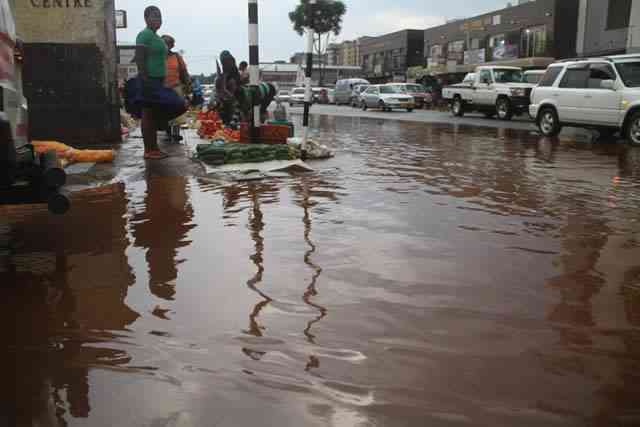
THE recent heavy downpours that battered Zimbabwe’s capital have once again exposed the city’s crumbling infrastructure and inadequate urban management.
Last week, after hours of relentless rainfall, sections of Harare’s central business district and several suburbs were transformed into makeshift waterways.
Pedestrians waded through knee-deep pools while vehicles skidded helplessly on waterlogged roads. The flooding, though triggered by the rains, revealed a deeper, long-standing problem — a drainage system weakened by years of poor maintenance and mismanagement.
In a statement, the City of Harare sought to reassure residents that corrective measures were underway. Council said its teams were “working on rectifying the challenges experienced on some streets,” and that “the City of Harare has been working on the drainage systems for the past few months.” The statement shifted part of the blame to vendors and residents, accusing them of clogging drainage systems with litter: “It is evident that we still have people and vendors who dump rubbish in our drainage systems. We urge residents to dump rubbish in bins and desist from throwing litter into our drainage systems.”
While there is truth in council’s observation about littering, laying the blame exclusively at the feet of informal traders tells only a fraction of the story.
The real issue runs much deeper — rooted in decades of infrastructural decay, inadequate city planning and chronic neglect by municipal authorities. The drainage infrastructure in Harare, much of it constructed in the colonial era, is no longer fit to handle the city’s expanding population and increasing urbanisation. Over time, maintenance efforts have become sporadic, underfunded and reactionary — often implemented only after disasters strike.
Every rainy season exposes the same systemic weaknesses. Potholes deepen into trenches, pavements crumble and drainage grates remain clogged with sediment, plastic, and waste. The city’s failure to carry out consistent, proactive maintenance or to upgrade aging infrastructure has turned normal rainfall into a predictable urban disaster. Even newly rehabilitated roads have drainage systems that are either poorly designed or quickly become non-functional due to lack of follow-up maintenance.
Moreover, Harare’s waste management remains grossly inadequate. Informal waste disposal — by vendors, residents and even commercial establishments — fills a vacuum left by unreliable municipal refuse collection. When bins overflow for days, people resort to dumping waste in open spaces or drainage systems. Thus, while citizens may share the blame, their actions often reflect the city’s failure to provide basic urban services.
- Schools shut as cyclone closes in on Madagascar
- Council under fire over Harare flooding
- Zim faces cyclone threat
- Zim faces cyclone threat
Keep Reading
This challenge is not confined to Harare alone. Across other major cities such as Bulawayo, Mutare and Gweru, outdated drainage networks and poor solid waste management expose urban centres to similar flooding risks.
These structural weaknesses mirror years of under-investment and ineffective urban governance that have left Zimbabwe’s cities unprepared for modern environmental and population pressures.
To reverse this pattern, the City of Harare must move beyond reactive measures and adopt a strategic, long-term urban renewal plan.
Drainage systems should not only be cleared after flooding occurs; they should be systematically mapped, rehabilitated and expanded. Continuous maintenance schedules, backed by transparent budgeting and public monitoring, must replace a cycle of short-term fixes and blame-shifting. The use of modern engineering technologies and eco-friendly urban planning — such as permeable pavements and green drainage corridors — can also enhance water absorption and reduce surface runoff during storms.
Partnerships will be crucial. Government agencies, environmental NGOs and private sector players all have a role to play. Companies could partner in the periodic cleaning of major drainage channels through corporate social responsibility initiatives, while environmental groups could assist with community awareness campaigns encouraging proper waste disposal and recycling. Urban planners and civil engineers, both local and international, could be engaged to design modern, climate-resilient drainage models tailored to the city’s terrain.
Equally important, residents must be integrated into the process.
Sustainable urban management thrives on community participation. If citizens are equipped with awareness, resources and platforms to report drainage blockages or illegal dumping, they become part of the solution rather than the problem.
The recurring floods in Harare are not merely acts of nature — they are symptoms of a city that has allowed essential systems to decay.
Until there is a genuine commitment to sustainable infrastructure investment, sound waste management and accountable municipal governance, each rainy season will be yet another reminder of the extent to which urban planning has fallen short.
Flooding, therefore, should not only prompt emergency repairs but inspire a fundamental rethinking of how Harare — and, indeed, Zimbabwe’s other major cities — manage the basic lifelines of their urban environments.