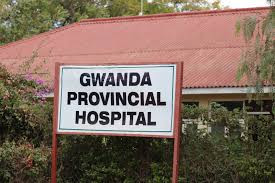
UNDP, the government of Zimbabwe — coordinated by the Finance, Economic Development and Investment Promotion ministry, with the participation from the Office of the President and Cabinet (M and E Directorate), the Health and Child Care ministry, Energy and Power Development ministry, the Department of Public Works and the Global Fund — conducted joint monitoring visits at Gwanda Provincial Hospital and United Bulawayo Hospital, which confirmed progress on solar-for-health investment that keeps essential clinical services running.
Focus on critical care reliability
The visits highlighted dependable power for maternity wards, theatres, ICUs and cold-chain facilities. Partners verified priority circuits end-to-end and aligned to enhancements that further secured uninterrupted power for life-saving services.
Gwanda Provincial Hospital: Systems optimised
Gwanda’s installation — approximately 120 photovoltaic panels, a 30-kW inverter and 24 batteries — already prioritises the maternity and pharmacy blocks through clearly designated clinical loads. Partners affirmed a set of rapid upgrades that will even further elevate performance:
Clinical-circuit prioritisation is completed through electrical segregation,
Seamless power continuity via automatic transfer switching across grid, solar/battery, and generator,
Real-time visibility with digital dashboards tracking generation, state-of-charge, utilisation and alarms,
- Hospitals face acute staff shortage
- Nurses say region’s health facilities neglected
- ZRBF rescues hunger-prone communities
- ‘Blood, drug shortages hit UBH’
Keep Reading
Sustained asset health through inverter-room cooling, site-level O and M procedures and reactivated remote monitoring, and
Water security advances are also underway, with a planned purification plant to safely integrate borehole water into hospital mains and reinforce infection prevention and control.
United Bulawayo Hospital commissioning on track
At UBH, the grid-tied solar plant — estimated at 300kW — is on a clear commissioning pathway focused on patient safety:
Reserved capacity for theatres, ICU and wards through completed load-splitting; and
No-gap changeovers with an automatic transfer switch.
Procurement is well advanced — about 70% of electrical-integration materials are at hand — with remaining works scheduled within a concise installation window once clearances are aligned. Remote monitoring is being set up so that hospital teams can visualise performance and respond proactively from day one. Financing coordination is progressing to leverage on available Health ministry budget space and accelerate final commissioning.
Tangible health gains
The programme’s impact is direct and measurable. Purpose-built solar capacity — 30kW inverter with 24 batteries at Gwanda and 300kW generation at UBH — supports safer procedures in theatres, steady ICU operations and reliable vaccine and medicine cold-chain. With dashboards live and roles formalised, hospital teams gain the data and governance to plan maintenance, manage energy use, and protect equipment over the long term.
Clear path to completion
Joint field reviews concluded with a unified, time-bound checklist: clinical-circuit prioritisation, automated changeover, monitoring dashboards and robust O and M procedures — all backed by procurement already in place and short installation timelines. As these final integration steps are executed, Solar-for-health at Gwanda Provincial Hospital and United Bulawayo Hospital is poised to deliver resilient, sustained gains in-patient safety and service reliability.
UNDP Zimbabwe