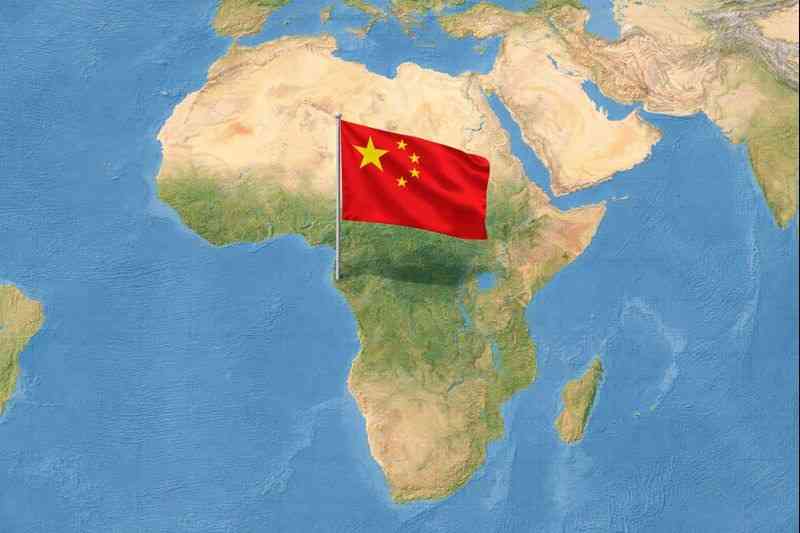
While Africa is struggling with climate change-related challenges, China, the biggest trading partner with the continent for a consecutive 15 years, has realised a green revolution, surpassing other world economies by establishing a holistically transformative green transition global economy.
China is the second-largest economy in the world, and now the leading multilateral actor in efforts to combat climate change while driving the green energy transition.
Climate change has exerted profound and escalating impacts across African countries, exacerbating existing socio-economic vulnerabilities and undermining sustainable development efforts.
In 2024, the World Meteorological Organisation (WMO), a specialised agency of the United Nations responsible for promoting international cooperation on atmospheric science, climatology, hydrology and geophysics, said that Africa was facing its warmest decade on record.
The WMO’s State of the Climate in Africa 2024 report revealed that extreme weather and climate change were intensifying hunger, insecurity, and displacement across Africa, impacting every facet of socio-economic development.
The impacts of climate change generate conflict and insecurity, reduce investor confidence, raise complex intersectional governance problems, particularly in most of the poorer countries with the lowest education, health, infrastructure and human development indicators globally.
The EM-DAT international disaster database shows that since 1984, Africa has endured 1 865 climate-related disasters, which affected an estimated 702 million people, and accounts for US$53 billion in direct financial losses.
Rising temperatures—occurring at a rate faster than the global average in many regions—have intensified the frequency and severity of droughts, floods, and heatwaves, particularly in the Sahel, the Horn of Africa, and Southern Africa.
- Open letter to President Mnangagwa
- Feature: ‘It’s worse right now than under Mugabe’: Sikhala pays the price of opposition in solitary cell
- The brains behind Matavire’s immortalisation
- Masvingo turns down fire tender deal
Keep Reading
An Institute of Security Studies Futures report published in 2024 says that climate-related disasters now account for nearly 70% of all natural disasters, with extreme weather events increasing in frequency and severity.
The report also notes that about 73 devastating climate-related disasters were reported in the continent in 2024, 40% of which affected nearly 10 million people.
A combination of extreme events, such as prolonged droughts in Southern Africa, cyclones along the southeastern coast, and heatwaves across North and West Africa have exacerbated food insecurity, displacement of affected populations while undermining development efforts. Coastal nations face additional threats from sea-level rise, erosion, and saltwater intrusion, unprecedented sea-surface temperatures and widespread marine heatwaves jeopardising livelihoods and urban settlements.
African countries bear disproportionate consequences of climate change, hence the need for urgent adaptation measures, climate-resilient investment, and strengthened international climate finance commitments to mitigate long-term socio-economic instability.
The demand for clean energy is in Africa. The problem is not just the reliance on fossil energy, but the lack or shortage of much-needed energy for both domestic use and industrial purposes.
Yet despite ongoing efforts to enhance green transition and combat climate change, the African continent falls behind other economies at various levels, ranging from innovation, financing, governance capacity and coordination.
Geopolitical instability and uncertainty triggered by economic nationalism in Washington, regional conflicts, trade barriers and a shaky global economy have recently weakened global resolve and multilateral cooperation on the green transition, including efforts to collectively fight climate change.
The Trump administration withdrew the US from the Paris climate agreement and the UN Framework Convention on Climate Change, undermining multilateral cooperation towards arresting climate change challenges.
But China's historic domestic and global transformation, and its unassailable role in combating climate change, have become an inspiration for the rest of the world. Beijing’s trusted partnership with African countries presents a major transformative driving opportunity for the continent to learn from its experience, while leveraging financial, technological, and knowledge resources that Beijing has demonstrably willingly shared with partners in the Global South.
China has made comprehensive progress towards meeting its green transition goals to become the cradle of the global green industrial revolution. By any measure, China is going big on green transition with massive investment in renewable energy generation, including wind and solar. China has surged in renewables and whole-economy electrification, rapidly reshaping energy choices for the rest of the world and creating the conditions for a decline in global fossil fuel use.
For instance, where many developed economies have 40 to 70 years to move from peak emissions to carbon neutrality, China aims to achieve this within 30 years, reaching the peak before 2030 and targeting net zero before 2060. Data from the International Renewable Energy Agency (IRENA) shows that in 2024, China accounted for over 40% of global renewable energy capacity and nearly 77% of Asia's total. In 2024, China invested about US$818 billion in its energy transition, more than double that of any other economy.
China has become the undisputed leader in solar, wind, and electric vehicle deployment. Data from China’s National Energy Administration shows that in the first half of 2024, renewable energy generation accounted for approximately 35.1% of the total electricity generated nationwide, with wind and solar power together accounting for about 20% of total electricity production. Solar farms embed desert landscapes and float on the surface of huge lakes, attesting to dynamic innovation combining energy production with a new aesthetics.
China is the global leader in solar supply chain, battery storage, and electric vehicle markets, and its rapidly growing solar capacity has roughly doubled that of the US and Europe combined.
Beijing is responsible for three-quarters of the world's wind and solar project construction, leads globally in hydropower, renewable energy storage and transmission, and green hydrogen facilities, and has the largest number of nuclear power plants under construction worldwide.
Beijing has created vast energy megabases backed by massive strategic and sustainable investments in renewable energy, which has immensely lowered the costs of energy transition in developing countries. The investments in renewable energy have a multiplier effect in expanding industrialisation, generating revenues and creating more jobs on the domestic front and abroad, while making the global green transition more cost-effective and accessible for all.
China's Green Revolution is driving sustained investments in agricultural and industrial modernisation, technological innovation, and State-led rural development, reshaping its food production systems and lifting hundreds of millions out of poverty. The incorporation of sustainability-oriented strategies, including climate-smart agriculture, renewable energy integration, and large-scale afforestation programmes have reduced the carbon intensity in production while strengthening resilience to climate variability to position China as an emerging leader in green development practices.
For African countries, China provides an important model for green transition-driven economic modernisation that effectively addresses challenges of climate change. China's experience demonstrates that coordinated public investment, technological innovation, and long-term policy planning can catalyse economic transformation at scale.
Africa should leverage close ties with China to learn from its experience, while creating conditions for deeper bilateral partnerships to foster green transition and climate change-driven economic transformation.
China has supported agricultural demonstration centers, technology transfer programs, and training initiatives across the continent, which should be utilised to upgrade African climate change interventions from merely reactive to proactive economic growth strategies rooted in and informed by the long bilateral tradition in mutually beneficial partnerships, translating to shared benefits of modernisation of both sides.
Lessons from the integration of climate-smart technologies within China's contemporary industrialisation and modernisation model could significantly transform Africa's climate adaptation and mitigation strategies, while boosting green energy resources, food security, and mitigating climate vulnerability. African governments must enhance their capacity and resolve to back climate change and green energy-driven economic growth strategies by leading from the front to create an enabling environment for such modernisation.
Gideon H Chitanga, PhD is a politics and international relations analyst.