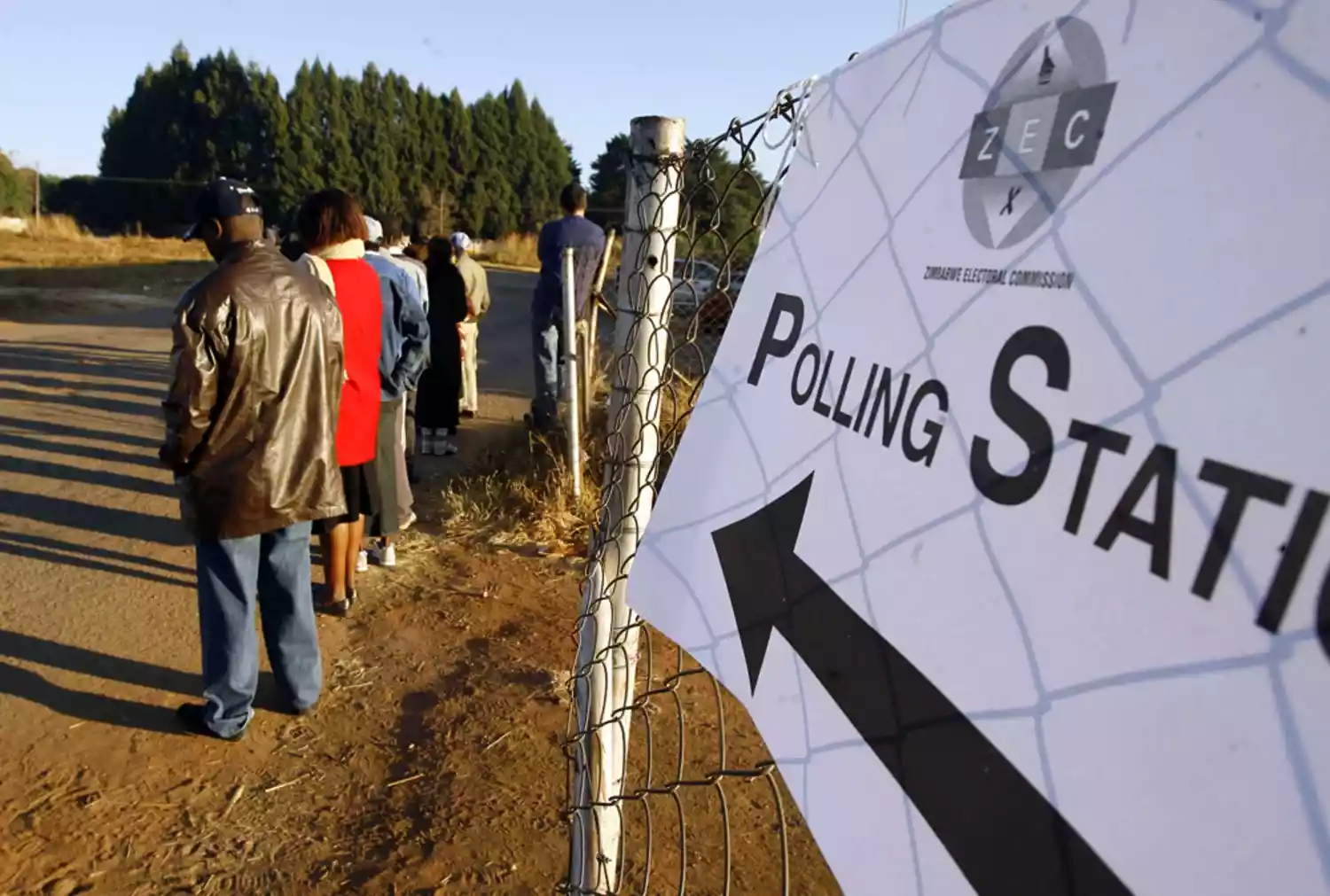
THERE is ongoing debate regarding participation in elections in Zimbabwe without electoral reforms.
Some argue that it is possible to defeat Zanu PF under the current legal regime, while others advocate for electoral boycott, contending that participation legitimises “fraudulent” polls.
It is essential to recognise that elections are a legal instrument used to establish a legitimate government in any democratic context.
Therefore, anyone claiming State power must secure their position through a legitimate election conducted in accordance with the laws of the jurisdiction they seek to lead.
It is crucial to acknowledge that the law — whether just or unjust — profoundly influences elections in Zimbabwe.
This influence is multifaceted, serving as a significant catalyst in shaping the political landscape and determining electoral outcomes.
This article examines whether boycotting elections can have a meaningful impact on regime change.
The legal framework governing elections in Zimbabwe comprises various statutes, regulations and constitutional provisions, particularly Chapter 7 of the Constitution of Zimbabwe.
- Mavhunga puts DeMbare into Chibuku quarterfinals
- Bulls to charge into Zimbabwe gold stocks
- Ndiraya concerned as goals dry up
- Letters: How solar power is transforming African farms
Keep Reading
This chapter establishes electoral systems and processes, the timing of elections and the delimitation of electoral boundaries.
These regulations dictate the conduct of elections, the eligibility of candidates and the rights of voters.
Historically, these legal rules have created advantages or disadvantages for the ruling party and opposition parties alike.
Advocates of boycott argue that the current framework significantly impacts electoral outcomes, often reflecting broader socio-political dynamics that favour the ruling regime.
The late former President Robert Mugabe mastered the art of amending laws on the eve of elections to benefit himself and his party.
In addition to employing violence as an electoral tool — particularly in rural areas — the law was manipulated to the advantage of his party.
One of the most glaring abuse of statutes was the introduction of the General Laws Amendment Act 2 of 2002, which tilted the electoral playing field in favour of Zanu PF, despite being later nullified by the Supreme Court.
This law aimed to amend over 40 statutes, primarily focusing on electoral law.
It criminalised voter education conducted by civil society organisations perceived as regime change agents and sought to prohibit these organisations from receiving funding from foreign donors.
Additionally, it addressed ballot security, postal votes and the jurisdiction of courts regarding electoral disputes.
Voter registration and eligibility
The electoral disputes in Zimbabwe mainly revolve around voter registration and eligibility, particularly access to the voters roll.
The law significantly influences who can participate in elections, beginning with voter registration.
The Electoral Act mandates that citizens must register to vote, a crucial step in determining electoral outcomes.
However, the manner in which voter registration is conducted has been contested.
The case of Tsvangirai v Registrar-General of Elections during the lead-up to the 2002 elections, along with subsequent applications made in the 2017 elections by Nelson Chamisa and his MDC Alliance, illustrate the importance of this law in electoral administration.
In Zanu PF v Mudzuri & Anor (2018), the Supreme Court ruled on the legality of the voter registration process, emphasising the need for transparency and accessibility to ensure eligible voters participate.
Inadequate voter registration can disenfranchise large segments of the population, disproportionately affecting young people and marginalised communities, thereby influencing election results.
Candidate nomination
The law also governs the nomination of candidates. Many will recall how Savior Kasukuwere was removed from the ballot in Mangwana v Kasukuwere and 2 Others (418 of 2023).
The applicant, Lovedale Mangwana, based his application on section 85(1) of the Constitution of Zimbabwe, which allows individuals to approach the courts if a fundamental right or freedom has been breached or is likely to be breached as further outlined in section 23(3) of the Electoral Act [Chapter 2:13].
The Electoral Act specifies criteria for candidates, including age, citizenship and the payment of nomination fees.
These requirements have acted as barriers for potential candidates, including Linda Masarira, who failed to pay the US$20 000 nomination fee for the presidential election in 2023, along with many others from opposition parties.
In MDC Alliance v Zimbabwe Electoral Commission (Zec) (2019), the court upheld Zec’s decision to disqualify certain candidates based on technicalities related to nomination papers.
Such rulings can significantly impact the competitiveness of elections by limiting the number of candidates who can contest.
Electoral management
The management of elections is another critical area where law influences outcomes.
Zec is responsible for overseeing the electoral process, but its independence and impartiality have been the subject of contention.
In Chamisa v Mnangagwa & 24 others, Chamisa challenged the 2018 presidential electoral victory of Emmerson Mnangagwa, accusing the Zec chairperson of bias, particularly after she was photographed wearing a scarf associated with Mnangagwa.
Another case, MDC-T v Zec (2016), addressed allegations of bias and misconduct by Zec, emphasising the necessity for an independent electoral body to ensure free and fair elections.
The perception of Zec’s partiality can affect voter confidence and turnout, ultimately influencing an election’s outcome.
Those advocating for boycott argue that without an independent Zec, any election is a foregone conclusion.
Electoral disputes and legal recourse
Post-election disputes are common in Zimbabwe, often leading to legal challenges that can alter results.
The law provides mechanisms for challenging electoral outcomes, but the effectiveness of the mechanisms is frequently questioned.
In the landmark case of Chamisa v Mnangagwa &24 others (2018), the Constitutional Court dismissed an election challenge brought by Chamisa, affirming Mnangagwa’s election.
This ruling underscored the Judiciary’s role in adjudicating electoral disputes while raising concern about the its independence and potential political influence.
The pressing question is whether it makes sense to boycott polls, given that the law does not recognise an electoral boycott as a legitimate protest against flawed electoral results.
If one does not contest in an election, how can they legally challenge the results, especially if the eventual winner adhered to established laws?
Elections are given life through the Constitution. As political scientist Tom Paine reasoned, “A constitution is a thing antecedent to a government and a government is only a creature of the constitution. A constitution is not an act of government but a people’s constitution of government. A government without a constitution is power without right.”
Boycotting elections is tantamount to boycotting the constitution.
Without it, no one can constitute power with legitimacy.
Therefore, I argue that boycotting an election is an exercise in futility, lacking a legal foundation and failing to provide a solution for the nation.
The doctrine of necessity will likely be invoked to support any government that comes to power via a boycott, as ruled in Madzimbamuto v Lendner Burke (1968) (2) SA 284.
In this case, the Smith regime had taken power illegally after declaring the Unilateral Declaration of Independence.
Madzimbamuto challenged Smith’s laws because the regime was illegal; at this point, the courts applied the doctrine of necessity, stating they could not create a legal and political vacuum.
Consequently, the court upheld Smith’s laws on that basis.
In summary, the law in Zimbabwe plays a crucial role in shaping electoral outcomes through its influence on voter registration, candidate nomination, electoral management and dispute resolution.
While the legal framework aims to promote democratic principles, its application often reflects the complexities of Zimbabwe’s political environment.
Cases such as Zanu PF v Mudzuri & Anor, MDC Alliance v Zec and Chamisa v Mnangagwa & 24 others, illustrate how legal interpretations and rulings can directly impact electoral outcomes.
Therefore, understanding the interplay between law and politics is essential to comprehending the electoral dynamics in Zimbabwe and assessing whether a boycott can be effective or not.
- Blessed Mhlanga is a law student at the University of Zimbabwe. He writes here in his personal capacity. He can be contacted on [email protected].