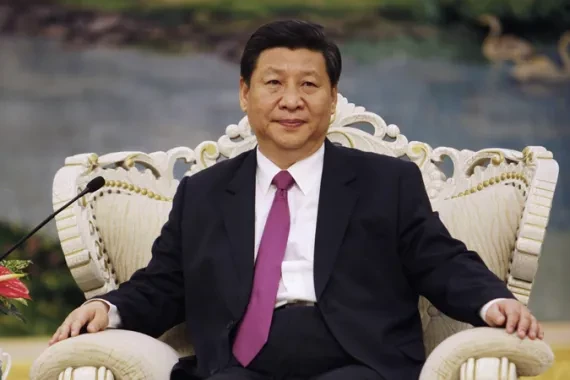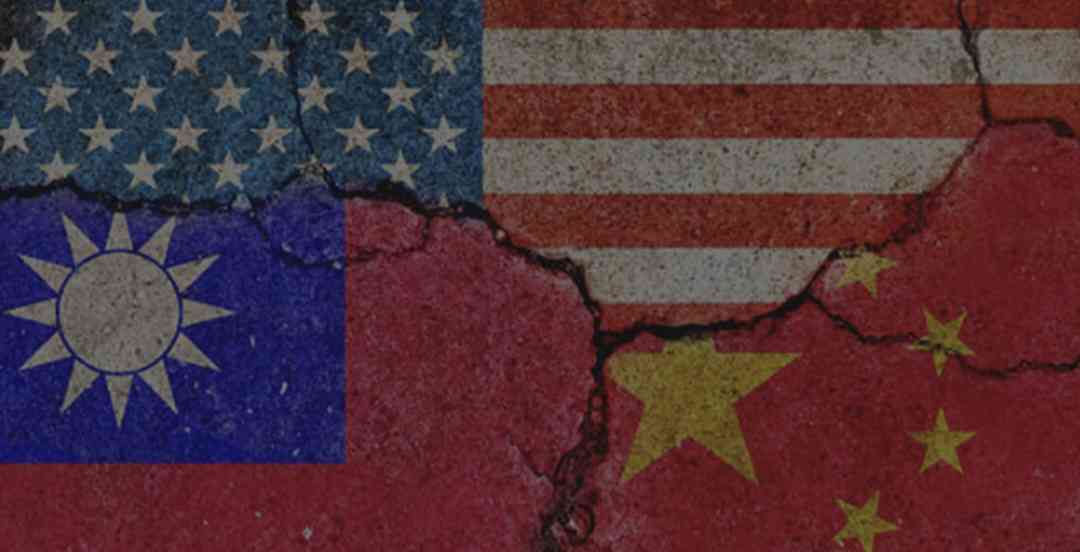
When Xi Jinping told Donald Trump in Thursday’s closed-door talks that Taiwan could lead to “clashes and even conflicts” and place the relationship in “great jeopardy,” according to China’s official readout, if mishandled, he was not issuing a novel warning. He was articulating the structural reality of U.S.-China relations: beneath every summit, every trade negotiation, and every climate pledge lies the unresolved question of Taiwan. It is the permanent fault line that ensures tensions are never far from the surface.
The United States’ “One China” policy, born of the Nixon-Mao rapprochement in the 1970s, and later formalized through the three U.S.-China communiqués, the 1979 normalization of relations, the Taiwan Relations Act, and the Six Assurances, deliberately left Taiwan’s status ambiguous. Washington acknowledged Beijing’s position but did not endorse it, while maintaining robust unofficial ties with Taipei. This ambiguity was meant to stabilize relations, but in practice it institutionalized uncertainty.
Xi’s warning to Trump echoes the language of successive Chinese leaders before him. Taiwan is the “core of core interests.” For Beijing, sovereignty is non-negotiable; for Washington, credibility in Asia requires resisting coercion.
There are several reasons why Taiwan Is Always Central. Starting with its geostrategic position, Taiwan sits astride the first island chain, a maritime barrier critical to U.S. and allied defense planning. Its semiconductor industry makes it indispensable to global supply chains. Also it has domestic legitimacy in China. The Communist Party has tied its legitimacy to eventual “reunification.” Any perception of weakness on Taiwan risks internal instability.
Last but not the least its an alliance credibility for the U.S. Washington’s commitments to Tokyo, Seoul, and Canberra are judged by its resolve on Taiwan. A retreat would reverberate across the Indo-Pacific.
Summits between Washington and Beijing follow a familiar choreography; trade concessions, military hotlines, or climate cooperation are announced, but Taiwan remains the shadow issue. Xi’s blunt words to Trump underscore that beneath the surface of cooperation lies a contest over sovereignty and legitimacy. The Taiwan Relations Act of 1979 requires Washington to make available to Taiwan the defense articles and services necessary for a sufficient self-defense capability, a precedent that Beijing views as interference. Each arms sale, each congressional visit, each naval transit through the Taiwan Strait reactivates the latent tension.
Xi’s warning of conflict and jeopardy is not mere rhetoric. Missteps, whether in arms transfers, diplomatic recognition, or military maneuvers, could trigger escalation. International law offers little clarity. UN Resolution 2758 settled China’s representation at the United Nations, but not Taiwan’s sovereignty, and the International Court of Justice has avoided the issue. Precedent suggests that ambiguity can manage disputes, but ambiguity cannot prevent crises when national identity is at stake.
The warning in Thursday’s talks should be read less as a threat than as a reminder. U.S.-China tensions were never far from the surface because Taiwan is not peripheral-it is central. Until the sovereignty question is resolved, every summit will carry the risk of rupture. The challenge for Washington and Beijing is whether they can manage a dispute that touches the nerve of national identity without allowing it to ignite the broader competition for global order.
- The brains behind Matavire’s immortalisation
- BCC flights multiple tenders
- In Full: Nineteenth post-cabinet press briefing: July 05, 2022
- Byo City polishes Manica Diamonds