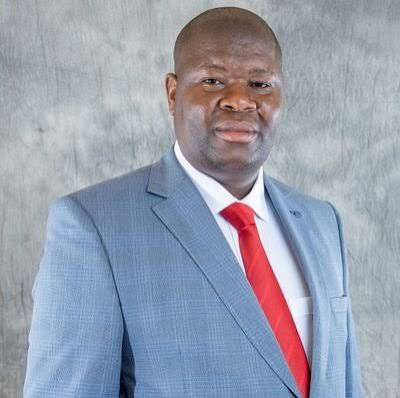
HARARE, Jun. 8 (NewsDay Live) — Speaker of the National Assembly Jacob Mudenda has urged Parliament’s chief directors and senior managers to embrace artificial intelligence and adopt a results-driven culture focused on measurable impact rather than administrative processes.
Addressing directors and senior managers during an Integrated Results-Based Management (IRBM) workshop recently, Mudenda said Parliament must leverage artificial intelligence and performance-based governance systems to improve service delivery and strengthen public trust.
“Directors, let AI be your compass, not your comfort zone. Integrated Results-Based Management demands that we measure ourselves not by meetings held or reports filed, but by lives improved,” Mudenda said.
“Embrace it with discipline, because a Parliament that cannot prove its impact cannot protect the people’s trust.”
Mudenda said Parliament was joining a growing number of legislatures worldwide that have adopted results-based governance models to improve accountability and effectiveness.
“It is precisely to guard against this institutional pathology that you are called upon to embrace Integrated Results-Based Management as the disciplined methodology that transforms the priorities of NDS2 and Vision 2030 into lived realities for the citizenry,” he said.
“In embracing IRBM, you join a growing cohort of parliaments that have recognised the necessity of results-based governance through disciplined and sustained application.”
He cited findings by the Inter-Parliamentary Union (IPU), which surveyed 112 national parliaments across six global regions and found that institutions with formal IRBM frameworks performed better on measures of effectiveness, public trust and oversight.
- Parly approves 2022 supplementary budget
- Call for fresh PVOs Bill public hearings
- Turkey denies human trafficking reports
- ZLHR pushes for PVOs Bill abolishment
Keep Reading
“At the global level, Sustainable Development Goal 16 calls for the development of effective, accountable and inclusive institutions at all levels,” Mudenda said.
“Critically, a landmark survey by the Inter-Parliamentary Union covering 112 national parliaments across six global regions established that institutions with formal IRBM frameworks achieved significantly higher scores on composite indices of effectiveness, public trust and oversight quality.”
Mudenda said IRBM offered a more suitable governance framework for the public sector than the widely used Balanced Scorecard (BSC) model.
“The choice of IRBM as the governing performance architecture warrants a candid examination of why alternative frameworks fall short of constitutional obligations,” he said.
“First, consider the Balanced Scorecard, which, despite its widespread uptake across sectors, reveals notable limitations when transposed to the public sector.”
He said the Balanced Scorecard does not adequately link institutional performance to national development goals or citizens’ welfare outcomes.
“Principally, it does not compel linkage to national development plans or citizen welfare indices. Relatedly, the BSC does not integrate the full cycle of planning, budgeting and evaluation that IRBM mandates as a unified whole,” Mudenda said.
The workshop focused on strengthening performance management systems within Parliament as the institution aligns its operations with National Development Strategy 2 and Vision 2030 targets.