
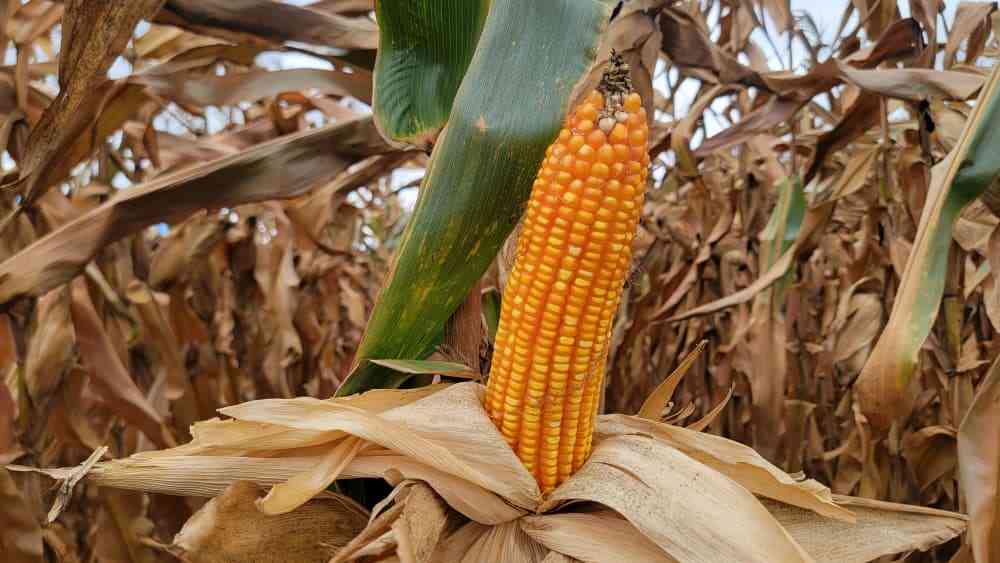
SOME West African nations, impressed by hybrid seed production in Zimbabwe and Zambia, are targeting agricultural best practices that have ensured food security in the neighbouring countries as the world battles climate change.
Zimbabwe and Zambia have successfully built strong hybrid maize systems that West Africa can adopt, with the International Institute of Tropical Agriculture (IITA) and CIMMYT recently launching a new Gates Foundation-funded initiative called “Resilient Maize Hybrids for Africa” (2026-2028).
The initiative is aimed at helping farmers to move from low-yielding open-pollinated varieties to high-performing, climate-resilient maize hybrids.
The transition has the potential to significantly increase yields, improve farmer incomes and strengthen food security across West Africa.

As part of this effort, scientists and partners from Ghana, Mali, Benin and Nigeria recently visited Zimbabwe and Zambia on a hands-on hybrid orientation and training tour.
In an interview with NewsDay during field demonstrations and insights into hybrid maize systems, innovation and interactions with scientists in Zimbabwe, IITA head of maize breeding John Derera said Zimbabwe’s hybrid seed systems for maize were more developed than those of West Africa.
“In West Africa and Central Africa, there is very low adoption of hybrids. Farmers are mainly growing what we call open-pollinated varieties,” he said.
- West Africa taps into Zim’s hybrid seed production
Keep Reading
“These varieties have a lower yield potential when compared with the hybrids grown by farmers in Zimbabwe and Zambia.”
Derera said IITA was also pushing maize breeders and scientists to learn how to develop the hybrids and to manage the quality of the seed that smallholder farmers will eventually grow.
“What we expect is that when scientists from countries in West Africa go back home, they apply the knowledge that they picked from Zimbabwe and Zambia in their own countries.
“They will develop demonstration platforms for hybrids. They will also use that knowledge to improve local seed systems so they can deploy hybrid technology to smallholder farmers in their countries.
“So it's the success of the hybrid technology in Zimbabwe and Zambia that we are tapping into and taking it to other countries that are behind.”
Sylvester Menseka, a maize breeder working for IITA and based in Ibadan, Nigeria, said adoption of hybrid seed was low, at 10 to 30%, while its above 80% is southern Africa.
“One of the learnings that we saw repeatedly is the demonstration of technology for farmers. So the technology that is demonstrated is basically varieties of maize, how they are planted in plant populations, but also how they perform between variety and other varieties,” he said.
“The second thing we learnt is how they operate, starting from the land preparation to planting up to harvest, how they operate as an industry, which is good for us because the breeding programme has taken the industrial approach.
“We have seen several technologies displayed, but we also learned one unique thing that we have not learned from the other seed companies: quality control and quality assurance.
“The theoretical part we used to read is a bit complicated, but the way it was explained was simple and easy to apply.”
CSIR Crops Research Institute in Ghana, principal research scientist and maize breeder Priscilla Francisco Ribeiro, hailed the demonstrations and trials they witnessed during the tour.
“When it comes to demonstrations, over the years, what I used to do back home was just to showcase my new varieties to farmers. But after coming here, I have realised that I can do more.
“I learned about the stress wheel. The stress wheel is something that if we showcase to farmers, they're going to appreciate the kind of population they will need and the planting distance for their crops,” she said.
“As breeders, it is important to do QA and QC for our parental lines and also our hybrids to ensure that our parental lines are pure and that the hybrids we have generated are truly hybrids.”
Seed Co Rattray Arnold Research head Tegwe Soko said hybrids had several advantages compared to open-pollinated varieties, especially in terms of yields.
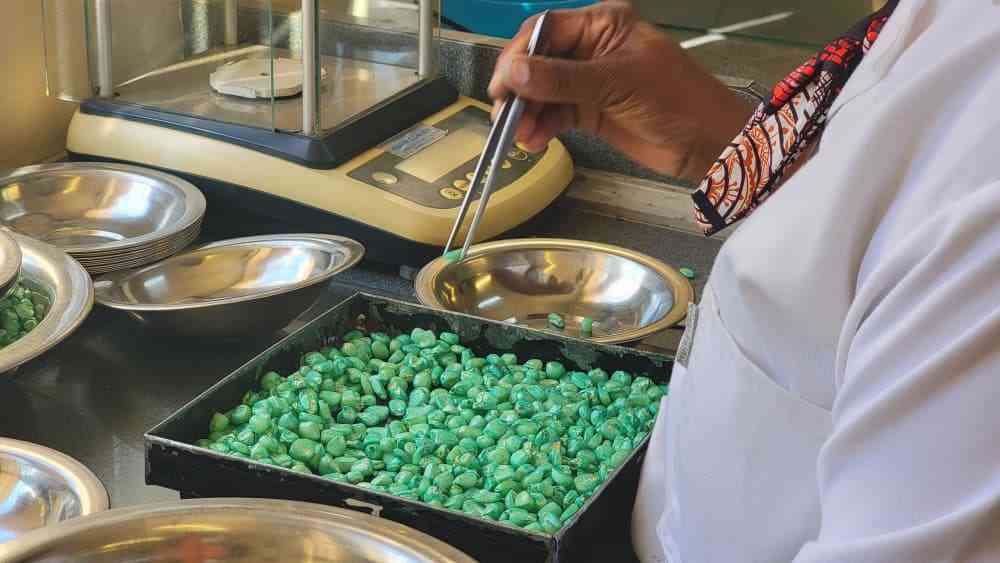
The main advantage of hybridisation adopted in this country is the high yield. We want more yields per unit area to improve productivity. Ultimately, there is still sufficient food. So yield is very critical,” he said.
“Besides that, you also improve the quality, the end-use quality, which means the milling percentage — the amount of flour you get from a certain unit — will also
improve.”
Soko said hybrids were also developed to counter the emergence of new diseases, mainly because of climate change.
“Pests are also changing. So what it means, these hybrids, they have to be adopted in terms of resistance against current pests and diseases that will be occurring in the country,” he said.
In developing hybrids, the breeders also look at other factors like water use and nitrogen use efficiencies.
“You will discover that here in Zimbabwe, our hybrid adoption is above 95%. And that is why Zimbabwe, as a country, we are up there in terms of food production because of the use of hybrids,” he said.






