The City Sports Centre in Harare has long been a venue for assembly, but on Tuesday, it became a theatre of the absurd—and the brutal.
As shards of broken glass from a human rights lawyer’s spectacles crunched underfoot, any lingering illusion that Zimbabwe’s "new dispensation" differed from the old autocracy was unceremoniously shattered.
The violence meted out against Doug Coltart was not merely a random scuffle; it was a calibrated message from the ruling Zanu PF: in the quest to keep 83-year-old President Emmerson Mnangagwa in power, the law is no shield, and the citizen’s voice is an inconvenience to be silenced by the fist.
We are witnessing a slow-motion constitutional coup, dressed in the tattered robes of "public consultation."
The parliamentary public hearings currently rolling across the country are ostensibly a mandatory step toward amending the supreme law of the land.
Yet, as the events in Harare and beyond have proven, these are not dialogues; they are orchestrated intimidation campaigns designed to facilitate a power grab that would see Mnangagwa remain in office well beyond his constitutionally mandated sunset in 2028.
The details of the proposed amendments are as chilling as the violence used to promote them.
The changes seek to extend the presidential term from five to seven years and, perhaps most dangerously, shift the election of the president from a popular vote to a parliamentary selection
- Paranoid Zanu PF regime cannot be trusted with solving Zim’s problems
- Bizzare twist to CCC activist torture saga
- Bizzare twist to CCC activist torture saga
- Storm over ZCTU ‘dirty capture’
Keep Reading
For a party that has mastered the dark arts of legislative dominance and patronage, this is a clear move to insulate the presidency from the unpredictable will of the Zimbabwean people.
Furthermore, the amendments would allow Mnangagwa to serve two more years beyond his current term, effectively moving the goalposts in the middle of the match.
The assault on Coltart serves as a microcosm of this national tragedy.
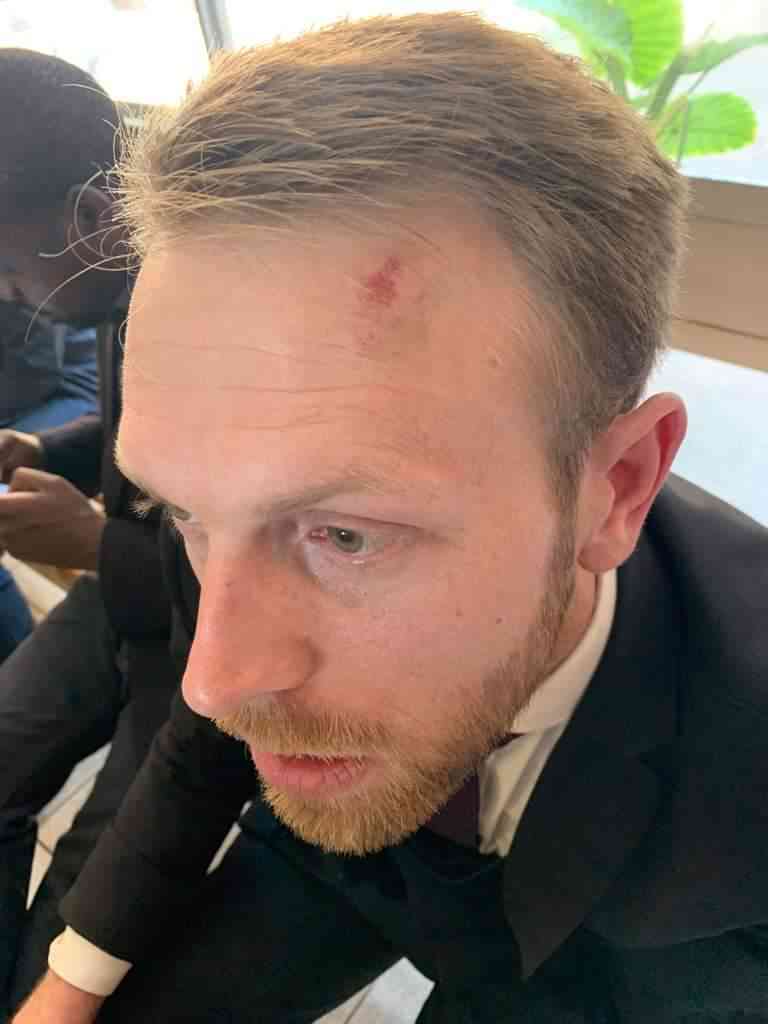
Coltart, a prominent human rights lawyer, was doing nothing more than exercising his right to dissent when he was shoved, slapped, and robbed of his mobile phone.
The audacity of the perpetrators is staggering: his phone was reportedly taken by Luckmore Tinashe Gapa, a member of the Zanu PF central committee, while another assailant was publicly identified as Nicholas Hamadziripi, a district official.
When high-ranking party officials feel emboldened to physically assault a lawyer in broad daylight at a parliamentary hearing, the "rule of law" becomes a punchline in a very dark joke
This is not an isolated incident of "exuberance" by supporters, as the state would have us believe. It is a pattern.
Just weeks ago, Lovemore Madhuku, leader of the National Constitutional Assembly, found himself in a hospital bed after being beaten by men he identified as police officers following a meeting on these very changes.
Tendai Biti, a former Finance minister and leader of the Constitutional Defenders Forum, has similarly faced the state’s wrath, having been detained for the "crime" of holding an unsanctioned meeting to oppose these amendments.
The government’s defence is a masterclass in gaslighting.
Authorities reject accusations of suppressing dissent, blandly stating that these reforms are being pursued "within the law".
But there is a profound difference between the letter of the law and the spirit of democracy
While the hearings are mandatory, the public’s input is, conveniently, non-binding on parliament.
At these sessions, critics find themselves drowned out by a cacophony of boos, heckling, and state-sponsored thuggery.
This is not a consultation; it is a coronation by coercion.
At the centre of this storm sits Mnangagwa himself, the man known as "the Crocodile" for his patience and legendary ruthlessness.
His public stance is one of studied ambiguity.
He has claimed he will step down in 2028, yet he has done absolutely nothing to discourage his party’s frantic efforts to ensure he never has to. This silence is a roar of approval.
Mnangagwa, who took power in the 2017 military coup that ousted Robert Mugabe, seems determined to follow his predecessor’s path: holding onto the presidency until the very end, regardless of the cost to the country.
The international community must not be fooled by the veneer of legality.
Both the 2018 and 2023 elections under Mnangagwa were marred by crackdowns on the opposition and were widely criticized by rights groups.
This latest move is simply the final nail in the coffin of Zimbabwean democracy.
Critics rightly argue that any move to extend presidential terms should, at the very least, require a national referendum.
But the ruling party knows it cannot win a fair fight at the ballot box; hence, the move to parliament and the use of the sjambok and the fist to clear the way
Zimbabweans deserve better than a future dictated by the broken glasses of their defenders and the stolen phones of their advocates.
The violence at the City Sports Centre is a warning: the Crocodile is not preparing to leave the pond; he is simply making it deeper.
If the world remains silent while Zimbabwe’s constitution is shredded by those sworn to uphold it, we are complicit in the birth of a new, even more resilient autocracy.
The blood on the floor of the hearing halls is a stain on the nation’s soul, and the time for diplomatic niceties has long since passed