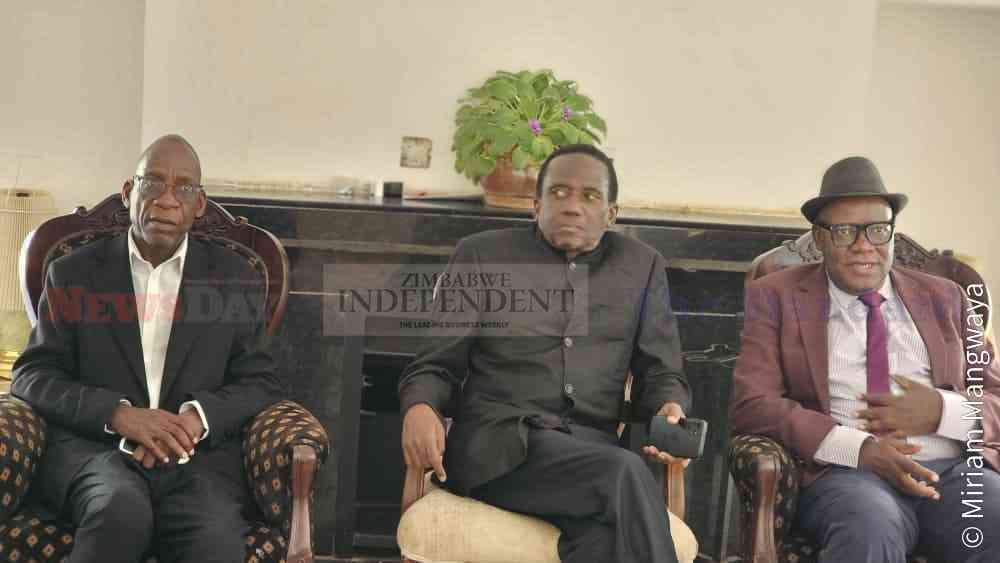
HARARE, Apr. 1 (NewsDay Live) — Opposition leaders on Wednesday announced they were boycotting ongoing public hearings on the Constitutional Amendment Bill No. 3 (CAB3), citing violence, intimidation and what they described as a “stage-managed” process that excludes dissenting voices.
Senior opposition figures Tendai Biti, Jameson Timba and Lovemore Madhuku said they had instructed their supporters not to participate in the hearings, which have been marred by disorder and allegations of ruling party interference.
“What we witnessed yesterday in Harare, and indeed in other parts of the country, cannot be described as a genuine consultative process. Citizens were denied the opportunity to speak, voices were drowned out, and in some instances violence and intimidation were deployed against those expressing dissenting views, including journalists, lawyers,” said Timba, flanked by Biti and Madhuku at a press conference.
“This is not consultation, this is orchestration. A constitutional process that excludes citizens cannot claim legitimacy. Our position as the DCP, in consent with our colleagues in the CDF and in the National Constitutional Assembly, we have taken a principled decision. We hereby disengage from the current public hearing process.”
Their withdrawal follows chaotic scenes at City Sports Centre in Harare on Tuesday where rowdy youths disrupted proceedings, blocked perceived opponents from speaking and forced an early shutdown of the session.
Human rights lawyer Douglas Coltart was assaulted and claimed his cellphone was stolen in the process.
Journalists were also targetted, with the Zanu PF youths blocking them from leaving the venue and demanding that they delete footage from cellphones and cameras.
Witnesses and civil society actors said the disruptions appeared coordinated, with critics alleging that participants were selectively mobilised to dominate proceedings in favour of the Bill.
- Madhuku slammed over Sikhala rants
- Madhuku slammed over Sikhala rants
- Polad a tool to sanitise Mnangagwa legitimacy
- Chamisa, Mnangagwa file nomination papers
Keep Reading
Opposition leaders argue the consultations have been reduced to a formality designed to legitimise a predetermined outcome. They accuse Parliament of allowing predominantly pro-Bill submissions while security forces allegedly clamp down on dissenting contributions.
At the centre of the controversy is a proposal within CAB3 to extend President Emmerson Mnangagwa’s term of office by two years — a move critics say undermines constitutionalism and democratic norms.
The Amalgamated Rural Teachers Union of Zimbabwe (ARTUZ) also announced its “total withdrawal and disengagement” from the hearings, describing the process as “captured by partisan interests” and no longer reflective of citizens’ will.
In a strongly worded statement, ARTUZ said the hearings had “degenerated into a theatre of coercion, fear, repression, ruling party rallies, violence and intimidation,” adding that participants were being bused in to manufacture consent rather than express genuine public opinion.
The union said its initial participation had been driven by “moral duty and civic responsibility,” but concluded the process failed basic standards of legality, transparency and democratic integrity.
The latest unrest builds on a pattern of tensions surrounding CAB3 consultations. Earlier reports documented violent disruptions at multiple venues, including the harassment and exclusion of perceived opponents. In a separate incident, officials linked to National Constitutional Assembly (NCA), led by Madhuku, were reportedly assaulted at their offices ahead of the hearings, underscoring a broader climate of intimidation.
Critics warn that the credibility of the constitutional reform process is now in question, with calls mounting for authorities to guarantee safety, neutrality and genuine public participation in any further consultations.