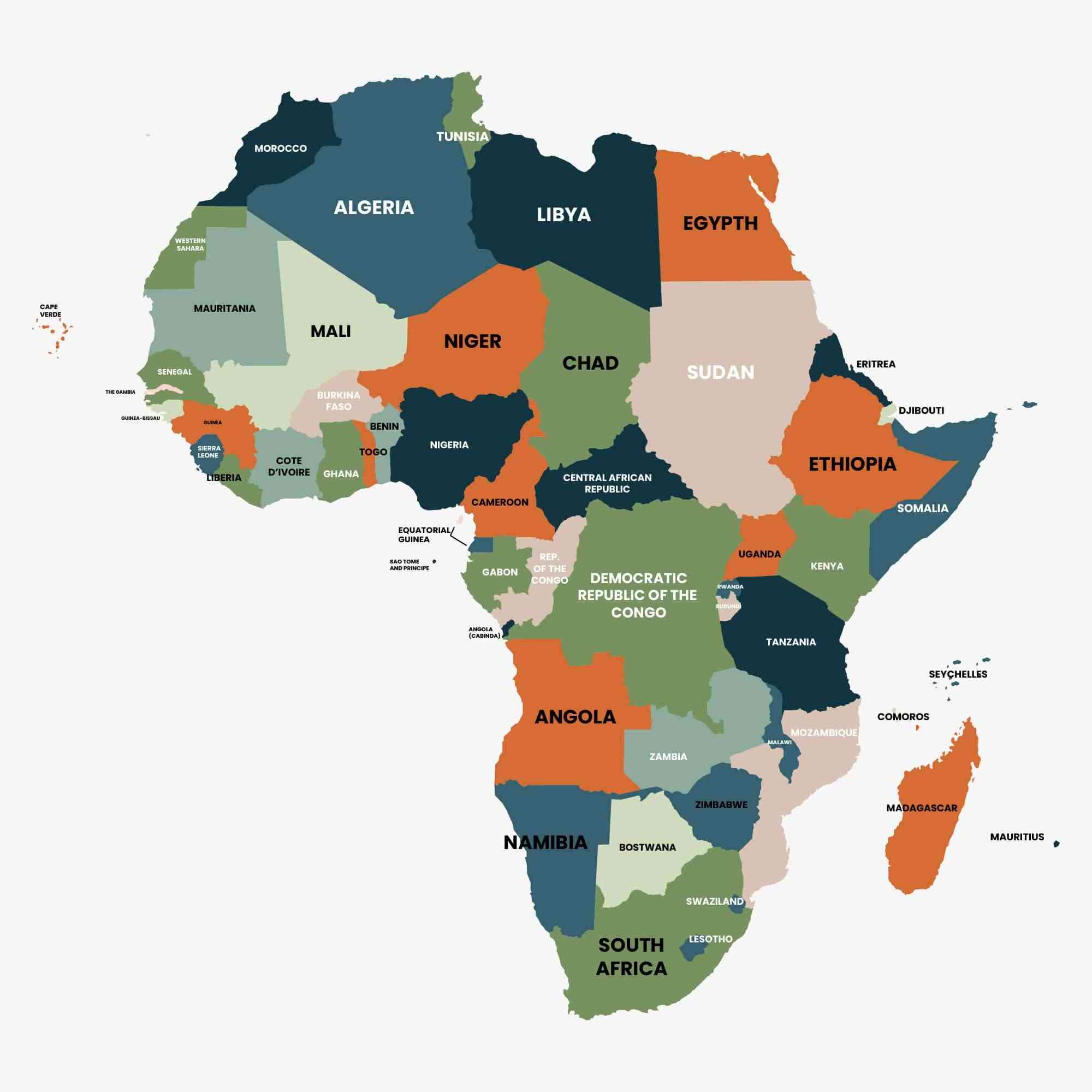
AFRICA’S paradox is obscene and almost unbearable to contemplate, as some of the continent’s “poorest” people are not dispossessed squatters but landowners who inhabit ancestral plots of two hectares or more, stretching from South Africa’s communal reserves to Kenya’s rural hinterlands, from Congo’s vast fallow lands to Morocco’s village commons, yet they remain ensnared in poverty.
The contradiction is not born of scarcity, but of symbolism. Their land is “owned” in ceremony, not in law; it is inherited in memory, but not in title. Despite over 60 years of so-called independence. Africa has failed to recalibrate the colonial economic system that extracted value from their own land for their erstwhile colonisers, who still have full ownership of most of that land today by simply converting it into title, collateral and capital for Africans.
The colonialists understood that the first prize of conquest was land, which is why even before minerals, labour and taxation, they seized title.
It was the title that became the alchemy that transformed African land into European wealth, into the bankable collateral and effective power that white monopoly capital still wields today on the African continent.
Africans, meanwhile, remain the figurative nominal custodians of “valueless” land, which is ancestral, communal and untitled in nature.
The tragedy is not that Africans lack land, for Africa has an abundance of land. The tragedy is that Africans lack titles to that land.
This ludicrous contradiction exposes the unfinished revolution of African independence because the land is plentiful, but the deed is absent, the land is inherited, but the capital is denied; therefore, Africans are trapped in a colonial afterlife where, for them, land ownership is symbolic and not sovereign or bankable.
Until the title is wrested from ceremonious existence to the African and reassigned as capital, Africa will remain a continent rich in land but poor in wealth.
- Zim headed for a political dead heat in 2023
- Record breaker Mpofu revisits difficult upbringing
- Tendo Electronics eyes Africa after TelOne deal
- Record breaker Mpofu revisits difficult upbringing
Keep Reading
The false narratives of poverty
We are endlessly lectured by academics, NGOs and development bureaucrats that Africa’s poverty endures merely because of limited agricultural productivity, poor infrastructure, lack of market access, vulnerability to climate change, absence of financial services, restricted non-agricultural opportunities, and the long shadow of historical marginalisation, among many reasons. These explanations are not wrong, but they are evasions from the real land question. They are symptoms paraded as causes, convenient alibis that conceal the deeper structural betrayal. The real crisis is not productivity, nor climate, nor infrastructure; it is the title to land. Without title, land cannot be collateral and without collateral, land cannot be capital; just as without capital, land cannot be converted to wealth. Africans are trapped in an existence crafted by colonialism for Africans, where land ownership is not sovereign, where hectares of ancestral land remain untitled and, therefore, economically sterile. As a result, poverty persists not because Africans lack land, but because Africans lack title deeds to that land. Until the title is wrested from ceremony and reassigned as capital, the continent will remain rich in land yet poor in wealth, a grotesque paradox sustained by false narratives and institutional cowardice.
Why communal land is not bankable
Land everywhere is finite and it is this finiteness that underpins its value, yet Africa stands as the grotesque exception: a continent where land is abundant but economically sterile.
The Democratic Republic of Congo alone harbours the largest reserves of fallow agricultural land on earth, while the average African in rural communal areas sits on at least a hectare of land, but this land is untitled, trapped in ancestral symbolism, stripped of legal recognition. Untitled land cannot be mortgaged, leveraged or securitised; therefore, it cannot unlock credit, cannot attract investment, cannot empower its custodians. It remains land without sovereignty, inheritance without capital.
The colonialists understood the alchemy of title: less than two centuries ago, they seized African land, stamped it with deeds and instantly converted it to European wealth.
The title was the instrument of transformation; land became collateral, became capital and empire. Africans, meanwhile, remain bound to nominal ownership, denied the legal instruments that convert abundance into prosperity.
The question is not rhetorical but revolutionary: if colonialists could create wealth by assigning title to land, they did not own, why can’t Africa do the same for its own people today?
The custodians of a new revolution
The first generation after independence squandered its historic mandate. Instead of dismantling colonial property regimes, it tinkered at the margins, content to inherit structures designed to keep Africans symbolically rich in land but materially poor in capital.
Post-1980 governments entrenched this betrayal, preserving communal ownership as ritual while perpetuating poverty as destiny. The unfinished revolution now belongs to the millennials and their offspring, Gen Z, the generation that must refuse to inherit poverty disguised as heritage. Gen Z must demand title, not tokenism. They must redefine land not as ancestral inheritance but as bankable capital, a lever of empowerment rather than a relic of memory. They must reject the false orthodoxy that land value derives only from productivity or infrastructure, for land value is not natural law; it is a human construct, monopolised by colonial valuation systems that converted African land to European wealth. Post-colonial Africa must seize that monopoly, recalibrate valuation and reassign title to its rightful custodians. This is not reform; it is revolution, and it is Gen Z’s revolution to lead, under the tutelage of millennials, to finally break the chains of symbolic ownership and convert abundance to sovereignty.
The questions we must confront
At the heart of Africa’s paradox lies a set of uncomfortable questions that demand confrontation rather than evasion.
Who truly determines the value of land? Is land inherently valuable because it is finite or is it worth a human construct imposed by erstwhile systems of colonial power?
Why, decades after independence, do colonial valuation regimes continue to dominate Africa’s property systems, dictating who can convert land into capital and who must remain a symbolic custodian of “valueless” inheritance?
Why do Africans, sitting on hectares of ancestral land, remain trapped as nominal holders while outsiders extract wealth from titled concessions? These questions expose the intellectual fraud of post-colonial governance: the refusal to recalibrate land valuation and ownership, the cowardice of clinging to ritual instead of sovereignty.
Until Africa seizes the authority to define and assign value to its own land, the continent will remain hostage to colonial constructs, rich in land but poor in capital, abundant in inheritance yet bankrupt in empowerment.
Title deeds as empowerment
The corrective action is disruptive yet deceptively simple: issue title deeds. Allocate real value to land by formalising ownership, stripping it of its symbolic shackles and converting it to capital.
Title transforms land into collateral, into credit, credit into investment and investment into wealth.
It is the missing link between abundance and empowerment. Africans must be enabled to leverage their land to access finance, diversify livelihoods and build enterprises that transcend subsistence.
Less than two centuries ago, Europeans encountered African land and, through the blunt instrument of title, converted it to wealth, empire and power. They understood that the title was not paperwork; it was sovereignty, it was capital, it was the foundation of modern economies.
Today, Africans must reclaim that logic for themselves, not as a mimicry of colonial practice but as a revolutionary recalibration of ownership. To issue title deeds is to weaponise land against poverty, to dismantle the colonial afterlife of symbolic ownership and to finally empower Africa’s citizens to transform inheritance into prosperity.
- Wellington Muzengeza is a political risk analyst and urban strategist offering incisive insight on urban planning, infrastructure, leadership succession and governance reform across Africa’s evolving post‑liberation urban landscapes.