IN Zimbabwe, over 60% of the population live in rural areas where access to healthcare is limited by distance, cost and infrastructure deficit.
People walk 15km to 20km to reach the nearest clinic, often delaying care until it’s too late.
Chiedza Mushawedu, co-founder and executive director of ZimbosAbantu Healthcare on Wheels, witnessed these challenges while working for a private hospital in 2016.
“We were seeing preventable deaths from treatable conditions, mothers giving birth at home without skilled assistance and people living with undiagnosed chronic illnesses simply because care was out of reach,” Mushawedu explains.
In 2021, Mushawedu founded ZimbosAbantu to improve healthcare access in these communities.
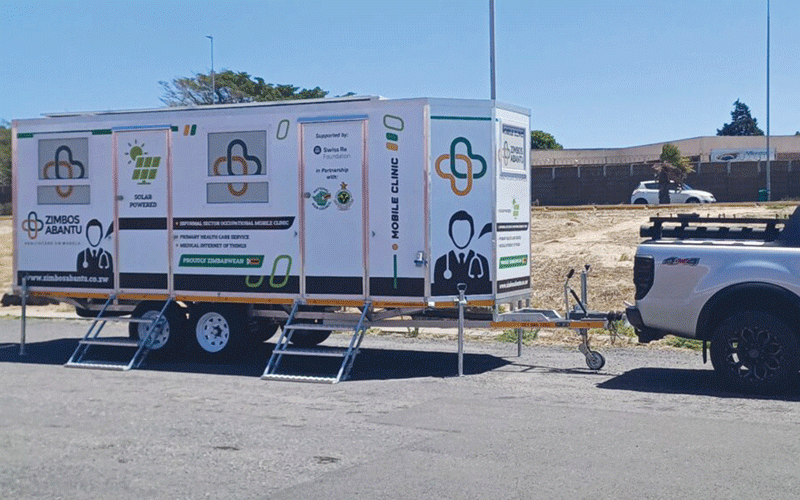
By repurposing vans into solar-powered, tech-enabled mobile clinics, the start-up brings healthcare directly to those who need it most.
Mushawedu says her team has cut walking distances from an average of 15km to just three, making early diagnosis and treatment possible right where people live.
Care on wheels
ZimbosAbantu currently operates 10 mobile clinics, each strategically deployed to reach communities with the greatest need.
According to Mushawedu, each clinic is a fully equipped unit built to operate in off-grid areas.
The clinics are powered by solar panels with battery back-up, fitted with refrigeration for vaccines and medicine and include a compact diagnostic lab called HealthCube, a portable device that performs over a dozen essential tests including blood glucose, haemoglobin and malaria.
Mushawedu explained that getting a clinic operational requires a combination of resources, infrastructure and people.
Each unit costs about US$120 000 to set up, she said.
The units provide primary healthcare, maternal and child services, dental and eye care, immunisation, HIV testing and NCD screenings for hypertension and diabetes.
“We prioritised services that address the most common community health needs while remaining cost-effective and portable,” Mushawedu said.
For more complex cases, patients are referred to partner hospitals under the supervision of the Health and Child Care ministry.
The patient experience
Patients first engage with community health mobilisers who serve as ambassadors, receiving basic health education and on-spot blood pressure checks.
Once they arrive at the clinic, they’re registered digitally.
“We build a digital health record for every patient, something many are experiencing for the first time,” Mushawedu says.
The data helps to track chronic illnesses like diabetes and hypertension, enabling continuity of care even when the clinic moves to another location.
Next, the patient moves to triage, where vitals are checked.
From there, they are directed to the consultation area, where a nurse or doctor conducts an assessment and offers a diagnosis.
If medication is required, they receive it immediately from the solar-powered pharmacy fridge or dispensary and if necessary, a follow-up visit is scheduled during the next mobile clinic visit.
The vans are designed with accessibility in mind, featuring ramps for people with disabilities, private consultation spaces and staff trained on gender sensitivity.
On an average day, each van serves between 18 and 25 patients, maintaining quality while ensuring reach.
“Our goal is to bring healthcare within 1km of every household in the communities we serve,” Mushawedu notes.
Beyond patient numbers, ZimbosAbantu measures its impact through a robust data-driven system that tracks 18 core health metrics daily, weekly, monthly or annually.
These indicators span the full HIV and NCD cascade, from preventive health and screening to chronic care and palliative support.
“We don’t just count patients; we track outcomes,” Mushawedu explains.
“Our data allows us to understand trends in maternal health, vaccination coverage, chronic disease management and behaviour change around sexual and reproductive health.”