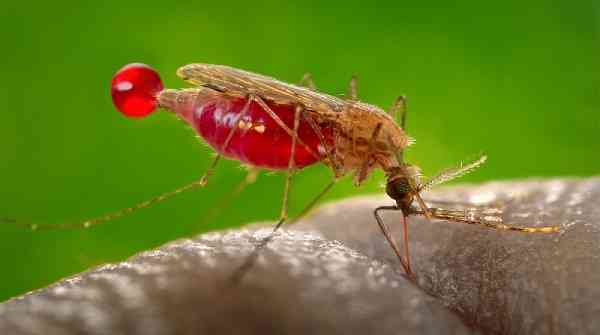
HEALTH authorities in Rushinga district in Mashonaland Central province have been jolted into action in a bid to reduce the impact of increasing malaria cases in the area.
Last year, the district recorded four malaria-related deaths.
Speaking to journalists during a media tour recently, Rushinga district health promotion officer Vincent Mhanda said they were using several interventions to eradicate the disease.
“This year, we have seen an increase in malaria cases like any other year. In Rushinga, malaria affects almost everyone as we are among the most high burden districts in terms of malaria in the country.
“As a district, we are in the control phase where we spray, we conduct indoor residual spraying (IRS). Usually, we carry out the programme from October to December. In terms of IRS, we have 24 wards where we carry it out.
“Currently as a district, in terms of awareness, which is a social behaviour change, in terms of malaria, we are also doing community engagement meetings, where we are capacitating our communities with health information so that they may be able to make informed decisions in terms of malaria prevention.”
Mhanda said the district was also taking advantage of public forums, including ward assembly meetings where they meet communities and provide standardised messages of malaria ensuring that everyone has the same message in terms of malaria prevention.
“As a district, we are also making use of community structures where we have trained a special group which is called community action group, in our respective wards, where we have volunteers or representatives of communities coming together as a group in terms of having their own local solutions, developing their own local solutions after they have identified their own key drivers of malaria,” he said.
- Artist Richard Mudariki’s vision for a Zimbabwean contemporary art fair
- Massive ZRP vehicle theft scam exposed
- Suns come within one game of eliminating Pelicans
- Uhuru Cup: Giants promise fireworks
Keep Reading
Mhanda said the communities developed their own local solutions to prevent malaria.
He said malaria cases were recorded in the district throughout the year.
Meanwhile, Rushinga district medical officer Delight Mutsamba said they had the highest burden of malaria since 2023.
“However, through interventions that we have put in place we managed to minimise our malaria deaths, hence, controlling the outbreak, which I think we ended on week 27.
“We have recorded only four cases of malaria deaths. Our aim is to even go lower, which also signifies the importance and effectiveness of interventions that we have highlighted,” he said.
In Zimbabwe, malaria is endemic, but the 2025 malaria trend exceeded the seasonal threshold as early as week 6 onwards.
From January to July this year, 126 229 confirmed malaria cases were reported across Zimbabwe, representing a 296,8% increase compared to the same period in 2024 (31 813).
Mashonaland Central contributed the highest number of cases with 49 944 cases (39,6%), followed by Manicaland with 27 398 cases (21,7%).