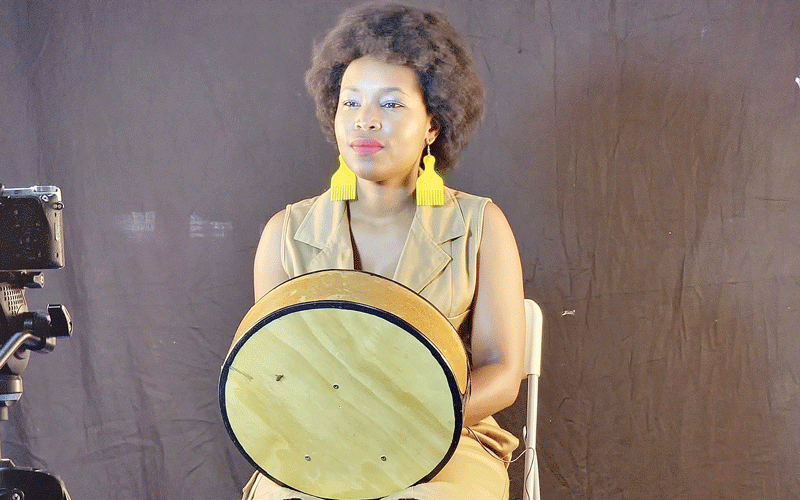
MBIRA musician Alethea Dzambo says fusing the Nyunganyunga mbira melodies with reggae tunes was a way of embracing cultural heritage defining her identity as a Zimbabwean and African woman.
Speaking to NewsDay Life & Style ahead of tomorrow’s launch of her extended play (EP) titled Uripi on her website (aletheadzambo.com) and social media platforms such as Facebook, Instagram and YouTube, Dzambo said Zimbabwe has a rich culture and heritage which need to be continuously shared with the world.
“My advice for mbira artistes is to keep learning and telling our African stories through mbira music,” she said.
Giving an insight on some of the songs to be featured on the forthcoming EP, Dzambo said the track Tigarisane speaks about how a young lady struggles to contain herself whenever she is in the presence of a man she feels deeply in love with, yet the prospective partner seems not to notice her.
“On this track a young lady risks being despised for making the first move to a man since we are socialised to believe that it is unacceptable for women to pursue men. This song talks about what the lady longs to say to a guy despite being frustrated when all her efforts to get his attention fail,” she explained.
“Tigarisane encourages self-expression and the need to go against certain beliefs. It simply teaches people how being brave enough not to conform can liberate them.”
Dzambo said the song Uripi is a bitter cry of a first wife in a polygamous marriage.
“The song Uripi talks about how vahosi (the first wife), feels abandoned and neglected by a man she met and married in her youth. The song describes how broken and furious this woman is for being the backbone and pillar of her family. It gives an insight into how she feels used, wasted and rejected,” she noted.
- I rejected Zanu PF scarf: Burna Boy
- NMB workers take on employer
- Mbavara eyes to resurrect Matavire’s music legacy
- I rejected Zanu PF scarf: Burna Boy
Keep Reading
“It also sheds light on how adultery or polygamy can have a detrimental effect on women’s mental health.”
The only English song on the EP is Lost. Through the song, Dzambo highlights how women often can be immersed into relationships to the point of losing their identity.
“The song talks about how one can neglect one’s goals as they go about day-to-day activities taking care of their loved ones. Although the song is directed at a romantic partner, it speaks about how easy it is for women to become trapped in a cycle of meeting other people’s needs while they disregard their own,” she further explained.
“It also encourages people, especially women to develop a balance where they can be carers, mothers, aunties, sisters and wives without neglecting themselves due to the pressure imposed on them by society.”
Dzambo lamented lack of investment and poor structures within the music industry which she said could be attributed to the state of the country’s economy.
“Arts is regarded as a luxury, so you have a situation where people spend on basic needs and have little to no disposable funds for luxuries such as music. It can be challenging to make a living from music in Zimbabwe,” she said.
Indicating that local artistes should, however, take advantage of technology to maximise on their earnings, she added: “Technology has created an opportunity for musicians to access markets outside Zimbabwe. Gone are the days where one could only make a living from live performances and selling CDs. Now we can take advantage of the internet access and add on to the traditional ways of revenue streams.
“As much as it can be a bit difficult for artistes to generate revenue in this country, our music can still be consumed outside through online streaming platforms. There are opportunities for artistes to be part of festivals in and outside the country, as well as collaborate with other musicians for growth.”