ZIMBABWE is staring at the prospect of a humanitarian emergency that could overwhelm an already fragile economy if authorities fail to respond with urgency, planning and honesty.
For weeks, warnings had been circulating that anti-immigrant groups in South Africa intended to intensify their campaign against foreign nationals, setting June 30 as a deadline for migrants — documented or not — to leave.
The warning was neither sudden nor hidden.
It played out publicly across social media, community meetings and news reports.
Yet Zimbabwe appears to have been caught reacting rather than preparing.
Now the consequences are unfolding at alarming speed.
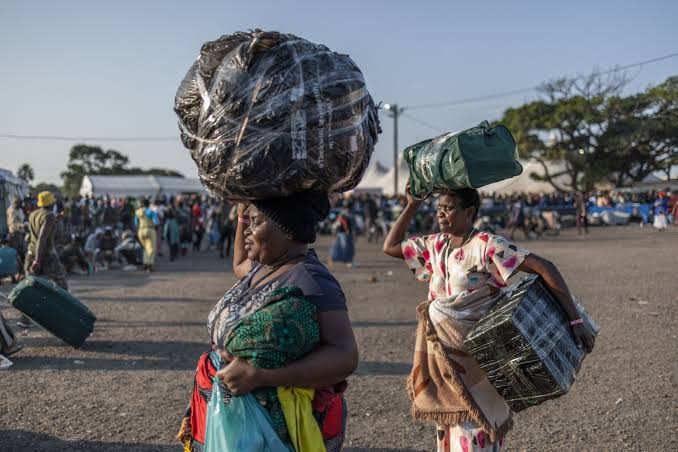
Hundreds of buses carrying frightened Zimbabweans, Malawians and other African nationals are arriving at Beitbridge everyday.
Others continue to pour into Harare and towns across the country after abandoning jobs, homes and belongings in South Africa to save their lives.
- Mavhunga puts DeMbare into Chibuku quarterfinals
- Masvingo turns down fire tender deal
- Bulls to charge into Zimbabwe gold stocks
- Byo author eyes SA award
Keep Reading
This is no longer simply an immigration issue.
It is a humanitarian crisis.
Many of those returning have nowhere to go.
They arrive with little more than the clothes they are wearing.
Some have children who have missed school.
Others have elderly relatives requiring medical attention.
Families have been separated.
Livelihoods have disappeared overnight.
Zimbabwe’s economy is already under immense pressure.
Hospitals struggle with staffing and medicine shortages.
Schools require more resources.
Local authorities battle to provide clean water.
Social welfare programmes are chronically underfunded.
Local authorities struggle to collect refuse.
Youth unemployment remains stubbornly high.
The millions of people in foreign lands were running away from some of the problems highlighted above.
And now some of them have been forced back to stare at the ghostly reminders of the lives they ran away from.
Adding tens of thousands of distressed returnees into such a fragile environment inevitably places enormous pressure on food supplies, healthcare, temporary accommodation, transport and social protection systems.
Compassion alone cannot feed hungry families.
Government deserves recognition for providing humanitarian assistance to returning migrants and extending support to Malawian nationals transiting through Zimbabwe.
Ordinary citizens, churches and charitable organisations have also shown commendable solidarity by providing food, clothing and transport.
But isolated acts of kindness cannot substitute for a co-ordinated national response.
The uncomfortable reality is that much of this should have been anticipated.
The June 30 deadline did not emerge overnight.
It offered authorities valuable time to activate disaster preparedness mechanisms, establish temporary reception centres, pre-position food supplies and medical teams, identify emergency accommodation facilities and co-ordinate with development partners.
Border facilities should have been strengthened weeks in advance to cope with increased arrivals.
Immigration officers, health workers and social welfare officials should have been deployed in larger numbers.
Temporary shelters equipped with sanitation facilities, clean water and child protection services could already have been operational.
Government should also have launched a nationwide information campaign explaining available assistance, registration procedures and referral services for returning citizens.
Instead, the country is once again responding after the crisis has arrived.
Even more worrying is the possibility that the current movement represents only the first wave.
Should violence continue or intensify, far larger numbers could return home over the coming weeks and months.
Zimbabwe must, therefore, shift immediately from emergency reaction to contingency planning.
The country needs a comprehensive national humanitarian response led by government but involving local authorities, churches, humanitarian agencies, business organisations and international development partners.
Reception centres must be expanded. Emergency food stocks should be mobilised.
Temporary healthcare facilities should be established at key border crossings.
Psychological counselling must be made available for traumatised families.
Schools should prepare to absorb children whose education has been abruptly disrupted.
Beyond the immediate emergency lies a deeper economic challenge.
Many of those returning were supporting families through remittances that have become one of Zimbabwe’s largest sources of foreign currency.
Their sudden return threatens household incomes across the country.
Families that depended on relatives working in South Africa may soon require social assistance themselves.
The long-term solution does not lie at Beitbridge.
It lies in building an economy capable of creating decent jobs at home so that Zimbabweans are not forced to seek survival elsewhere.
The xenophobic violence unfolding in South Africa is a stark reminder that migration driven by desperation carries enormous risks.
No Zimbabwean should have to choose between unemployment at home and persecution abroad.
This crisis demands swift action, regional cooperation and careful planning.
Above all, it demands recognition that humanitarian disasters cannot be managed through improvisation.
They require preparation long before the first bus arrives at the border.