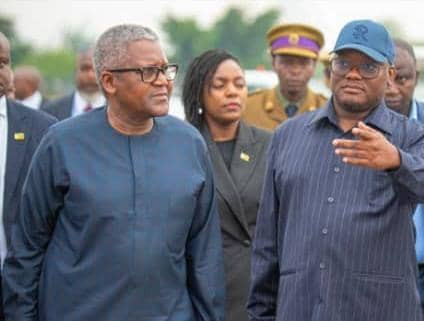
AFRICA’S richest man, Aliko Dangote, is back in Zimbabwe — and with him comes both opportunity and a test.
The Nigerian billionaire, who built an empire from humble beginnings, epitomises what vision, discipline and strategic foresight can achieve on African soil.
His journey from trading sugar and salt to dominating the continent’s cement industry — and now venturing into oil and gas — is a testament to what can be done when business meets purpose and efficiency.
Dangote’s business model is simple yet transformative: identify market gaps, invest heavily in production capacity and expand strategically across borders.
Through this approach, Dangote Cement has become the largest producer in Africa, while his oil refinery project is set to reshape Nigeria’s energy landscape and reduce its dependence on fuel imports.
Now, he has turned his eyes once again to Zimbabwe — a country whose construction boom is crying out for affordable cement and reliable supply chains.
Across the region, cement prices tell a compelling story.
In South Africa, premium cement sells for around ZAR114 — roughly US$5,50 to US$6.
- Open letter to President Mnangagwa
- Feature: ‘It’s worse right now than under Mugabe’: Sikhala pays the price of opposition in solitary cell
- Masvingo turns down fire tender deal
- Human-wildlife conflict drive African wild dogs to extinction
Keep Reading
In Zambia, it costs roughly the same, while in Botswana, the price hovers around 100 pula or US$7,50.
In Zimbabwe, however, a 50kg bag of cement costs at least US$10, if not more.
The difference is not driven by global commodity prices or input costs alone — it reflects inefficiency, limited competition and the cumulative cost of doing business in a market weighed down by corruption, bureaucracy and poor infrastructure.
Dangote has seen this before.
When he first visited Zimbabwe in August 2015, he reportedly left frustrated by the corrupt and rent-seeking behaviour he encountered among senior officials and bureaucrats.
According to those familiar with that visit, some powerful figures demanded bribes and “facilitation fees” before any investment could proceed.
Disgusted, Dangote walked away — and Zimbabwe lost what could have been game-changing investment.
His return offers a rare second chance — both for Zimbabwe’s leadership and for its struggling economy.
Dangote’s proposed US$1 billion investment in cement production could do more than reduce prices.
It could inject competition into a market long dominated by a few players, drive efficiency, create jobs and stimulate related industries — from logistics and quarrying to construction and infrastructure development.
But that potential hinges on one condition: a clean, predictable and corruption-free business environment.
Dangote is not short of options.
His conglomerate operates successfully in more than a dozen African countries, many with stronger governance systems and clearer investment frameworks than Zimbabwe.
If the same old gatekeepers try the same old tricks, Zimbabwe will once again be left behind.
The country’s booming construction industry — from housing development to road rehabilitation — needs more than cement; it needs credibility.
Investors like Dangote are watching not just the profit margins, but the integrity of the system.
Every bribe demanded, every permit delayed, every arbitrary policy change sends a signal that Zimbabwe remains a high-risk destination.
For a nation desperate to attract foreign direct investment, the stakes could not be higher.
Dangote’s presence is not just about cement — it’s about trust.
If the government truly wants to prove that the “new dispensation” is open for business, this is its moment.
Cutting red tape, streamlining approvals and protecting investors from political interference would not just welcome Dangote — it would welcome the world.
Zimbabwe lost the first chance in 2015 to corruption and arrogance.
The question now is whether the country will seize this second chance to redeem itself — or repeat the same mistakes that have turned opportunity into tragedy time and again.