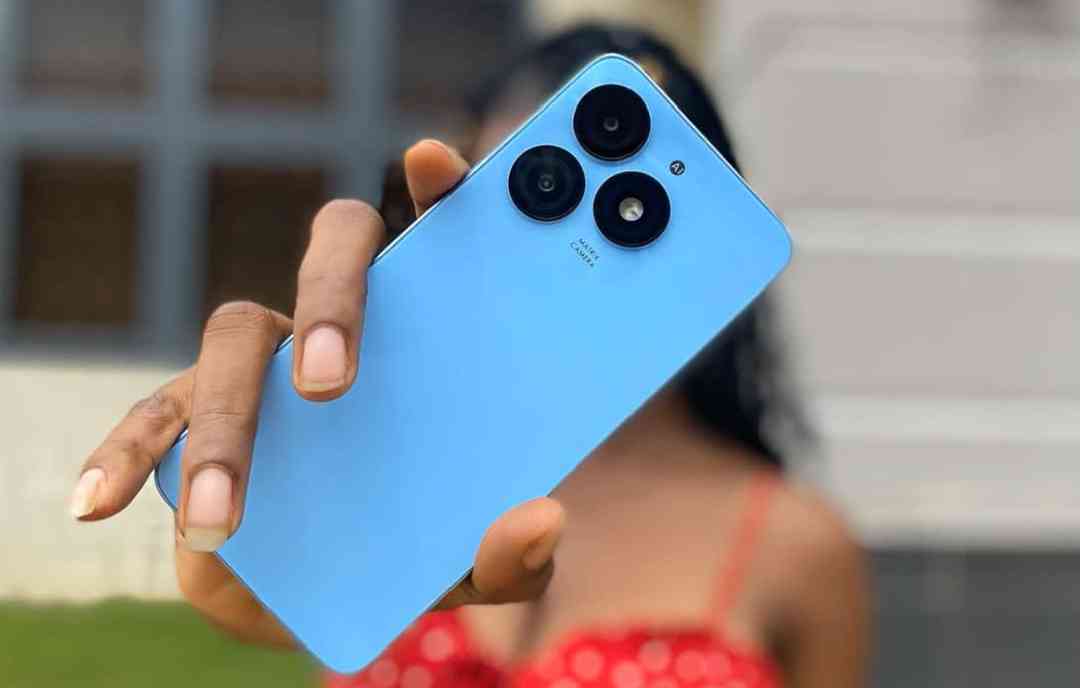
For years, the mention of an Itel smartphone provoked a predictable reaction, typically a smirk, a roll of the eyes or a warning to look elsewhere.
Historically branded as the ultra-cheap option for people who just needed to make phone calls and send WhatsApp messages, Itel has carried a heavy reputation for being cheap and nasty.
But the budget smartphone market has shifted dramatically and Itel has rewritten its own playbook with recent releases like the P55 series, the City 100, and the ambitious S26 Ultra.
To find out if Itel phones are really that bad, we looked past the aggressive marketing and evaluated how these ultra-budget devices handle real-world demands.
At the heart of the debate is what runs under the hood, which reveals a distinct silicon reality regarding whether Unisoc can handle the modern digital citizen.
To keep prices low, Itel relies heavily on budget chipsets, primarily from Unisoc, such as the octa-core T7300, alongside entry-level MediaTek chips.
If your daily digital life consists of scrolling through TikTok, jumping between WhatsApp groups and checking emails, these processors actually hold their ground.
Paired with memory fusion, which uses storage space to artificially boost RAM up to 16GB or 24GB on paper, multitasking on fresh devices is surprisingly responsive and everyday animations are smooth, often helped by the inclusion of 90Hz and 144Hz refresh rate screens on newer models.
- Are Itel phones really that bad?
Keep Reading
However, these are not gaming rigs or heavy-duty content creation tools.
Try to render a high-definition video or play graphics-heavy games and the chips immediately choke, leading to frame drops, severe thermal throttling and aggressive background app closures when the phone is pushed beyond casual use.
Furthermore, simple tasks like waiting for the virtual keyboard to pop up can occasionally suffer from a noticeable, frustrating delay.
When balancing price versus value, it becomes clear what your money actually buys and price is where Itel wins its crown.
In a market where mid-range devices easily breach the $300 mark, Itel dominates the sub-$75 to $150 space.
On the entry-level end, with models like the P70 and City 100 priced between $75 and $100, you receive a 90Hz LCD, a 5000mAh battery, basic AI integration and a functional plastic build.
Stepping up to the premium budget tier, which includes the S25 and S26 Ultra priced between $120 and $200, you gain access to curved AMOLED displays, up to 144Hz refresh rates and massive 6000mAh batteries.
On paper, what you get for the money is staggering, as features like high-brightness AMOLED panels and curved glass were entirely unheard of at this price point a few years ago.
In terms of sheer feature-per-dollar ratio, Itel offers undeniable, unmatched value for tight budgets.
The camera experience highlights the contrast between marketing megapixels and everyday reality.
Itel proudly slaps 50MP AI Dual Camera badges on the backs of its phones, but as any seasoned tech user knows, megapixels don’t always equal quality.
In broad daylight or well-lit environments, the primary sensor takes decent, shareable photos because the colors are reasonably vibrant and the on-board AI processing does a fair job handling basic HDR exposures for casual social media uploads.
The illusion breaks down the moment the sun sets, however, as the cameras struggle immensely in low-light environments where shutter lag increases, images become muddy and digital noise takes over.
The auxiliary lenses are mostly decorative, adding very little to the actual photographic experience, meaning that if you are a digital professional relying on crisp, high-fidelity mobile photography, this camera will feel like a massive bottleneck.
Battery life remains the undisputed saving grace of the Itel lineup.
If there is one area where Itel consistently hits a home run, it is power endurance, as devices are routinely equipped with massive 5000mAh to 6000mAh batteries.
Because the low-tier Unisoc chips and lower-resolution screens consume very little power, these phones are absolute endurance champions.
A single charge easily guarantees a full day of heavy screen time and up to two days for casual users.
For anyone living in areas plagued by unpredictable power grids or rolling blackouts, this extreme battery reliability is a major selling point, especially now that charging speeds have improved to range from an acceptable 18W to much faster 45W capacities on higher-end variants.
Evaluating build quality and longevity reveals what is often described as the 18-month wall, balancing how a phone feels out of the box with how it holds up after months of daily abuse.
Historically flimsy, Itel has made strides in structural durability and newer models boast IP64 dust and water resistance ratings alongside tougher glass capable of surviving minor drops.
However, the chassis remains primarily plastic, which scratches easily and lacks the rigid, premium density of aluminum-framed competitors.
This leads directly into the long-term drag, which is where the true compromise of an Itel phone hides.
While a brand-new Itel feels snappy, performance tends to degrade noticeably after 6 to 12 months of active use because the budget eMMC or lower-tier UFS storage formats slow down as they fill up with cache, photos and messages.
Furthermore, Android software updates are rare in the Itel ecosystem and without consistent software optimisation, the operating system begins to drag, apps take longer to launch and systemic stuttering becomes part of the daily experience.
The ultimate verdict is that Itel phones are not inherently bad, but rather misunderstood and strictly bound by their price tag.
If you buy an Itel expecting it to match a Samsung Galaxy or an iPhone just because it has an ultra badge or a high-megapixel camera, you will be deeply disappointed by its clear flaws, which include sluggish long-term performance, weak low-light cameras and an eventual system slowdown.
However, if judged strictly on what it is designed to be, which is an affordable lifeline to the digital world, Itel is highly capable.
For casual users, students on a budget or anyone prioritising exceptional battery life and a smooth screen over raw processing power, Itel isn't bad at all, but is simply a highly calculated compromise.