ZIMBABWE Cricket (ZC) has intensified efforts to decentralise the sport after training 550 teachers, security service members, community leaders and club representatives to run cricket programmes in their communities between May 2025 and April this year.
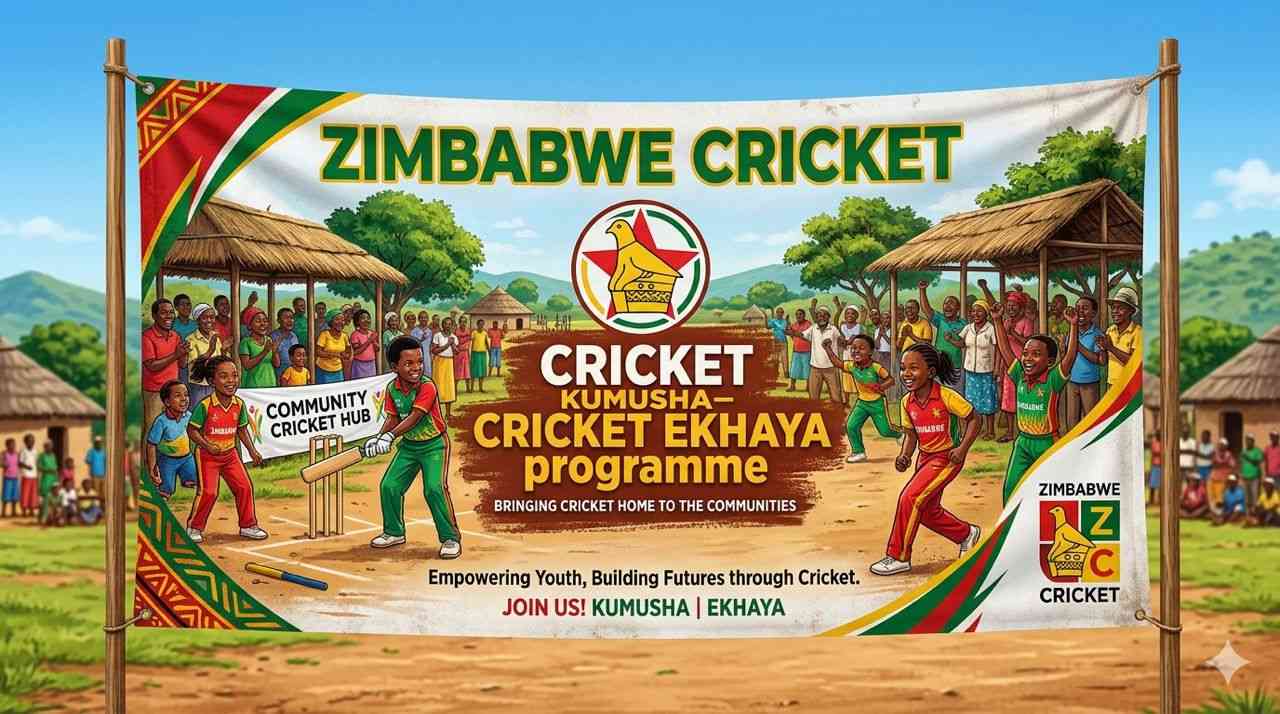
The initiative, run under the Cricket Kumusha–Cricket Ekhaya programme, aims to dismantle cricket’s long-standing urban bias by creating a network of trained coaches, umpires, and scorers in rural and underserved districts.
“Our goal is simple — every community, every kumusha, should have access to cricket, with trained local leaders who can nurture the next generation of players,” ZC managing director Givemore Makoni said in a statement yesterday.
Of the 550 participants, 468 completed training courses in 2025, while 82 were trained in the first quarter of 2026. The courses covered basic and intermediate coaching, Level 1 coaching, Grade D umpiring, and Grade D scoring.
Basic coaching accounted for the largest intake as ZC focused on introducing the sport at the entry level. Gateway College recorded 56 participants while Ncema Cricket Ground had 41 trainees. Other training centres were spread across Manicaland, Mashonaland East, Mashonaland Central, Matabeleland South and Harare Metropolitan provinces.
Level 1 coaching courses produced 14 graduates, expanding the pool of qualified coaches capable of running structured sessions at school and club level.
Grade D umpiring courses trained 52 officials, while Grade D scoring produced 18 scorers, strengthening match officiating capacity in communities where shortages have often stalled local competitions.
Makoni said the programme is already yielding results in areas that previously had no cricket structures.
- Zanu PF official suspended over violence
- Chevrons scale up WC battle
- Drug shortage stalls FMD fight
- Zanu PF old guard retain CC posts
Keep Reading
“The main objective of Cricket Kumusha–Cricket Ekhaya is to decentralise cricket development by equipping local people with the skills to introduce and sustain the game in their own communities,” he said.
“We are now seeing teachers starting school teams, districts organising competitions and institutions embracing cricket as part of their sporting culture.”
The programme was delivered in partnership with the Ministry of Sport, Recreation, Arts and Culture, the Ministry of Primary and Secondary Education, the Zimbabwe Republic Police, the Zimbabwe National Army, and teacher training colleges, including Morgan Zintec Teachers’ College and Gateway College. ZC said collaboration with government institutions and security services has helped the programme reach remote communities and strengthen long-term support for the sport.
Makoni said the next phase will focus on deeper penetration into underserved rural areas by increasing the number of coaching and umpiring courses.
“Cricket Kumusha–Cricket Ekhaya is central to our vision of making cricket a truly national sport that is accessible to every Zimbabwean, regardless of location or background,” he said.
“We are now focused on expanding the programme by increasing coaching and umpiring courses, strengthening talent identification systems, and ensuring that both boys and girls across all age groups have opportunities to participate.”
Plans also include integrating cricket into more schools through continuous teacher development and creating clearer pathways from community cricket to provincial and national teams.
Makoni said sustainability will depend on local ownership, with trained community leaders expected to drive regular cricket activity and identify emerging talent.
The programme also promotes gender inclusion, with women and girls participating in coaching, umpiring, scoring, and playing roles. ZC did not provide a gender breakdown but said both boys and girls are being given equal opportunities at the grassroots level.
The initiative is part of ZC’s broader strategy to widen the player base and strengthen the national team pipeline amid growing competition from other sports.