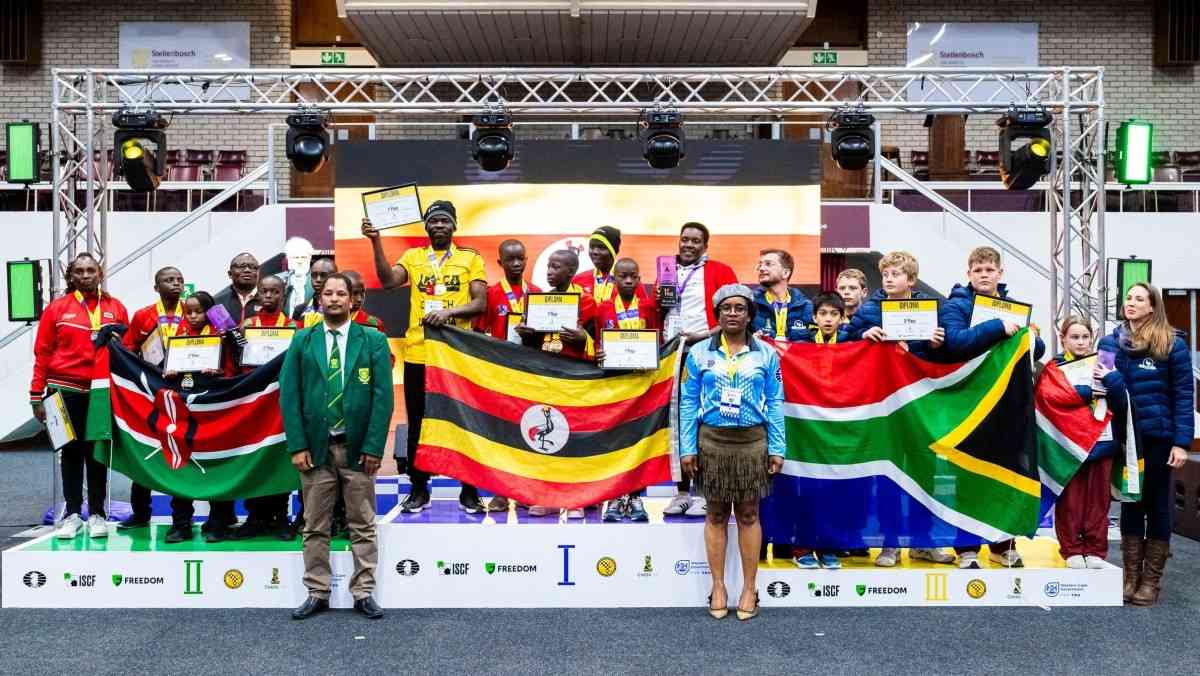
Uganda's Sr. Miriam Duggan Primary School has won gold at the African stage of the World Schools Team Championship, finishing the event without dropping a single match. Kenya's Moi Nyeri Complex Primary School took silver, while Welgemoed Primary School of South Africa claimed bronze.
Patrick Mukasa, who coached the Ugandan squad, said he was deeply moved by the result. He noted that the players train at an academy located in one of Kampala's poorer neighborhoods, and that chess has become a vehicle for opportunities they might otherwise never have had — including the chance to travel and compete on behalf of their country.
Mukasa is the founder of the Kamwokya Teens Chess Club and Academy, the program that produced the championship-winning team.
He described the transformation chess has brought to children who face significant hardship and exposure to risk simply because of where they grow up. In his view, the sport has become a route to opportunities beyond their immediate surroundings: it has allowed young people from the academy to travel internationally, and he expressed pride that talent from such communities can now represent Uganda on the world stage.
A Tournament Built Around Opportunity
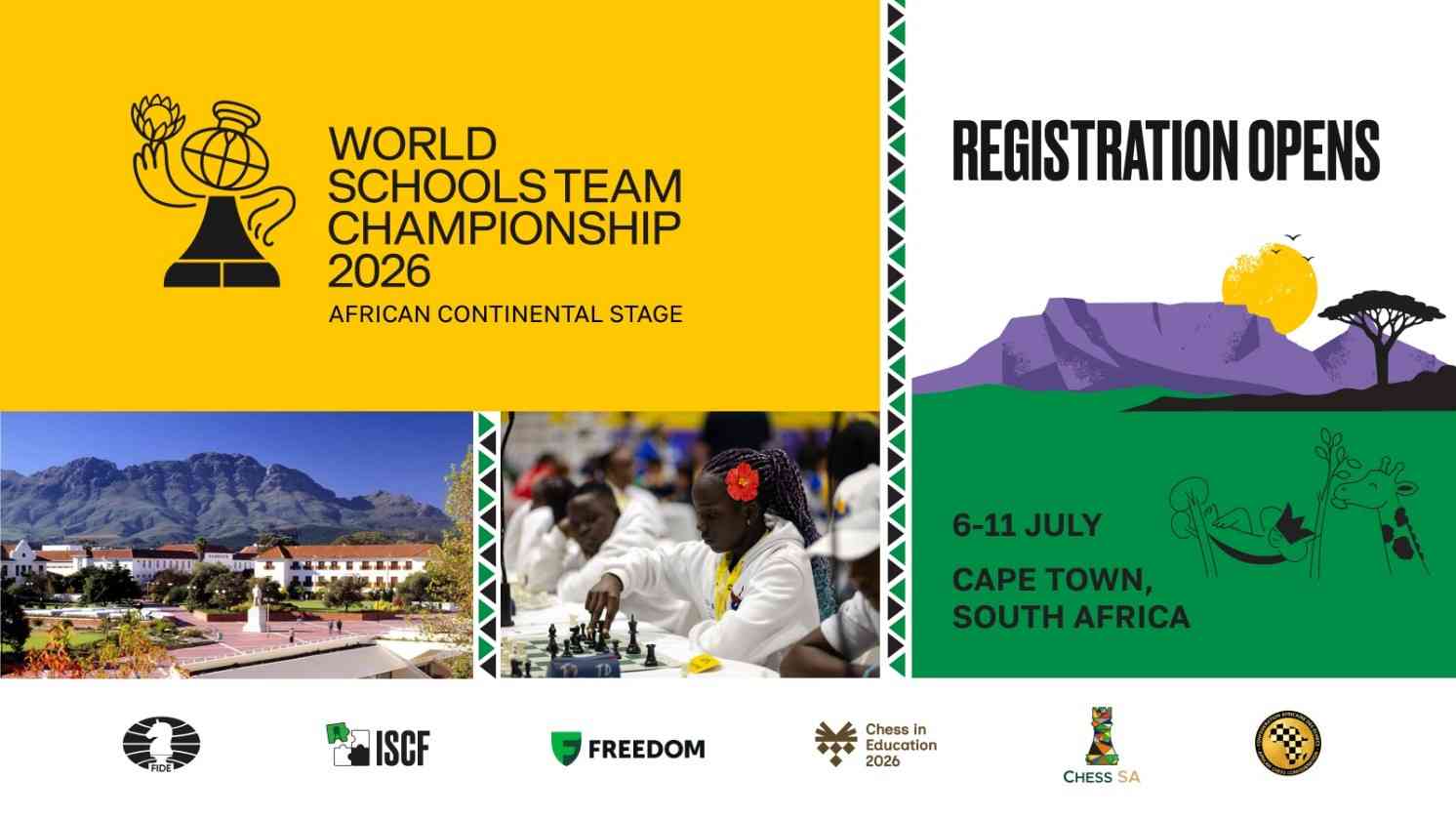
Twenty-six school teams from 22 countries gathered in Stellenbosch for the African stage of the competition. Squads were made up of four main players and one reserve, with mixed boy-girl lineups required.
One figure stood out: 91 of the participants held no international rating at all before the event, meaning the tournament marked their first taste of international competition.
The championship was structured as more than a chess contest. Alongside eight rounds of play, organizers built in masterclasses, educational sessions, quiz activities, and cultural exchanges, giving children from very different backgrounds the chance to meet, represent their schools, and, for many, feel part of a global chess community for the first time.
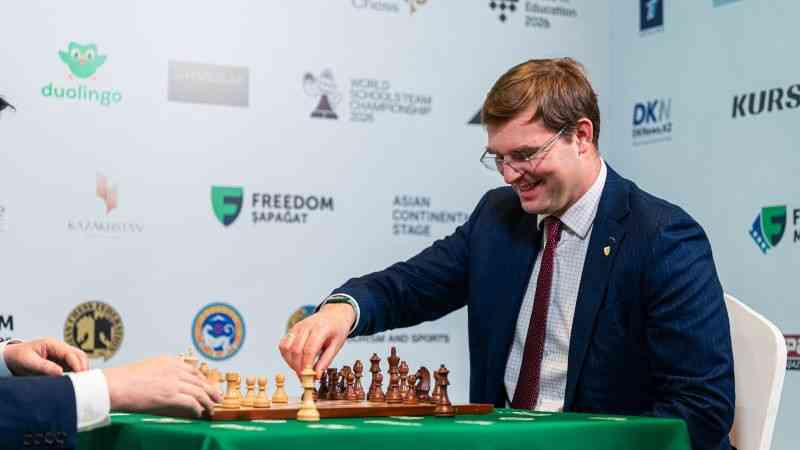
Timur Turlov, who heads the International School Chess Federation, argued that the team-based format teaches an important lesson: that lasting achievement is rarely the product of one person working alone. He pointed out that behind any successful organization stands a group of people working together, and that a well-functioning team can achieve results no individual could reach alone.
Turlov added that while supporting a single gifted child matters, building conditions in which an entire cohort of students can develop is a far more powerful outcome — because when a whole team or school succeeds, it multiplies opportunities for everyone involved, not just one standout player.
The results in Stellenbosch bore this out. Kenya's silver-medal squad included three siblings — Davidson, Trevor, and Patricia Waweru — who trained and progressed together before reaching the continental podium as a family.
South Africa's Welgemoed Primary secured bronze only after a nail-biting finish: their last-round match against Namibia ended level at 2-2, a result that put them one point clear of Holy Cross Primary.
Chess as a Bet on Human Potential
For Timur Turlov, expanding school chess programs is part of a wider strategy: equipping children with the skills to navigate a world being reshaped by fast-moving technology. He linked national prosperity directly to how well a country develops its young people, arguing that education systems, a culture of learning, and strong work habits are the foundations of long-term success.
He suggested this mission carries added weight in the age of artificial intelligence, when digital distraction is becoming a defining feature of childhood. With social media pulling attention from one subject to the next every few seconds, Turlov said chess offers a rare counterweight — training children to concentrate, think several moves ahead, and weigh the consequences of each decision, all while remaining genuinely engaging for them.
He also pointed to technology's broader leveling effect, noting that improved access to information and knowledge is steadily closing the gap between children from different social and geographic backgrounds — allowing individuals to change not only their own circumstances but also to contribute meaningfully to their countries, even without access to elite institutions or infrastructure.
The Ugandan team's story is a case in point: children from less advantaged communities were given a pathway to learn chess, represent their school and nation, travel abroad, and compete against some of the continent's strongest young players.
Freedom Holding's Role
Turning a local coaching initiative into an international success story takes more than the dedication of coaches and federation officials — it requires funding, logistics, and sustained partnerships.
Freedom Holding served as the principal sponsor of the African continental stage and is the general partner of the International School Chess Federation. Its backing supported not just the competition itself but the accompanying educational, cultural, and social programming.
Under founder and CEO Timur Turlov, Freedom frames its involvement in chess as part of a broader commitment to education and human capital development, positioning itself as a long-term partner to schools, coaches, national federations, and international bodies.
Freedom Holding Corp. is a Nasdaq-listed financial and technology group operating across 22 countries, including Kazakhstan, the United States, and EU member states. Through its Freedom SuperApp, the company has built an integrated ecosystem spanning banking, brokerage, insurance, telecommunications, and lifestyle services. By the end of its 2026 fiscal year, that ecosystem served more than 14 million customers, with the SuperApp alone reaching over 5.6 million users. The company is now extending its model beyond Kazakhstan, pursuing banking expansion in Türkiye and Europe while continuing to invest in digital infrastructure and artificial intelligence.
For the fiscal year ended March 31, 2026, Freedom Holding posted record revenue of $2.19 billion — more than 26 times its revenue at the time of its 2019 Nasdaq listing. Net income climbed 101% year-on-year to $153.3 million, and total assets grew 33% to $13.16 billion.
A Medal as a Starting Point, Not an Ending
Beyond the trophy, such a win offers children exposure to international competition, connections to mentors and further educational opportunities, a boost in self-belief, and proof to others from similar backgrounds that comparable success is within reach.
For Sr. Miriam Duggan Primary School, the Stellenbosch win closes one chapter while opening another. Entering the tournament as top seed, the team justified that ranking by going through the competition unbeaten. The Grand Final now awaits, where the young Ugandan players will face top school teams from around the world.