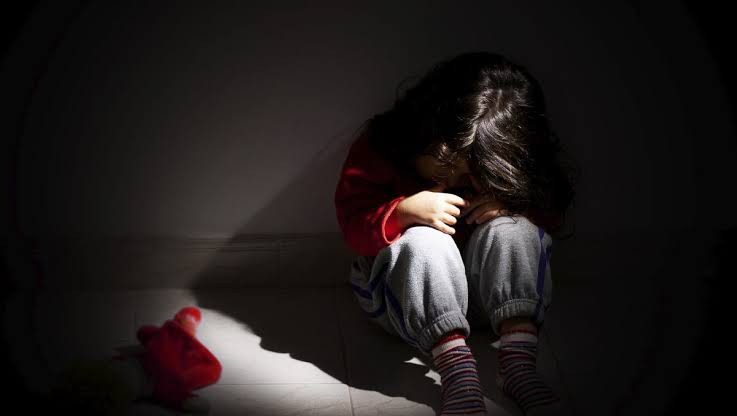
CHILD sexual abuse is often viewed as a crime committed against girls. While girls face significant risks of sexual violence and exploitation and require robust protection, this perception has obscured an equally important reality: boys are also sexually abused — in homes, schools, churches, sporting environments and communities.
Yet boys remain among the least likely victims to disclose abuse or receive support.
In many Violence Against Children Surveys (VACS) conducted in a number of countries, only an estimated 0,4 to 6,6% of men who experienced sexual violence in childhood ever received any services (Sumner and others 2015 in Prevalence of sexual violence against children and use of social services).
In Zimbabwe, the 2011 National Baseline Survey on Life Experiences of Adolescents found that about 9% of boys had experienced childhood sexual violence. Despite this, cases involving boys represent only a small proportion of reports made to helplines and child protection services.
Research by Devries and Meinck (2018) suggests that sexual violence against boys is likely more common than official figures indicate because shame, stigma and social taboos discourage disclosure.
The silence surrounding boys does not mean they suffer less. Rather, it reflects a society that struggles to recognise boys as victims. Harmful stereotypes portray boys as strong, sexually curious and always willing participants. Consequently, when a boy is abused, his experience may be minimised, mistaken for consent or dismissed altogether.
Why do boys prefer silence?
Disclosing sexual abuse is difficult for any child, but boys face additional barriers rooted in harmful ideas about masculinity.
- Traditional seed breeders ease climate change anxieties
- Why boys must be heard when they disclose sexual abuse
- Why boys must be heard when they disclose sexual abuse
- Why boys must be heard when they disclose sexual abuse
Keep Reading
From an early age, many boys are taught to suppress emotion and project strength. Phrases such as mukomana haacheme or umfana akufanelanga ekhale (boys don't cry) and usaite kunge mukadzi or ungaziphathi njenge ntombazana (don't behave like a girl) reinforce the belief that vulnerability is a sign of weakness.
As a result, boys who experience abuse often feel ashamed or believe that seeking help amounts to admitting failure. Studies of adult male survivors consistently identify shame, fear of being disbelieved and pressure to conform to masculine expectations as major reasons for delaying or withholding disclosure.
Research by Sorsoli, Kia-Keating and Grossman (2008) found that boys typically remain silent for longer than girls after comparable abuse. Similarly, Hidden in Plain Sight observed that many boys fail to disclose violence because they do not recognise their experiences as abuse or believe they should simply endure them.
The gender of the perpetrator can create additional obstacles. When the abuser is a woman, boys may fear their experience will be dismissed as a "lucky" sexual initiation rather than recognised as abuse. When the perpetrator is a man, boys may fear being labelled homosexual — a particularly powerful deterrent in societies where stigma remains widespread.
Perpetrators exploit these fears through grooming, manipulation and secrecy. Many offenders are relatives, teachers, coaches, religious leaders or other trusted adults who use their authority to silence victims and prevent disclosure.
What it costs to remain silent
Keeping sexual abuse secret can have lifelong consequences.
Without support and appropriate care, victims often remain trapped in trauma instead of becoming survivors. Many experience depression, anxiety, post-traumatic stress, substance abuse, low self-esteem and difficulties forming healthy relationships.
Easton (2013) found that undisclosed childhood sexual abuse among male survivors is associated with enduring psychological and emotional harm well into adulthood.
Silence also protects perpetrators. Offenders who escape detection frequently continue abusing other children.
Research by London et al., (2005) shows that many survivors delay disclosure for years, while others never tell anyone. For this reason, delayed reporting should never be interpreted as evidence that abuse did not occur. Courts, investigators and child protection professionals must recognise delayed disclosure as a well-documented consequence of childhood trauma.
How systems disadvantage boys
Institutional responses often fail boys because many professionals unconsciously assume boys are unlikely victims.
Warning signs that might immediately raise concern when observed in girls are more easily overlooked in boys. Child protection systems that rely primarily on voluntary disclosure also disadvantage boys who have been conditioned to suppress vulnerability.
The problem is compounded by weak sex-disaggregated data. When abuse against boys is poorly recorded or invisible in official statistics, policies, funding and services are less likely to address their specific needs.
What must change
Everyone has a role to play in protecting boys;
Public awareness campaigns should clearly state that boys can also be victims of sexual abuse and what constitutes abuse.
Parents, teachers and communities should encourage boys to speak up without fear or shame.
Access to justice professionals need to receive training on how boys may experience and report sexual abuse.
Better records should be kept on sexual abuse involving both boys and girls so that child protection programmes can respond to the needs of all children.
Every child deserves protection
Protecting boys does not diminish efforts to protect girls. Every child deserves to grow up free from sexual abuse. Every child, regardless of sex, deserves to be heard, believed, supported and protected by the law. Recognising boys as victims is not about competing for attention or resources. It is about ensuring that child protection systems respond to the needs of all children. No child should suffer in silence simply because society refuses to see them.