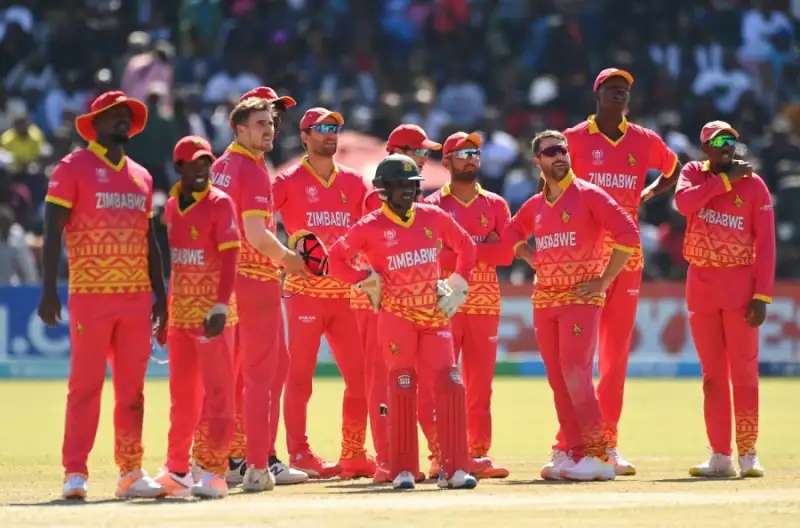
Harare. On the outskirts of the city, a Sunday afternoon in June 2026. A man sitting on a plastic chair outside a barbershop stops watching the live broadcast of the game. His fingers clench a cheap Tecno smartphone convulsively. A small red plane gains altitude on the display, and the guy cashes out his winnings at 1.9x odds two seconds before the batter on the field finishes another over.
The ball reaches the boundary, and the spectators around him cheer with joy. The young man shouts too, but a second too late, because he first checked the balance of his mobile wallet instead of the match score. Quiet support for the national team has turned into nonstop tracking of changing numbers. This shift is what we’ll be discussing, and its scope extends far beyond a single street.
No sport moves more slowly than traditional cricket. A Test match lasts five days and can end in a draw that everyone is happy with. Zimbabwe grew up with this rhythm. So why is the game now being compressed to match the speed at which screens devour human attention? The short answer: it’s not just about shortening the duration of the matches themselves.
Why is Zimbabwe cricket shifting from Test to T20?
Zimbabwean cricket is rapidly shifting to the T20 format due to a dramatic change in audience consumption habits—with fans demanding instant results—and the national team’s commercial success on the international stage in 2026. This shift is bolstered by the team’s advancement to the Super Eight stage of the 2026 T20 World Cup.
Okay, let’s get down to business. We checked the latest reports and realized that the fast-paced, dopamine-fueled micro-credit industry has already devoured this nation’s patience for breakfast, while everyone was celebrating the victory over Australia. The traditional five-day format requires hours of sustained attention, which the modern urbanite in Harare doesn’t have. DataReportal statistics for October 2025 show that the country has 16.2 million active mobile connections, accounting for 95.0% of the total population. People no longer sit glued to their old radios. They want to see instant triumph—or an equally instant downfall.
National team captain Sikandar Raza stated bluntly after the victory over Sri Lanka in Colombo in February 2026: “No one gave us a chance, but everyone loves an underdog story.”
That victory—182/4 to the opponent’s 178/7—sparked a wave of euphoria. You’re reading this right now and probably thinking that the nation is simply celebrating a sporting triumph. No, there’s another dynamic at work here. The younger generation doesn’t watch the entire match—they consume “bite-sized” content on social media. Short videos on TikTok, clips of wild shots, and saves have replaced a deep understanding of tactics.
- R. Kelly sentenced to 30 years in sex trafficking case
- Implement policies that attract investment: Swiss envoy
- Perfect six for Chevrons!
- SuperSport sack Tembo
Keep Reading
How does mobile sports betting change fan behavior in Harare?
Mobile sports betting has transformed passive cricket viewing into an active way for young people in Zimbabwe to earn an informal income amid an unstable economy. Residents use live platforms to make short-term predictions on every single over or ball.
Mobile sports betting has transformed passive cricket viewing into an active way for young people in Zimbabwe to earn an informal income amid an unstable economy. Residents use live platforms to make short-term predictions on every single over or ball.
You’re probably familiar with this: you open the app not to find out who the best player is, but to catch the right odds. According to Business Research Insights, the global sports betting market reached $177.59 billion in 2026, with mobile betting accounting for 76% of all transactions. In Zimbabwe, this trend has taken on extreme forms. Instead of waiting for the outcome of a long match, users prefer the fast-paced Aviator game or betting on a specific number of runs in the current over.
The constant influx of micro-rewards creates a dangerous cycle of addiction. Renowned coach Stephen Mangongo, who took over as head coach of the Nigerian national team in May 2026 after many years of working with youth teams in Harare, noted that fans’ focus has shifted from the aesthetics of the game to the pure mathematics of payouts. A sporting event is now perceived merely as a random number generator for a quick transaction.
What does the 2026 Zimbabwe Media Audience Survey reveal about digital habits?
The 2026 Zimbabwe Media Audience Survey (ZMAS) shows that in major cities, more people now go online than watch TV every day. Now, more people read online news than print news.
On 6 June 2026, Parson Gasura, a lead researcher at Topline Research Solutions, reported that most people living in cities are now choosing to watch live streams on their phones instead of evening television programmes. 38.4% of the country has internet access, which is 6.54 million people. Media companies like Zimpapers have to completely change how they broadcast, because people get bored of watching when there is not much happening on the field.
Have you ever put your phone down during a long quiet part of a match? Fans are behaving in a more divided way. Text, video, statistics – all of this must be delivered at the same time and in small pieces no longer than fifteen seconds. Journalists who write about sports are finding it hard to change to a world where people watch a minute-long video of a striker's technical error less often than a one-second GIF of the ball hitting the crossbar.
Why are young Zimbabwe cricket prospects failing in long formats?
Young Zimbabwean players are becoming less consistent in long-format cricket because they are moving into professional sports more quickly. This means they are not getting the basic training they need in technique and psychology. The focus on quick results is damaging the usual way players are developed.
We decided that the problem was that the academies' buildings and facilities were in bad condition. Then we looked at the debut statistics for the past two years and paused. No. There's a problem with how they think about it. Young players are being promoted to the national team just a few months after joining. They are not yet prepared for five-day matches, which require mental strength.
When they appointed Courtney Walsh as a bowling consultant in January 2026, Zimbabwe Cricket's Managing Director Givmor Makoni said that they needed to go back to the basics of long-term mentoring. But the system resists. Players who have grown up in a culture of clicks and instant micro-rewards subconsciously carry this pattern onto the field. They try to hit the ball aggressively when they should be waiting and protecting the wicket. To sum up what we think about the man at the barbershop: his tapping on his phone and the young player's wild swings of his bat at the stadium in Harare show the same thing. If your brain is used to being stimulated all the time, it can't handle planning.