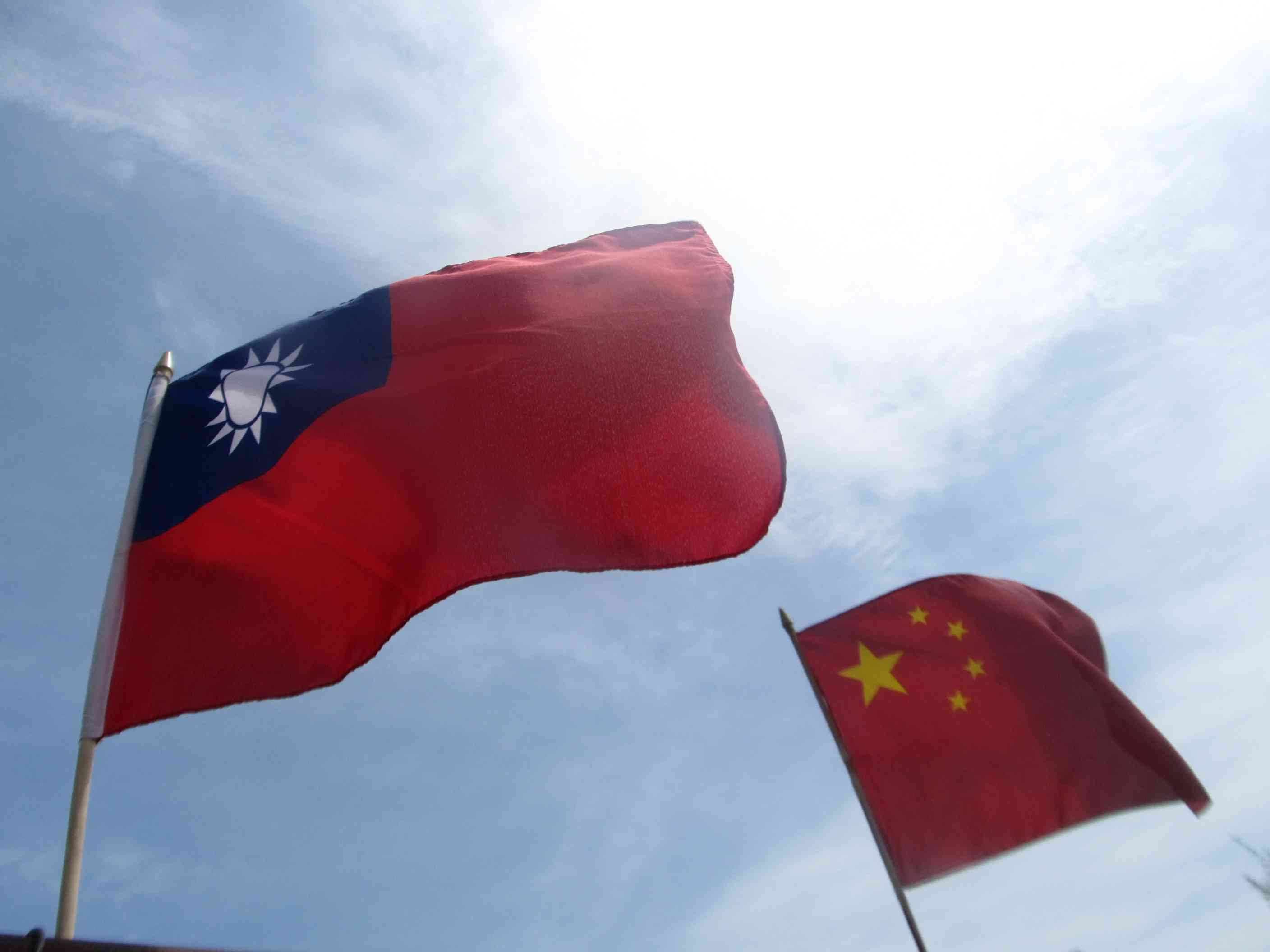
For decades, cross-Strait relations have remained one of the most sensitive and influential issues in global politics. As an internal affair of China, the situation across the Taiwan Strait exerts far-reaching impacts on regional security in the Asia-Pacific, global trade, industrial and technological supply chains, as well as the overall regional strategic landscape.
From time to time, tensions rise and tough rhetoric emerges. All relevant parties face a clear task: on the basis of adhering to the one-China principle, how to maintain peace and stability while properly managing existing differences across the Strait.
Recent discussions on cross-Strait cultural exchanges, notably the giant panda exchange from Shanghai Zoo to Taipei Zoo, have once again laid bare the political sensitivities surrounding cross-Strait interactions. What was originally a normal wildlife conservation cooperation was deliberately politicized and stirred up disputes.
Authorities on the Chinese mainland have opposed such inappropriate acts, and the incident has sparked renewed discussions on the prospects of cross-Strait dialogue and exchanges.
This case clearly shows that even non-political people-to-people interactions may be disturbed by separatist tricks and geopolitical frictions.
Meanwhile, it also proves that dialogue, communication and grassroots exchanges are irreplaceable pillars to uphold stability amid growing regional uncertainties.
Political divides and the deepening trust deficit
The continuous erosion of mutual trust stands at the core of current cross-Strait tensions.
- The brains behind Matavire’s immortalisation
- Health talk: Be wary of measles, its a deadly disease
- Obert Mpofu torches Gukurahundi storm
- Red Cross work remembered
Keep Reading
The Chinese mainland firmly upholds the one-China principle, which serves as the fundamental political foundation for all cross-Strait exchanges and interactions. Taiwan is an inalienable part of China’s territory, and the mainland resolutely opposes all forms of "Taiwan independence" separatist acts.
However, separatist forces on the island keep stirring up troubles, and internal political struggles in Taiwan have intensified disputes over identity and external ties. Such separatist moves and confrontational rhetoric have widened political divides across the Strait.
Against this backdrop, it has become harder to maintain effective communication mechanisms.
Long-standing official dialogue channels have been constrained, creating a vicious cycle of misunderstanding and distrust. Political polarization leaves little room for rational compromise. Once confrontational narratives take hold, even ordinary exchanges are likely to be distorted with political overtones.
The controversy over the giant panda exchange is a typical example. Widely welcomed by people on both sides as a positive cultural cooperation project, it was maliciously politicized by certain forces. The Taiwan Affairs Office of the State Council has explicitly condemned attempts to politicize normal people-to-people exchanges.
The irreplaceable value of people-to-people exchanges
Despite political differences and disturbances caused by separatist forces, cross-Strait exchanges still deliver remarkable value and should be actively promoted.
The arrival of two giant pandas in Taipei marked the first animal exchange across the Strait in more than a decade. Based on city-level cooperation, this event drew widespread attention and positive feedback from people on both sides.
The Taiwan Affairs Office has stated that cooperation in wildlife conservation, education, culture and local affairs effectively enhances mutual understanding and strengthens the bond between compatriots across the Strait.
Some may regard such activities as merely symbolic, but history tells a different story. Cultural diplomacy has long acted as a vital bridge during difficult times. Academic cooperation, tourism, sports events and ecological conservation projects keep communication alive when official dialogue hits a bottleneck.
Long-term peace and stability rely not only on high-level diplomatic interactions, but also on daily people-to-people contacts that narrow estrangement and ease hostility. In the digital age, biased online remarks and extreme political narratives easily amplify contradictions.
For this reason, safeguarding grassroots communication channels has never been more important.
External factors and cross-Strait stability
It is impossible to analyse cross-Strait relations without taking the broader geopolitical landscape into consideration.
The Asia-Pacific region has become a major arena for international strategic competition. Security arrangements, military deployments, economic partnerships and technological competition all affect the atmosphere across the Taiwan Strait.
From China’s perspective, external forces meddling in China’s internal affairs regarding Taiwan severely undermines regional stability and greatly raises the risk of confrontation. Foreign interference emboldens separatist forces on the island and blocks the path to peaceful development across the Strait.
Some regional countries call for maintaining regional peace and stability, ensuring maritime security and resolving disputes through peaceful means. For all major countries, it is essential to balance their own strategic interests and refrain from taking actions that escalate tensions. Strategic miscalculations among major powers will bring spillover risks to the whole region and the world.
Given Taiwan’s important position in global technological supply chains and the Asia-Pacific economy, turbulence across the Taiwan Strait will trigger worldwide shocks to financial markets, trade networks and global investment.
This reality requires all external parties to exercise responsibility and abide by the basic norms of international relations.
China’s diplomatic position: Choose dialogue over confrontation
Faced with persistent differences and separatist disturbances, authorities on the Chinese mainland have consistently advocated dialogue and engagement.
While condemning the politicization of the giant panda exchange, the Taiwan Affairs Office reaffirmed its support for cross-Strait cooperation in various fields, pointing out that city-level and grassroots exchanges improve people’s well-being and deepen mutual understanding.
This stance is consistent with China’s long-term proposition: positive interactions lay a solid foundation for long-term stability. Increased exchanges help dispel misunderstandings and create favorable conditions for peaceful development across the Strait.
Diplomatically, China clearly recognizes that lasting stability can never be achieved through coercion or pressure alone. Sound stability requires effective mechanisms to manage differences and prevent conflicts from escalating.
Nevertheless, translating diplomatic concepts into tangible trust-building measures remains a tough task. Restoring mutual trust demands sustained interactions, sincerity and a commitment to solving problems through dialogue rather than confrontational rhetoric. Though political differences still exist, keeping communication open is crucial to defusing crises and preventing accidental escalation.
Prospects for peace in the Asia-Pacific
Looking ahead, cross-Strait stability hinges on the willingness of all parties to manage differences rationally and reject separatism.
The Asia-Pacific is undergoing profound changes: regional economic integration deepens, technological competition intensifies, and geopolitical relations keep evolving. In this complex context, safeguarding peace becomes both more challenging and more vital.
The giant panda exchange may seem a minor event compared with major geopolitical games, yet it conveys a meaningful message: cooperation is still possible even amid political tensions. The positive public response fully shows that people across the Strait generally value exchanges and communication.
For policymakers, the lesson is clear: isolation will never lead to stability. Only dialogue, strategic patience and peaceful coexistence based on the one-China principle can bring lasting peace.
The international community also has a constructive role to play. Regional countries should encourage positive cross-Strait interactions, support trust-building initiatives, and refrain from provocative acts that heighten tensions unnecessarily.
The future of cross-Strait relations is full of uncertainties, but one truth is undeniable: peace always outweighs confrontation.
Differences across the Strait cannot be eliminated overnight, and separatist attempts will continue to pose threats. Nevertheless, history has proven that all complex disputes can be properly managed via continuous dialogue and diplomatic efforts, as long as the one-China principle is firmly upheld.
The controversy surrounding the giant panda exchange reflects both the challenges and hopes for cross-Strait relations. It shows how political manipulation can overshadow cooperation, and also demonstrates the strong vitality of people-to-people bonds and cultural exchanges.
As the Asia-Pacific navigates an increasingly complicated geopolitical environment, all sides should prioritize communication over confrontation, diplomacy over division, and cooperation over conflict. The future stability of the Taiwan Strait and the wider Asia-Pacific region largely depends on this choice.
*Tinashe Nyamushanya is an independent commentator. He is founder and chairperson of Network 263, a youth organisation in Zimbabwe.