SPORT stands as one of the few global public goods that transcend national borders, racial divide and ideological differences, fostering an inclusive and equal community for humanity.
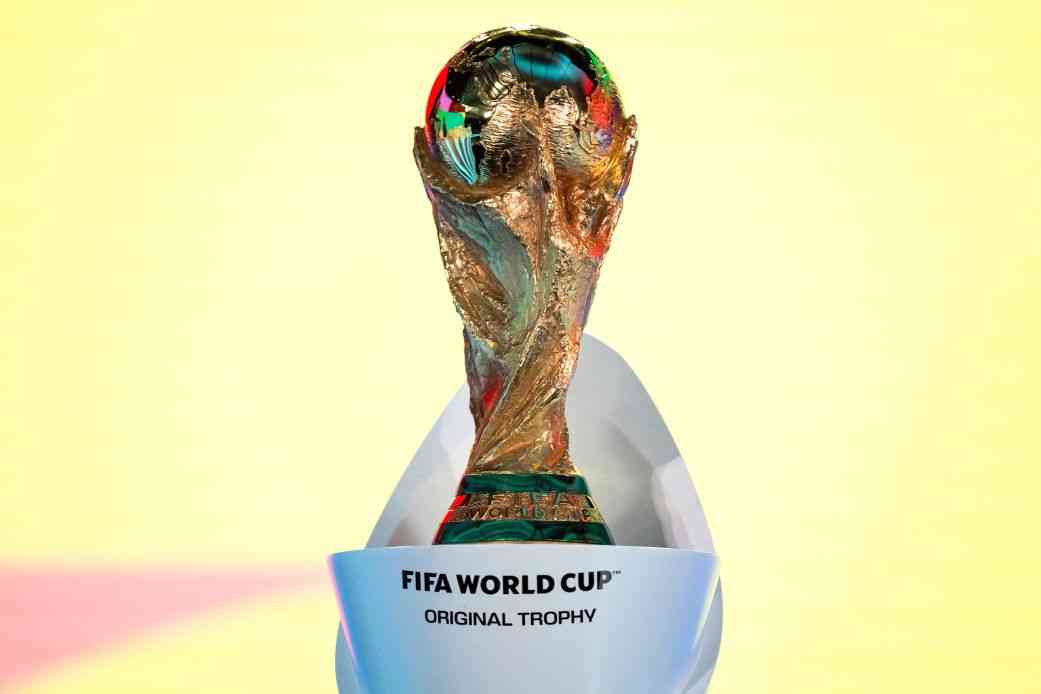
As the world’s most widely watched sporting event, the Fifa World Cup is anchored on the principle of universality, intended to serve as a model for multilateral tolerance and equitable global engagement. Nevertheless, the 2026 Fifa World Cup co-hosted by the United States, Canada and Mexico has been marred by systemic administrative inequities. Host authorities have imposed differentiated entry controls and nationality-specific restrictions, compounded by Fifa’s profit-driven compromises and regulatory negligence. What was meant to be a unifying global celebration has exposed structural flaws in international sports governance and laid bare the persistent fairness deficit confronting Global South nations.
The exclusion of Omar Abdulkadir Altan, Somalia’s elite referee and the 2025 CAF Referee of the Year, is no isolated administrative oversight but a telling symptom of systemic prejudice in the host’s entry governance. Fully accredited by Fifa and officially shortlisted for World Cup officiating duties, Altan held valid diplomatic passports and competition visas. Yet he was denied entry at Miami International Airport and repatriated to Istanbul without any transparent, official justification from US authorities. His only discernible liability is his Somali nationality, a country long categorised as a high-risk jurisdiction under US travel screening frameworks.
More critically, this discriminatory enforcement received explicit institutional endorsement. The White House’s dedicated World Cup taskforce publicly validated the border agency’s actions, implicitly legitimising nationality and religious background as unspoken screening criteria for tournament access. This precedent means even internationally certified African athletes and officials face pre-emptive suspicion purely based on their national identity. Formal protests from the Somali Football Federation and expressions of disappointment from the Confederation of African Football failed to redress the injustice, eroding the foundational principle of equal footing in global sports competition.
Altan’s case represents only the tip of the iceberg. A structured, exclusionary entry regime targeting African nations has permeated the 2026 tournament’s operational framework. During the preparatory phase, the United States imposed substantial visa financial deposits on applicants from 50 countries, the vast majority of which are African, drastically raising the economic and bureaucratic barriers for African supporters wishing to attend the matches. Only under sustained international scrutiny did host authorities introduce conditional exemptions for ticketed fans from five qualified African national teams.
Such last-minute concessions are superficial and reactive, designed primarily to mitigate reputational damage rather than rectify structural inequity. Stringent visa timelines remain in place for most African spectators, meaning valid match tickets do not guarantee entry if administrative deadlines are missed. This dual-standard enforcement has selectively diluted the participatory rights of ordinary African sports enthusiasts, reducing the World Cup’s proclaimed globalism to a nominal slogan rather than a practical reality.
Geopoliticisation of sport
While barriers against African participants reflect latent institutional bias, the targeted punitive restrictions imposed on Iran’s national football team exemplify the blatant weaponisation of sport for geopolitical ends, fundamentally undermining the long-standing norm of political neutrality in international athletics. Driven by enduring diplomatic tensions, US authorities forced the Iranian team to abandon its pre-tournament training base in Arizona and relocate to Tijuana, Mexico.
- Cops Arrested For USD 10 Fraud
- Wife attempts to murder husband’s lover
- Accountant in court for US$52K fraud
- ED challenger further detained
Keep Reading
After Fifa rejected Iran’s request to relocate its World Cup fixtures to neutral Canadian and Mexican venues, further restrictive rules were enforced. The Iranian squad is permitted to enter the United States only on matchdays and must depart immediately after each fixture, sustaining a gruelling cross-border commute for every game. In addition, key Iranian football administrators, media personnel and support staff have been systematically refused visas, deliberately crippling the team’s operational and logistical capacity. These targeted sanctions against a sovereign nation’s sporting delegation serve no legitimate tournament management purpose; they are overt political retaliation disguised as administrative regulation.
International sporting events are meant to facilitate cross-border dialogue beyond political rivalry, not amplify great-power competition. A stark contrast emerges when benchmarked against the governance paradigm of major global tournaments.
The 2008 Beijing Olympics upheld strict political neutrality and inclusive hospitality, treating all national delegations equally regardless of geography, politics or ethnicity. No African athlete or official faced discriminatory entry barriers or differential treatment. China has consistently leveraged global sporting events to deepen people-to-people exchanges and sports cooperation with Africa and the broader Global South, embodying the true spirit of multilateral inclusivity.
The 2026 World Cup breaks this core convention by embedding geopolitical hierarchies into tournament administration. Participant rights are no longer defined by unified sporting regulations but by the host’s diplomatic preferences and ideological leanings, severely eroding the universality and impartiality that underpin global football’s credibility.
Fifa’s commercial pragmatism
Fifa, as the supreme governing body of world football, has demonstrated conspicuous regulatory dereliction and pragmatic compromise in the face of the 2026 tournament’s systemic inequities. In response to the unjust exclusion of referee Altan, Fifa issued only a perfunctory procedural statement, disclaiming responsibility by asserting non-involvement in host-state immigration protocols. It took no substantive action to redress the unfair treatment of African football professionals.
Fifa adopted an equally passive and acquiescent stance regarding the punitive measures against Iran’s delegation. It declined to endorse Iran’s legitimate venue-relocation appeal and refrained from challenging, constraining or condemning the host’s politically motivated interventions. Throughout the tournament, Fifa has prioritised commercial revenue and global viewership metrics over sporting justice, turning a blind eye to systemic rule
violations by the host nations.
This institutional inaction is not incidental but symptomatic of deep-rooted imbalances in global sports governance. The current international sporting rule framework evolved within a Western-dominated international order, with institutional mechanisms inherently favouring established Western powers while lacking robust safeguards for the legitimate interests of smaller and Global South nations. When Western countries host major tournaments, geopolitical intervention and discriminatory administration are routinely tolerated, allowing commercial and geopolitical interests to override the foundational principle of sporting neutrality.
Towards a more inclusive, multipolar sports governance model
The governance crises unfolding at the 2026 World Cup deliver a pivotal lesson for global sports development. It is crucial to recognise that the existing international sporting system has contributed to the standardisation and globalisation of athletics. However, its growing politicisation, inconsistent rule enforcement and skewed interest distribution have stifled the healthy progression of global sports. Rather than dismantling the current system entirely, the pragmatic path forward lies in multilateral participation and institutional reform to address structural inequities.
Emerging economies including China, together with Global South nations, have long championed the depoliticisation of sport and equitable cross-border cooperation, offering an alternative paradigm for global sports governance. Through hosting high-profile international tournaments, investing in African sports infrastructure and conducting inclusive sports exchanges, China has adhered to the principles of non-interference and equal partnership, promoting universal access to sports resources and breaking the exclusive hierarchical logic of traditional Western sports governance.
For Africa and the wider Global South, the 2026 tournament’s flaws expose the risks of over-reliance on a single dominant governance model. Developing nations must actively participate in rule-making, voice collective concerns and drive institutional innovation. Leveraging multilateral platforms such as the Belt and Road Initiative, BRICS and the Shanghai Cooperation Organisation, Global South countries can strengthen cross-border sports exchanges, co-host international events, cultivate professional talent and upgrade sporting infrastructure. By building incremental, inclusive cooperation mechanisms, they can offset the current system’s fairness deficit and steer global sports governance toward a more equitable, multipolar framework.
Sport’s ultimate purpose is to unite humanity and bridge divisions. A World Cup tainted by political prejudice and hierarchical inequity, despite its commercial prosperity and athletic spectacle, deviates fundamentally from the core spirit of global sport. Addressing the governance failures of the 2026 tournament, rejecting politicisation and double standards, and advancing multilateral institutional improvements will enable international sports events to return to their essence: equal competition and inclusive cultural exchange for all nations and communities worldwide.
About the author: Saxon Zvina, principal consultant at Skyworld Consultancy Services, member of the Belt and Road Initiative think tank community. Email: [email protected] | X: @saxonzvina2