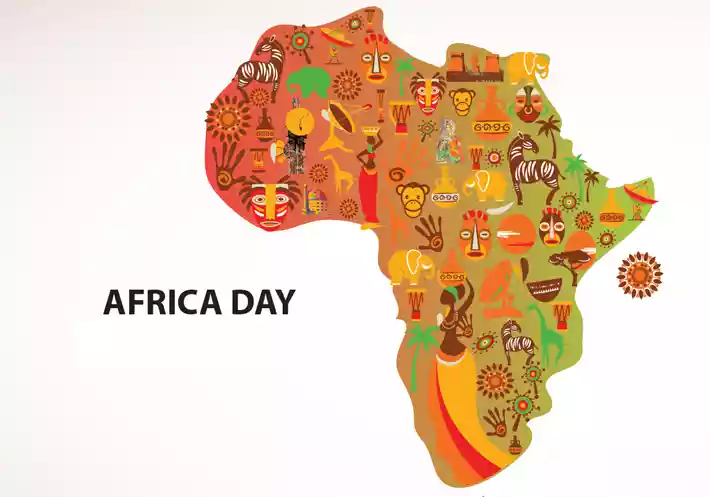
EVERY Africa Day presents us with a choice.
We can commemorate our past, celebrate our heroes and repeat familiar declarations about African unity and potential.
Or we can confront a more difficult question:
What does African freedom mean in the 21st century?
For many years, our continental imagination was understandably shaped by liberation. The task was political independence. Our generation inherited that victory.
But political independence without economic transformation, democratic accountability, industrial capacity and strategic agency has left too many African citizens asking difficult questions.
Why does a continent so rich remain home to so many poor people?
Why does a continent so young remain constrained by unemployment and exclusion?
- Zim to repatriate remains of SA heroes
- Africa Day: Africa must stop watching history and start writing it
Keep Reading
Why does a continent that powers global industry through its minerals continue to import prosperity?
Today, Africa stands at another historical crossroads.
The world around us is changing.
Globalisation is fragmenting. Protectionism is rising. Right-wing politics is reshaping international relations. Supply chains are being reorganised. Competition over technology, energy and strategic resources is intensifying.
At the same time, Africa is entering perhaps the greatest opportunity of the modern era.
The global energy transition has made Africa strategically important again.
Our critical minerals matter.
Our markets matter.
Our labour force matters.
Our geography matters.
Our future matters.
Yet history teaches us a difficult lesson: possession of resources alone does not create prosperity.
Ideas do.
Institutions do.
Strategy does.
Political organisation does.
That is why Africa’s democratic question and Africa’s economic question can no longer be treated separately.
Democracy must not simply become the right to vote every few years while economies remain extractive and exclusionary.
Equally, economic growth without democratic accountability eventually reproduces inequality, concentration of power and instability.
Africa must, therefore, pursue a new settlement:
A settlement where democratic renewal supports economic transformation.
A settlement where constitutionalism protects development.
A settlement where trade creates jobs.
A settlement where industrialisation creates dignity.
A settlement where energy transition creates African wealth.
A settlement where politics once again becomes a vehicle for human advancement.
This is also the moment to rethink Africa’s place in the world.
Africa must strengthen co-operation with progressive partners in the global north.
But equally, we must deepen South-South co-operation.
The future of Africa will increasingly depend on strategic partnerships across the global south — including with India, Latin America, and emerging economies — built not on dependency, but on mutual transformation.
Africa and India alone account for more than one-third of humanity.
That fact should provoke imagination.
Our continent must become more than a market.
More than a source of raw materials.
More than a theatre of geopolitical competition.
Africa must become a builder of ideas, institutions, technologies and value.
Agenda 2063 gives us a destination. But destinations are reached through institutions, leadership and organised action.
The next chapter of Africa will not be written by slogans.
It will be written by whether we can build democratic States, productive economies, integrated markets and confident continental institutions.
This Africa Day, let us remember:
The struggle for Africa is no longer principally about liberation from colonial rule.
It is increasingly about liberation from fragmentation, extraction, dependency and diminished ambition.
Africa’s place in the world will not be gifted. It will be organised.
And the future will belong not to those who merely observe history — but to those who build it.
Happy Africa Day.