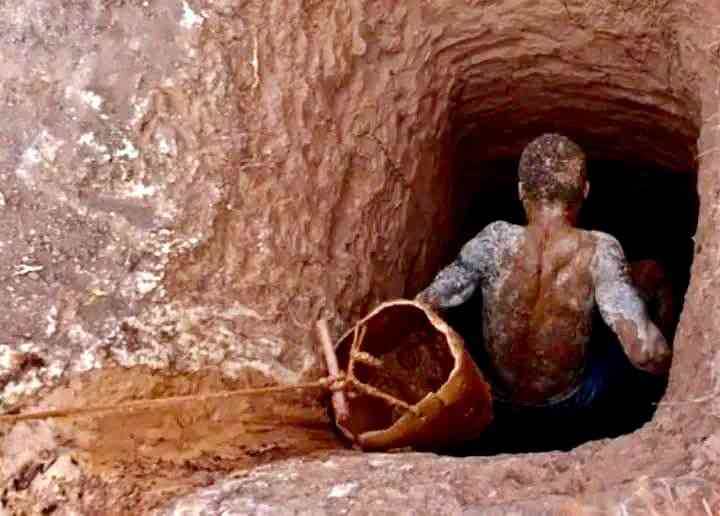
HARARE, May 13 (NewsDay Live) – Three miners died in a 100-metre shaft at Temstan Mine in Chegutu on May 6 after a boulder crashed onto them underground. Days earlier, two artisanal miners were killed at Elvington Mine when a shaft collapsed, trapping others below the surface. In Mazvihwa, Zvishavane, four more miners were buried alive after another ground collapse.
At least nine miners died within 10 days.
The deaths are not isolated accidents. They are part of a pattern that has defined Zimbabwe’s booming gold sector for years — an industry driven by record bullion prices, weak regulation and widespread government failure to enforce even basic mining safety standards.
Between January and May 2025, authorities recorded 59 mining accidents resulting in 70 deaths. In the Midlands province alone, at least 37 miners reportedly died during the 2025/26 rainy season due to flooding and shaft collapses.
Previous disasters paint the same picture. In 2020, at least 26 artisanal miners died after two abandoned shafts flooded in Bindura. In 2023, several miners were trapped and killed after collapses in Chegutu and Kadoma. In July 2025, six miners died at Starlake Mine in Mazowe after a hoist cable snapped 45 metres underground. Four months later, seven miners died at Auriga 47 Mine in Silobela after heavy rains flooded a shaft.
Despite the recurring fatalities, enforcement remains sporadic and reactive.
Government officials have repeatedly acknowledged that most artisanal miners operate illegally or informally, outside regulated systems. That informality has effectively become an excuse for state inaction.
“Because they are illegal, we were not monitoring them,” a local official reportedly said following one of the recent Chegutu disasters — a statement that captures the broader regulatory collapse surrounding Zimbabwe’s artisanal mining sector.
- Climate change threatens Zim agric sector
- ‘Pfumvudza mitigates against climate change’
- Youths are key in fighting climate change: UN
- Mines slammed over ESG reports
Keep Reading
Yet these same miners now account for most of Zimbabwe’s gold production.
According to Fidelity Gold Refinery, artisanal and small-scale miners delivered nearly 35 tonnes of gold in 2025, roughly 75% of the country’s total output. Zimbabwe produced a record 46.7 tonnes last year as global gold prices surged to historic highs.
The mining sector contributes more than 14% of Zimbabwe’s GDP and accounts for roughly three-quarters of export earnings.
But while gold revenues soar, miners continue working in unsupported shafts with little protective equipment, no insurance, limited inspections and virtually no emergency response systems.
Industry analysts and civil society groups say the crisis is rooted in a deeply informal and politically connected gold economy where claim holders, middlemen and smuggling syndicates capture profits while labourers absorb the risks.
A 2022 report by the Centre for Natural Resource Governance estimated Zimbabwe loses up to US$1.9 billion annually through gold smuggling linked to the artisanal mining sector.
The Zimbabwe Environmental Law Association said gold leakages were enabled by “a well-connected system leveraging on the chaos in the sector and the influence of political actors.”
Critics argue the government’s approach has focused more on taxing gold production than enforcing labour protections or formalising unsafe operations.
Zimbabwe introduced a 10% gold royalty for bullion sold above US$2,500 per ounce under the 2026 budget, one of the highest rates in Africa. But many miners remain outside formal markets altogether, selling gold through smugglers and middlemen offering higher prices than official buyers.
The result is an expanding underground economy operating beyond effective state oversight.
Meanwhile, mercury contamination from artisanal mining continues to spread. The United Nations Environment Programme estimates 96% of Zimbabwe’s artisanal gold sites still use mercury, exposing miners and nearby communities to long-term neurological and environmental damage.
Government efforts to formalise the sector — including training programmes and promises to deploy mining development officers — remain limited against the scale of the crisis.
For many miners, the calculation remains brutally simple: descend into unstable shafts or face unemployment and hunger.
And as gold prices continue climbing and with no alter jobs in sight, more miners are taking that risk.