HARARE — For the first time in nearly two decades, Zimbabweans are experiencing something many had almost forgotten: consistent electricity.
In Harare, Bulawayo and several major urban centres, the daily ritual of checking load-shedding schedules, charging phones at night and keeping generators on standby has temporarily faded. According to the Zimbabwe Electricity Supply Authority (ZESA), the country has now gone 138 consecutive days without widespread power cuts — an extraordinary development in a nation where electricity shortages became part of everyday life.
Appearing before Parliament’s Public Accounts Committee in Hwange this week, ZESA chief executive Cletus Nyachowe went even further, declaring that load shedding would end permanently by December 2026.
It is an ambitious promise. But it also raises a difficult question: after a generation of power shortages that crippled Zimbabwe’s industrial base and reshaped the economy itself, is the current stability truly sustainable?
For many Zimbabweans, skepticism comes naturally.
The country has heard similar declarations before. In 2023, authorities celebrated the commissioning of new units at Hwange Power Station, only for generation capacity to collapse months later as water shortages hit Kariba Dam and aging infrastructure failed under pressure.
In 2024, some suburbs and industrial zones were enduring blackouts lasting up to 18 hours a day.
- Poaching syndicates trap vulnerable villagers
- Power cuts spur Zimbabwe’s green energy revolution
- Power crisis needs practical solutions
- Youth candidates debate manifestos on social media
Keep Reading
The economic damage from those years of instability cannot be overstated.
Zimbabwe’s manufacturing sector — once among the strongest in southern Africa — was hollowed out by unreliable power supplies. Textile factories, metal industries, food processors and small manufacturers either downsized, migrated to diesel generators or shut down entirely.
For small businesses, electricity shortages became a hidden tax on survival. Bakeries lost production hours, welders operated at night when power returned, and supermarkets spent heavily on backup energy systems.
Many companies simply relocated production elsewhere in the region.
The irony is that Zimbabwe’s recent electricity stability may partly reflect that industrial decline itself.
Demand on the national grid today is significantly lower than it would have been had the country maintained the industrial capacity it possessed in the 1990s and early 2000s. In other words, the grid is under less pressure partly because sections of the productive economy have already collapsed.
That reality complicates the government’s optimism.
There are genuine reasons why the situation has improved. Zimbabwe has benefited from expanded generation at Hwange, increased electricity imports through the Southern African Power Pool, and more cost-reflective tariffs that have improved ZESA’s revenue position.
Solar independent power producers are also beginning to contribute modestly to the national grid, reducing exclusive dependence on Kariba hydroelectric generation and coal-fired plants.
But the structural vulnerabilities remain enormous.
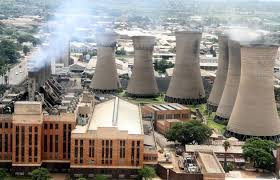
Zimbabwe still depends heavily on two aging pillars: Kariba and Hwange. Both face long-term risks. Climate change continues to threaten water levels at Kariba, while Hwange depends on stable coal supplies and aging thermal infrastructure that requires constant maintenance.
At the same time, the country’s electricity demand is likely to rise sharply if economic growth recovers.
Hundreds of thousands of new homes still require grid connections, while any meaningful industrial revival would place immediate pressure on generation capacity.
This creates a paradox at the heart of Zimbabwe’s current energy story: the country may have enough electricity today partly because its industrial demand remains depressed.
If factories reopen, mining expands and urban electrification accelerates, the existing gains could quickly come under strain.
The financial picture also remains fragile.
ZESA continues to carry substantial historical debt while relying on electricity imports during periods of domestic shortfall. Maintaining stable power supplies will require sustained foreign currency reserves, infrastructure upgrades and continued investment in new generation projects.
None of that comes cheaply.
The broader concern is that Zimbabwe has historically treated energy crises as temporary shortages rather than symptoms of deeper structural underinvestment.
For years, maintenance was deferred, tariffs remained politically controlled below cost-recovery levels, and long-term generation planning lagged behind population growth and urban expansion.
The result was an economy forced to adapt to dysfunction.
Entire industries reorganised themselves around load shedding. Households shifted toward solar systems and gas. Informal businesses emerged around charging stations, generator rentals and alternative energy supplies.
That adaptation created resilience at household level, but it also normalised decline.
Now, for the first time in years, Zimbabwe may genuinely be turning a corner on electricity availability. But sustaining that progress will require more than a temporary generation surplus or imported power contracts.
It will require long-term investment, diversification into renewable energy, modernisation of transmission infrastructure and a stable industrial policy capable of growing electricity supply alongside economic recovery.
Otherwise, the country risks repeating a familiar cycle: short-term relief followed by another return to darkness.
For now, Zimbabweans are enjoying uninterrupted power with cautious optimism — but few are ready to throw away their candles and generators just yet.