President Emmerson Mnangagwa’s proposal to allow Zimbabweans and Batswana to free tavel between the two countries using national identity cards instead of passports is more than a practical administrative reform. It is a moral and political statement whose time has come.
For too long, African borders have functioned less as lines of cooperation than as instruments of separation, inherited from a colonial order that was never designed to serve the unity, dignity, or development of African people.
To move now toward freer movement between Zimbabwe and Botswana is to take one step closer to the long-cherished Pan-African vision that Kwame Nkrumah proclaimed with prophetic conviction: that Africa must unite, or perish in fragmentation.
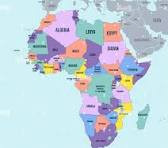
This proposal should be welcomed not as an isolated bilateral gesture, but as part of a much larger continental awakening. The African continent has lived with the artificial geography imposed by the Berlin Conference, where European powers carved up land, communities, families, languages, and trade routes according to imperial convenience rather than African reality. Those borders were never drawn to reflect the lived truth of African peoples. They split kingdoms, divided kith and kin, interrupted commerce, and imposed bureaucracy where there was mobility, exchange, and shared belonging. To continue treating those colonial lines as if they were sacred is to remain trapped in the logic of the colonizer. To begin relaxing them is to begin reclaiming ourselves.
The idea that an African needs to undergo unnecessary burden, delay, and expense moving from one African state to another is a contradiction of our history. Trade cannot flourish where movement is strangled. Regional integration cannot deepen where ordinary citizens remain prisoners of outdated systems. Families living near borders should not feel like foreigners in the next village simply because a colonial administrator once drew a line across a map. Our people have always traded, married, visited, prayed, and laboured across these spaces long before the modern state put up barriers. In truth, Africa’s integration does not begin with treaties in conference halls; it begins with the dignity of the trader, the teacher, the commuter, the farmer, and the student who must cross a border without humiliation.
It is encouraging that this is not happening in a vacuum. Across the continent, there are already examples of states daring to imagine a different Africa. In parts of West Africa, citizens have long enjoyed the relative ease of movement under regional arrangements that recognize the importance of mobility to integration and commerce. In East Africa, too, there have been serious efforts to advance freer travel and more seamless cross-border interaction through regional cooperation and the gradual harmonization of systems. These efforts are not perfect, and they remain incomplete, but they carry an essential message: Africa can choose integration over suspicion, cooperation over isolation, and confidence over fear. Zimbabwe and Botswana would not be inventing an entirely new path; they would be strengthening a continental direction that is already visible.
The significance of this proposal also lies in its symbolism. Identity cards represent recognition. They are a way of saying that a citizen is known, trusted, and entitled to move with dignity. If properly implemented, such a system can reduce the cost of travel, ease congestion at border posts, encourage formal trade, and strengthen social ties between neighbouring communities. It can also help shift the mindset of governments from guarding borders as if they were fortresses to managing them as gateways of opportunity. A border should not be the place where African aspiration dies in a queue. It should be the place where African cooperation begins.
Of course, such reform must be guided by systems that are orderly, secure, and technologically sound. But security should never be used as a permanent excuse for stagnation. There are modern tools available to states that wish to balance mobility with accountability. Digital clearance systems, harmonized immigration procedures, and one-stop border posts can all help remove unnecessary friction while protecting national interests. The issue is not whether Africa can manage such a transition. The issue is whether Africa possesses the political courage to do so. And that courage is now urgently required.
- Open letter to President Mnangagwa
- Feature: ‘It’s worse right now than under Mugabe’: Sikhala pays the price of opposition in solitary cell
- Masvingo turns down fire tender deal
- Human-wildlife conflict drive African wild dogs to extinction
Keep Reading
The broader principle at stake is simple yet profound: Africa must learn to trust itself. For too long, our policies have been shaped by inherited fear, by the suspicion that every movement is a threat, every traveler a risk, and every border a battlefield. But a continent that does not permit its own people to move cannot expect its economies to grow with vigor or its integration to become real. The dream of a united Africa was never merely about flags, anthems, or diplomatic speeches. It was about ordinary life about the freedom to move, to work, to trade, to learn, and to belong across the continent without being treated as a stranger in one’s own civilizational home.
If Zimbabwe and Botswana can take this step, they should do so boldly and without hesitation. Let the reform begin where the need is most visible and the benefits most immediate. Let border communities be the first to feel the relief of a new African common sense. Let commerce move more freely. Let the ties of kinship and culture breathe again. Let the young people of this continent see, in practical policy rather than rhetoric alone, that African unity is not a slogan reserved for anniversaries and summits. It is a living project, demanding action, imagination, and trust.
This is why Mnangagwa’s proposal matters. It is not simply about identity cards. It is about history correcting itself. It is about Africa beginning to undo the administrative cruelty of colonial partition. It is about honoring the Pan-African thinkers, freedom fighters, and visionaries who insisted that our future lies in deeper unity. It is about saying, with seriousness and conviction, that these borders were not made by us, for us, or in our interest. And if they no longer serve our people, then our duty is to soften them, humanize them, and ultimately transcend them.
We need this. Not someday, not after endless committee work, not after the language of integration has been drained of meaning. We need it now. Africa’s renaissance will not be built by hesitation. It will be built by decisive steps, by courageous leadership, and by the willingness to make the continent easier for Africans to live in, trade in, and move through. If we are truly serious about one Africa, then let us start by making it easier for Africans to cross from one African country to another as brothers and sisters, not as suspects.
*Lawrence Makamanzi is a researcher and analyst. He can be reached at [email protected]