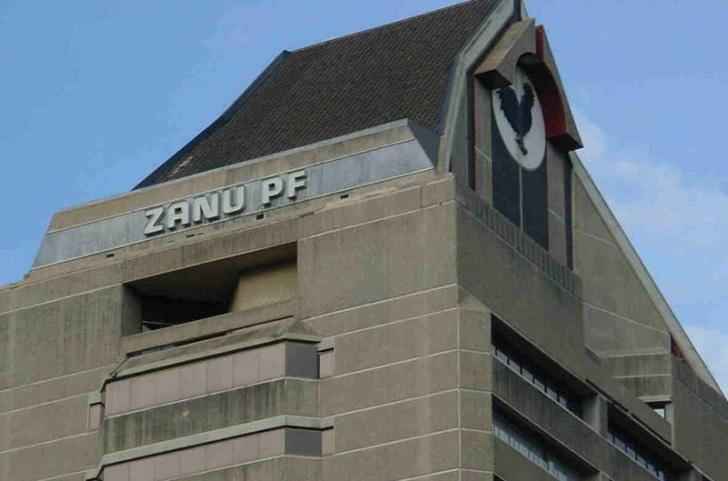
I grew up in an environment where ZANU-PF cultivated a culture of blaming everyone but itself. It became a defining trait—one that has shaped not only political discourse but also the lived reality of millions of Zimbabweans over decades.
At different points in our history, the party has identified convenient scapegoats for its failures. In the early years, blame was directed at white commercial farmers and business owners. When many of them left the country, the promise was that prosperity would follow. Instead, agricultural productivity declined and food insecurity worsened.
The narrative then shifted to multinational industrial companies, accused of sabotage and exploitation. One by one, many of these companies either scaled down operations or shut their doors entirely, leaving behind unemployment and economic contraction.
As economic challenges deepened, a new explanation emerged: sanctions. The opposition—particularly the Movement for Democratic Change—was accused of lobbying Western governments to impose punitive measures on Zimbabwe. While sanctions did have an impact, this explanation often served to deflect attention from internal policy failures, corruption, and mismanagement. Meanwhile, opposition voices were not merely criticised; they were harassed, intimidated, and, in many cases, silenced.
The year 2008 marked one of the darkest chapters. Following electoral losses, opposition supporters were blamed for undermining the ruling party. What followed was a wave of violence that shocked the conscience of the nation. Beatings, killings, and enforced disappearances became tragically common. Instead of introspection, there was retaliation. Instead of reform, there was repression.
However, this culture of blame is not unique to Zimbabwe. I witnessed a similar pattern during my student years in Britain in the early 1990s. At the time, the British National Party gained attention by blaming many of the country’s challenges on Black communities, immigrants, and anyone perceived as different. It was a strategy rooted in division—one that sought to convert fear and frustration into political capital rather than offer real solutions.
Fast forward to today, and echoes of that approach can still be found in parts of British politics. The rise of Reform UK has, in some instances, leaned on narratives that place disproportionate blame on migrants and outsiders for complex national issues. While the context is different and the institutions are stronger, the underlying tactic—simplifying problems and assigning blame to identifiable groups—remains familiar.
In both cases, whether in Harare or Westminster, the politics of blame thrives in moments of uncertainty. It offers easy answers to difficult questions, but at a cost. It creates divisions, distracts from accountability, and ultimately delays meaningful progress.
- Backlash over ZEC’s huge 2023 poll fees
- Yadah finish Chibuku Cup on a high
- Yadah finish Chibuku Cup on a high
- Backlash over ZEC’s huge 2023 poll fees
Keep Reading
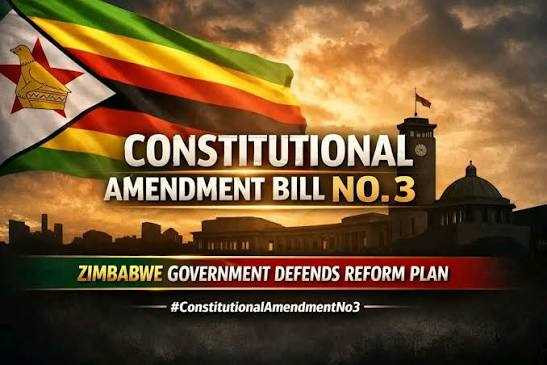
Now, in 2026, as Zimbabwe grapples with the rejection of the Constitutional Amendment Bill No. 3, the familiar pattern is emerging once again. Rather than recognising public sentiment or engaging in honest reflection, the search begins for someone—anyone—to blame.
To ZANU-PF, blame may win votes. It may rally a base. But it does not build nations.
Zimbabwe, like Britain, must continually choose between two paths: one of division and deflection, and another of accountability and inclusion. History shows that while the politics of blame may endure for a time, it is never a foundation upon which lasting prosperity is built.
The real challenge for leaders in both countries is not to find new scapegoats, but to find the courage to confront their own failures and lead with responsibility.