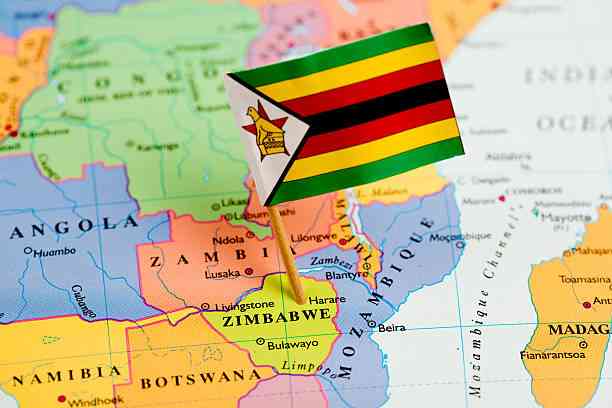
ZIMBABWE turns 46 years in 2026.
That is not a young nation.
It is old enough to have built durable institutions.
Old enough for development to be routine rather than theatrical.
And yet, nearly half a century after independence, progress increasingly arrives branded.
Roads are not simply roads.
Boreholes are not just service delivery.
Agricultural schemes are packaged with initials.
- Experts downbeat as Ncube cuts GDP forecasts
- New perspectives: De-link politics from Zim’s education policies
- Experts downbeat as Ncube cuts GDP forecasts
- New perspectives: De-link politics from Zim’s education policies
Keep Reading
The phrase “4ED” circulates in political messaging, a shorthand that collapses governance into personality.
The question is not partisan. It is institutional.
After 46 years, why must development still wear a face?
At independence in 1980 under Robert Mugabe, the rhetoric, whatever its later distortions, framed Zimbabwe as a national project.
The language was centred around reconciliation, education expansion, healthcare access and State-building.
Institutions were meant to outlive personalities.
The country, not the individual, was the protagonist.
Today, under President Emmerson Mnangagwa, development is more visibly personalised.
Infrastructure is branded. Programmes are marketed.
Policy is amplified through identity. Governance feels less abstract, more embodied.
This shift matters because strong institutions do not require constant branding to legitimise delivery.
In stable economies, highways are built by transport ministries, not personalities.
Water systems are expanded by utilities, not campaign slogans.
Citizens expect service delivery as a function of governance not as a favour attached to a name.
When systems work, they do not need advertising.
They are predictable. They are normal.
Zimbabwe’s economic journey since 1980 has been turbulent.
Hyperinflation in 2008 devastated savings and eroded institutional trust.
Dollarisation in 2009 brought temporary relief.
Currency instability returned in 2019. Deindustrialisation deepened.
The informal sector expanded as formal employment contracted.
Manufacturing’s contribution to GDP declined significantly from its early post-independence levels.
In such an environment, economic gains are politically valuable and symbolically amplified.
Scarcity increases the need for narration.
When growth is structural and sustained, it speaks quietly through rising productivity and a stable currency.
When growth is fragile, it must be repeated to be believed.
Branding becomes reassurance.
Supporters might argue that attaching leadership identity to development enhances accountability; that visibility creates urgency.
In competitive political environments, credit-claiming is strategic.
Modern politics everywhere is personality-driven.
That is true.
But proportion matters.
In functioning economies, slogans complement performance.
In struggling economies, slogans risk substituting it.
When infrastructure delivery is consistent, branding feels ornamental.
When delivery is uneven, branding becomes central.
The deeper issue may not be economic decline.
It may be institutional confidence.
Nations that trust their systems do not anchor progress on individuals.
They rely on bureaucracies, legal frameworks and fiscal structures designed to endure beyond election cycles.
When credit is personalised, it suggests institutions do not command sufficient trust.
After nearly half a century of sovereignty, development should not require initials to feel legitimate.
A borehole drilled in 2026 should symbolise administrative capacity, not personalised benevolence.
A road constructed should reflect institutional continuity, not campaign branding.
The tragedy is not the existence of slogans. Political communication is inevitable.
The concern is slogans deem it necessary to validate ordinary governance.
Zimbabwe at 46 stands at a crossroads between nation-building and brand-building.
One relies on institutions strong enough to outlive leaders.
The other relies on leaders strong enough to overshadow institutions.
The difference is not semantic. It is structural.
A confident State builds quietly. An insecure State brands loudly.
After 46 years, the question is simple: should development still need a face or should it finally be normal?Simbarashe Namusi is a peace, leadership and governance scholar. He writes here in his personal capacity. He can be contacted on [email protected] or on +263 773 257 449