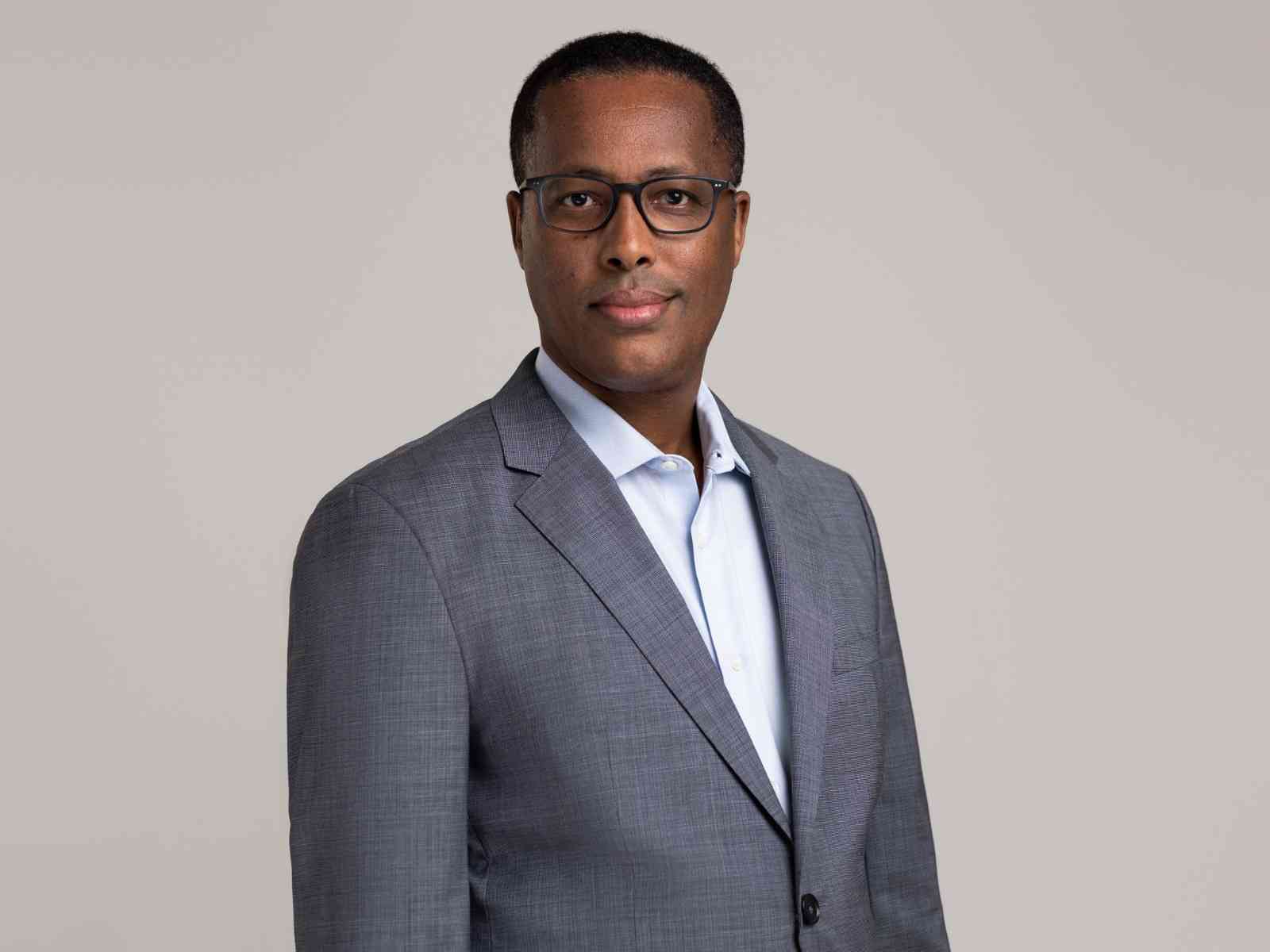
The world is experiencing hyper change, which necessitates leaders to be agile. Our columnist Jonah Nyoni (ND) attended the AbR Media Convention held in Kigali, Rwanda, where he spoke to an expert Jurie Vermeulen (JV) on leadership. Find excerpts below:
ND: In your conference presentation, you cited John C. Maxwell, who said, “leaders see more and see before.” What does that mean?
JV: One of the main functions of a leader is to understand their context. We talk about decoding your context, analysing your context.
They must be different from a staff member. The leader's job is to see what’s going on around them and to align their organisation with what’s happening around them and what will happen in the future. A leader’s best friend is the future.
Leaders always look to the future. That’s why leaders see more. They see more than ordinary staff because they’re analysing, and they see it before. They anticipate what will happen and lead their organisations into the future successfully.
ND: One of the things that is inevitable is change. How does a leader prepare for change, especially in the face of these new developments — technology, AI and the constant shifts we see every day?
JV: That’s the leader’s function. The leader’s function is to look at their environment and align their organisation with what’s coming. Right now, there are many factors converging globally. All types of technologies are coming together.
It’s like rivers flowing into one massive stream. Huge changes are coming because of breakthroughs in AI, computing, biology and bioengineering. For instance, the University of Chicago was able to implant a microchip (a computer chip) into a living cell. When these technologies become more advanced, humanity will change.
- Time running out for SA-based Zimbos
- Sally Mugabe renal unit disappears
- Epworth eyes town status
- Commodity price boom buoys GB
Keep Reading
Even humans themselves will change. We talk about transhumanism. If you don’t have those chips in your cells, you become an inferior being.
They’ll just know things automatically that you don’t. So all these technologies flowing together form what we call an inflection point. And inflection means a dramatic, sudden change.
ND: How does this disruption — technological, biological and political — relate to leadership?
JV: Yes, all this is disruption: technological, biological, political wars, pandemics. We’re seeing more totalitarian governments because they have more control —surveillance of people, digital IDs — all these things that enable governments to control populations.
Like in some places in China, if you cross the street and you’re not on the pedestrian crossing, cameras pick up your face and deduct money automatically from your bank account. You don’t get a fine — they just take the money.
That’s how it’s becoming. And it’s not just China — it’s coming to the rest of the world. So huge disruption is on the horizon.
And for us as leaders, especially in media, that has massive consequences. We’ll need to adapt. I’m not sure if you want me to go into how Paul managed the disruption.
ND: Let’s talk about the Pauline leadership model. Take us through that model. How can it help a leader — whether in the church or in the secular space?
JV: Leadership is a generic concept. You don’t need to be very different as a leader in the church or in ministry compared to a leader in the secular world.
You need the same skills — they’re just applied differently in a church than in a business. In my PhD research, I studied the Pauline letters. I chose Paul to develop a leadership model because he planted new churches and had to appoint new leaders.
I wanted to understand how he thought. What model, if you want to call it that, did he use? So I studied his letters for a couple of years during my PhD and isolated five elements — five characteristics or dimensions of leadership — that Paul seemed to work with.
Context: The first one he was very clear on is that a leader should understand their context.
Paul adapted to the context all the time. He spoke differently to Jews than to Greeks. He used Greek poets to speak to them.
He didn’t quote from the Bible — he used their own authors. He adapted.
He spoke to highly intelligent philosophers and also to ordinary people who weren’t as developed in their thinking. So he was very adaptable. He understood and adapted to his context.
The second thing I isolated in Paul’s letters is character — the leader’s character. So first is the leader’s world, their context.
Character: Second is the leader’s character — their personality, their style. That’s the leader’s soul.
Of course, your personality impacts your leadership style. It affects how you work with people, how you lead. Paul had a lot to say about character, too. He emphasised that leaders need to live close to God. They must have a living relationship with God. You can’t be a godly or Christian leader if you’re not continually connecting with God.
So that’s character. You must grow in your character — otherwise, you’re a dangerous leader. If you’re not a leader with solid character and good values, you’re dangerous. It doesn’t matter how many skills or gifts you have.
Calling: Then the third element in Paul’s model is the calling of a leader. We have context, character, and calling — the essential gifts and functions of leadership.
God gives gifts to leaders — talents, skills — and you need to improve those skills. You must always grow as a leader. You can’t just expect God to teach you everything supernaturally. You have to read books, you have to study, and you have to learn from your experience — what works and what doesn’t. That’s part of the calling, the functions, and the gifts. Then we talk about the competencies and capacities of leaders.
Competences: These are the generic skills that all leaders need — whether in business, church, or ministry. They need to be able to resolve conflict. They must be problem solvers.
They must know how to work with people, how to manage people, and even how to manage finances. There are so many different skills leaders need. These are universal across the board.
Core metaphor: Then the last one is the core metaphor of leadership. We believe that all leaders must be servants. If a leader is not a servant — if you don’t serve people — you’re not entitled to have followers.
No leader is entitled to followers without first serving them. People choose to follow you. That’s what true leadership is. It’s not about position.
Paul displayed many leadership characteristics from these five dimensions I just mentioned in how he approached and handled disruption and crisis. We looked at Acts 27 and saw how Paul didn’t consider himself a victim of the Romans. Paul said, “I want to go to Rome,” and they granted his request.
He was in prison and all that, but he never saw himself as a victim, even though he was imprisoned for two years unjustly and assaulted. Now he had to go to Rome. But it was Paul’s decision, and God said, “You must go to Rome for me.” On his way there, he made contact with his support network.
That’s important for leadership — to rally your support, to stay in contact with those who support and help you. He was always aware and vigilant while they were sailing. Paul said, “Let’s not continue, because we’re going to run into trouble.”
They didn’t listen — and they did run into trouble. He was always looking at the context, anticipating what was coming, and identifying what they should be aware of.
He maintained his relationship with God — we see this in Acts 27 — because an angel of the Lord came to him on the ship. And because of that revelation, Paul was able to encourage everyone on board: God said we will not die. The ship will run aground, but we will not die. He’s saving all of us, so we can continue. He followed God’s instructions carefully all along the way. He stayed focused on the people. He spoke to them and told them what to do: “Let’s eat,” he said.
“You need your strength now. You’re going to run aground, so you need strength. You haven’t eaten for 14 days. Come, let’s get together, break bread, eat, and be ready to be shipwrecked.”
After that, Paul simply continued on his mission. He was vigilant, agile, resilient as a leader—focused on people, in contact with God, and aware of his context. That made him an excellent leader.
ND: One of the things the book Accelerate by John Kotter talks about is speed and agility in the face of change. How important is speed?
JV: Very important. Because look—AI is already here, and some people are confused. They don’t know what to do with what’s happening.
Leaders cannot be lazy. Leaders must be students of the world, students of people. If you’re a Christian leader, you must be a student of the Bible and stay in close contact with God.
Leaders must know what’s happening around them and be adaptable, agile, flexible — able to change direction on a dime if needed. What worked yesterday won’t work today. What worked this year won’t work two years from now, because the world will be different.
The task of a leader is to see what’s going on around them, communicate that to their organization, their staff, and all stakeholders, and say, “This is what’s going to happen.” Just like Paul did in Acts 27. He said, Listen, I see — from verse 9 to 13 — I see that the seasons have changed. We can’t just go on. We need to stay here for the winter, and then we can continue. If we go on now, I foresee loss of ship and cargo.
He saw it before it happened. That’s the work of a leader —to interpret the current situation a nd describe to the people what needs to be done in the future if we want to survive. So speed, agility, resilience — all those good words — are very important.
ND: How important is learning agility — your ability to learn faster than everyone around you — as a leader?
JV: As a leader, that’s the key. What should we be learning? That’s the key.
You must, like I said, decode your context all the time. See where we are, what’s happening around us, and where we need to go — not just to survive, but to grow, to conquer, to succeed.
Because a leader cannot — I’ve spoken to church leaders and other leaders, and all I hear is, “This is out of our hands. We’re helpless. We have no solution.”
Those are not leaders. They’re just like their staff. Their doors will close.
They won’t survive. You can’t think like that. Everything going on around you isn’t necessarily a problem.
It’s a challenge, yes — but it’s a solvable challenge if God is with you. And if you do the work of analysing, learning, acting fast, liaising with all your stakeholders — your board, your staff, your audience, your clients.
You must stay alert, stay informed, stay vigilant, stay aware, and be ready to change.
Leaders who aren’t ready to change will not survive.
ND: You gave us one of the tools — the Bible. What would be your best books on leadership that you’d recommend?
JV: Well, there are so many. Probably about three or so. It depends on your need. I like John Maxwell’s books. They’re very easy to read, easy to understand. They give you basic principles. Patrick Lencioni has books such as The Five Dysfunctions of a Team and The Advantage, and all those kinds of books. What’s really helpful to me as a leader is joining platforms like Harvard Business Review — the website, hbr.com — and McKinsey Consultants’ website. I subscribe to their websites, so I get lots of articles almost every day. I get updates from them. These articles are short, easy to read, and based on research.
It’s not just a book someone wrote with five principles and a hundred stories. It’s: “We researched a thousand companies on this topic and found this, this and this.” That helps me a lot to stay abreast of developments and trends.
So I’d really recommend that — if you’re a leader who wants to stay in touch with the latest research, the newest trends, and the things you need to learn and do.