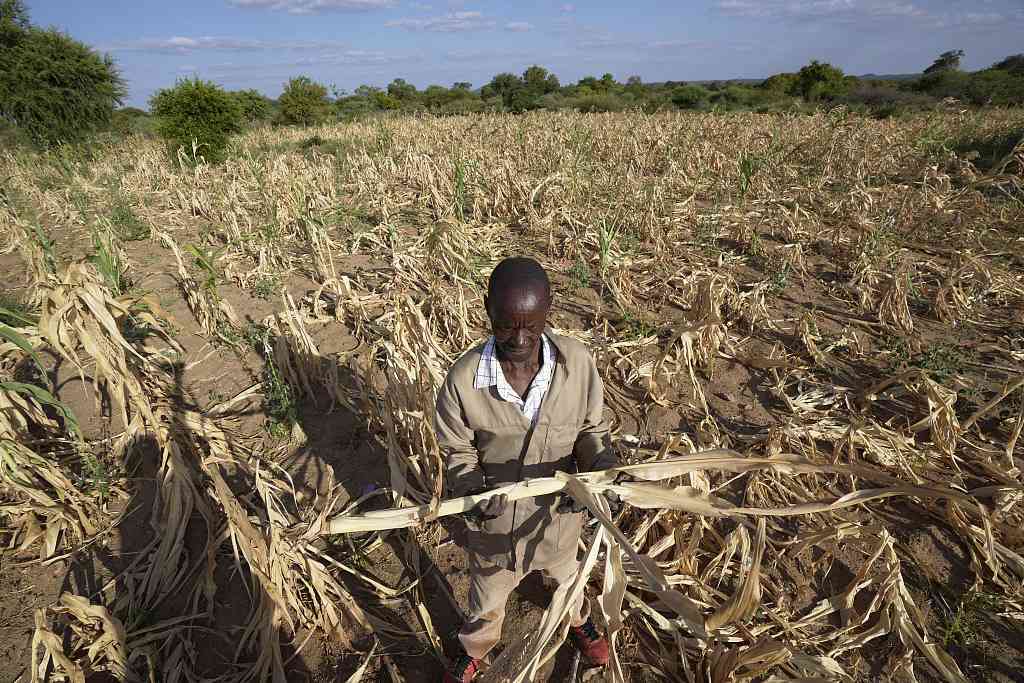
THE heat has been relentless.
Fields are still dry with bristling grass.
Most farmers who rely on natural rains are still staring at the sky with trepidation.
However, the government wants to play god, cloud seeding, but the process is unclear as mud.
Zimbabwe has over the years experienced dry seasons — long dry spells between the months of December to early February.
These long dry spells, despite having the right quantities of rainfall, naturally caused droughts.
Many Zimbabwean farmers still largely rely on natural rains for their agriculture activities.
They have no irrigation facilities to mitigate against the vagaries of climate change.
- Minister bemoans shortage of schools
- BCC joins Green Cities initiative
- Drunkard kills church pastor
- DripSol’s one-stop-shop for farmers opens doors
Keep Reading
It is no small wonder why farmers still rely on natural rains, years after the government spent millions of greenbacks in farm mechanisation programmes — programmes that literally were a transfer of public money into private hands.
It may be of interest to state that the Reserve Bank of Zimbabwe incurred millions in debt to try to support resettled farmers.
Many of the millions found themselves in the bank accounts of the politically connected.
Overnight, they became big businessmen by playing the middlemen.
The government has evolved. It has learnt new words like climate proofing.
These are big words. Words that show man taming climate change.
This combines the actions such as producing drought resistant seeds or even taming dry seasons.
On taming the dry seasons, governments and private players have come up with developing irrigation infrastructure — dams, pipes and centre pivots.
Farmers are learning climate resilience and adaptation.
The government has also played a key role in the development of cloud seeding.
This is a new form of causing dry clouds to weep and water the fields in a controlled manner.
This is not new and the process chews millions of dollars.
It carries with it the riveting facts of seminal literature by Yuvral Harari — Homo Deus. Of men playing God. Men adapting to their changing natural environments or even making the seasons.
The government this week confirmed that it was worried Zimbabwe may experience a dry season.
In mitigation, it plans to play god, producing rain from cloud seeding.
“Cabinet considered and adopted the cloud seeding programme for the 2025-2026 summer cropping season,” the government said in a post-cabinet statement.
“The aircraft cloud seeding systems, which Zimbabwe currently uses, has been selected as the most practical and effective in terms of flexibility, coverage and precise targeting for large-scale operations, making it ideal for comprehensive cloud seeing initiatives in Zimbabwe.
“These systems will be complemented by drone technology. A whole government approach has been adopted to ensure timely and efficient operations.”
This is a bold statement. A statement of intent, but when scrutinised, it falls short.
Let’s look at the phrases: most practical and effective in terms of flexibility; coverage; and precise targeting for large-scale operations.
The fact that cloud seeding is seen as practical and effective in terms of flexibility makes a mockery of these terms.
Practical, effective and flexible are terms that say it is possible, has a high rate of success and can be used in creative ways.
Then the crunch phrase: precise targeting for large-scale operations.
The question is which farms or areas and large-scale operations that are targeted.
When we start asking these questions, this leads to the realisation that this is a disguised business opportunity for the politically-connected tenderpreneurs to make money out of people’s misery.
The government acknowledges cloud seeding has been done for several years, but it has not shared publicly how much rains the process produced and what were the effective yields during those seasons.
The figures are not public because they were a complete loss.
The processes did not produce tangible results.
The plan for this season has not been explained how many aircrafts would be used and what hectarage is targeted.
This could be deliberate. Does the State have the planes for the exercise?
Or they would be leased from private players — the so-called tenderpreneurs?
If it is the latter, the government has not confided in the taxpayers how much the process would cost.
It is conceivable; it would run into several millions of greenbacks.
These are amounts that soon would be clinging in their bank accounts or they would be paid in Treasury Bills.
The country has to be debating this candidly in Parliament.
Zimbabwe cannot afford millions being looted because of the perennial dry seasons by cloud seeding without investing in more dams and irrigation infrastructure for farmers.
The Finance ministry should come out openly about the source of funding.
Zimbabwe cannot afford operating on having to accrue debts through unauthorised expenditures.
Expenditures that are done to make tenderpreneurs rich each year without tangible results to the citizens.
In the final analysis, the dry seasons should not be used to water the bank accounts of a few politically connected middlemen.
Climate change should be taken seriously and good policies implemented to adapt to it.
Short-term solutions are expensive and not sustainable, except to the few middlemen who are enjoying the cream of the country’s economy.