WHEN things started going south in Zimbabwe, with western companies closing shop and relocating, the country had no option but to adopt the Look East policy.
Today, two and half decades later, Zimbabwe relooks east as President Emmerson Mnangagwa seeks to cement his legacy.
China has in the past two decades extended over US$3 billion loans to Zimbabwe.
In fact, it has become the largest creditor to Zimbabwe.
The funds have largely been used for infrastructure development.
Among the projects are: Robert Gabriel Mugabe and Victoria Falls international airports, the National Defence College, Kariba South Hydro-electric power station and Hwange Thermal Power Station expansion.
On the other hand, China has become the largest investor in mining.
It now controls Zimbabwe’s lithium mining, iron mining, chrome mining and is now a significant player in gold too.
- Gweje relishes fashion achievements
- Russia-Ukraine war to cause Zimbabwe bread shortage
- Russia-Ukraine war and the Zimbabwe daily bread
- Russia-Ukraine war to cause Zimbabwe bread shortage
Keep Reading
China now is a world power, both economically and militarily.
It now has focused infrastructure projects in Africa and Asia — the Silk Roads Initiative.
These are meant to facilitate trade.
Zimbabwe was slow to the game, but last week’s visit to China has touched the right nerves.
It signed a US$600 million memorandum of understanding to refurbish the country’s railway and revamp the ailing National Railways of Zimbabwe.
The State media reported: “The discussions with CRG [China Railway Group] are for a comprehensive overhaul of Zimbabwe railway infrastructure through several key initiatives including infrastructure modernisation, rehabilitation of existing railway lines, signalling systems, and acquisition of 17 new locomotives and 209 modern freight wagons.”
China is a world leader in infrastructure development. It has developed railway lines in Kenya, Ethiopia, Tanzania and Zambia.
However, a word of caution. Walter Rodney in his seminal book How Europe Underdeveloped Africa wrote: “All roads and railways led to the sea.”
Nearly 300 years later, things have not changed — all roads and rails still lead to the sea.
African raw materials are still feeding the factories and industries in Europe and of late, China.
The refurbished railways will make transportation of bulk ore such as lithium, chrome, iron and granite to the port of Beira for onward shipping to China.
Refurbishing railways is no charity, but enhancing its extractive powers.
Let’s get back to deal and what it means. It’s still not clear how the finances are structured.
However, it is most likely that this project would be funded by sovereign debt.
Currently, Zimbabwe public debt stands at US$21,5 billion, a significant portion of these debts are in arrears.
Of this amount, nearly US$3 billion is owed to China for the afore-mentioned projects and most of these debts are now set for repayment after the seven years grace period.
Like earlier stated, China does not do charity. It does serious business.
Therefore, Zimbabwe is expected to fork out collateral guarantees.
We are not certain what it would be, but it is very conceivable Zimbabwe would mortgage more mineral resources to China.
For starters, one may look at how Zimbabwe used its diamonds as collateral security for the loans to refurbish its international airports.
The country has nothing to show for all its diamond wealth.
Marange is still a village despite producing diamonds for nearly two decades.
Zimbabwe should become craftier in signing these debt or dirty deals.
Otherwise, it will find itself in a debt trap.
Political analyst Takura Zhangazha recently wrote on his blog: “The heavy investments that the Chinese have made in mining, energy and infrastructure development need to be politically protected. This can only be done when its primary political partner, Zanu PF, retains political power.”
Zhangazha poignantly added: “This also indicates that our politics, while purporting to be about democratic elections every five years, is beholden to Chinese economic interests in Zimbabwe.”
This is deep. As a country we have to candidly discuss our foreign policy, economic trajectory and sovereign debt.
Failure to do this, Zimbabwe will find itself back in time — 1890, a colony again of some sort.
It is, however, not all bleak if political leaders are sincere.
The railways can be used to boost internal trade like moving timber from the Eastern Highlands to all other provinces, move grain, vegetables across the country and reduce the cost of doing business.
We need roads and rails that connect citizens and make it safer and easier to commute inter-districts or inter-provinces.
Moreover, they can be used to revitalise factories and industries as raw materials can be transported cheaply.
When all is said and done, Mnangagwa has somewhat achieved his mission of being a builder by implementing his infrastructure projects that will be his signature.
Zimbabweans will remember the roads and the rails for generations.
However, it all comes at what cost? Zimbabwe now needs to debate its foreign policy and economic development model, avoiding the lure of debt at the expense of the future.
The country needs technocrats who can analyse and negotiate deals that benefit the country.
Never again should we negotiate stupid deals like the Namibian power deal.
A country that was exporting electricity while at home its citizens were facing rolling power cuts.
Two decades of Look East policy, leadership should be smarter in concluding deals.
It should use experience gained over the years and even carefully adopt the Chinese state controlled economic model with relevant adaptation to the local culture and context.
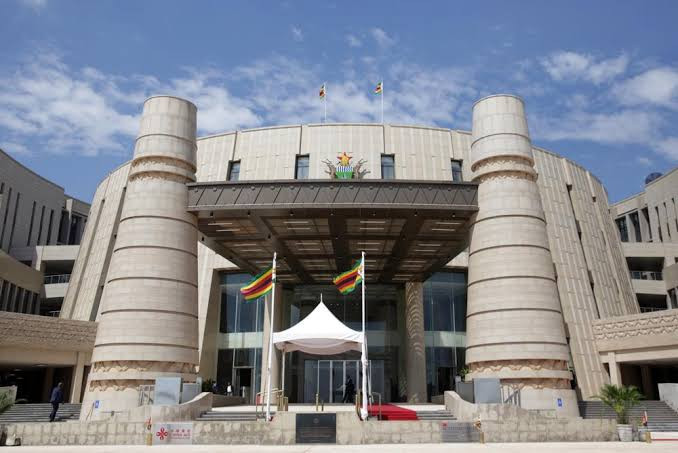
Zimbabwe’s Parliament should wake up and do its oversight role, hold the Executive accountable and thoroughly debate these loan deals before they are ratified in accordance with our constitution.
It cannot afford to continue business as usual at the expense of future generations by fawning to the ideas of one man.
Time to re-examine the Look East policy.