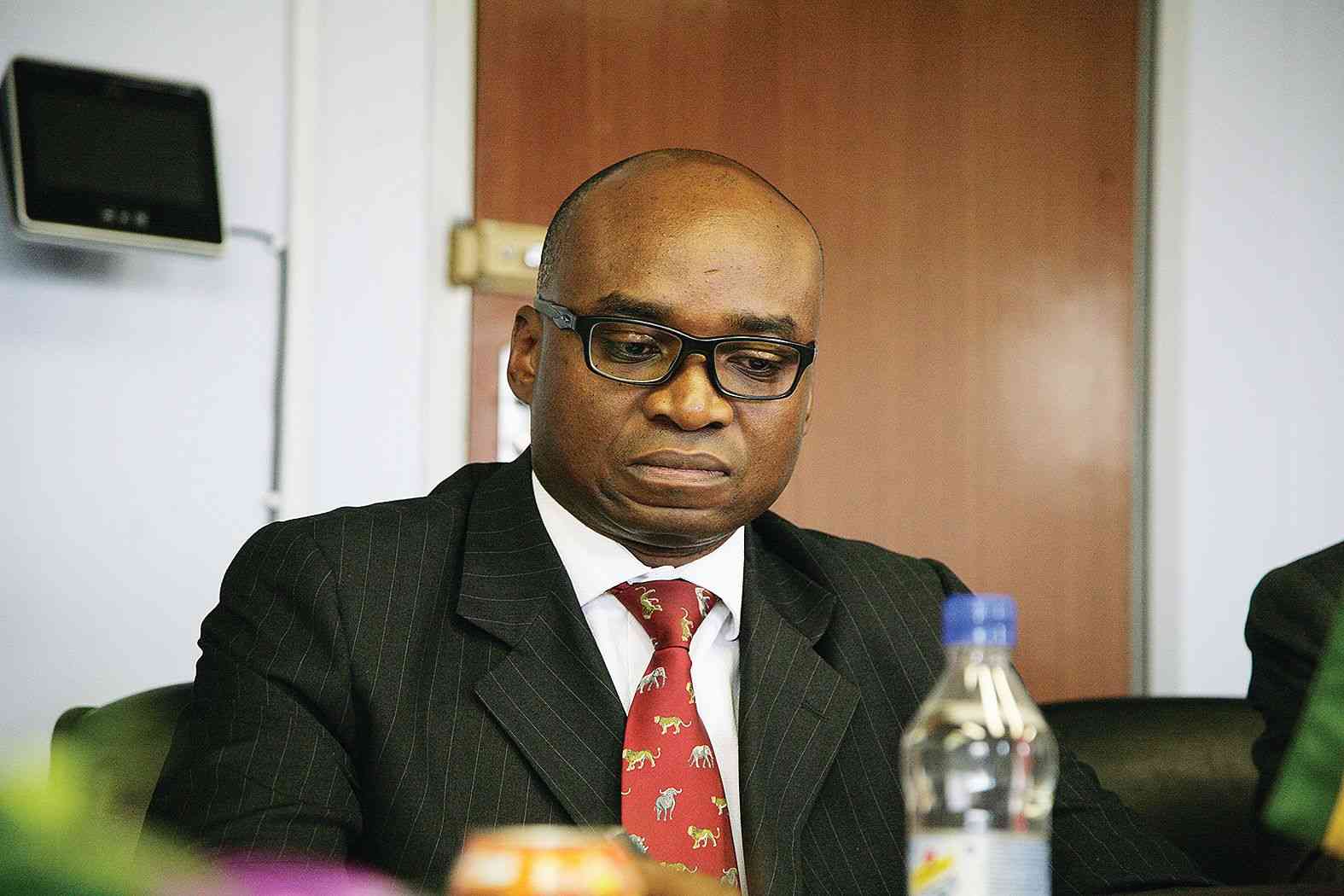
Trust, talent, and true leadership: Dr Nigel Chanakira
LAST week, we brought to you the first part of Dr Nigel Chanakira interview.
This week, we bring the last part of the interview that Jonah Nyoni (JN) had with Dr Chanaikira (NC).
In this concluding part, Jonah asked questions on team dynamics, talent density and emotional intelligence. Here are the excepts:
JN: How do we cultivate enthusiasm within teams and even elicit their commitment?
NC: Through our data analysis, we’ve observed that trust is the bedrock of high performance teams.
So the highest performing teams worldwide, renowned, are the Navy SEALs.
And the research shows that if you look at the contents of a Navy SEAL who has gone on missions and successfully executed them, it’s not necessarily that they are the fittest.
It’s not necessarily that they are the best in class.
The statistics show it’s those who are the most trusted because Navy SEALs are on a mission. It’s a team effort.
No rock star is ever going to execute successfully.
They don’t need a Rambo in Navy SEALs because it’s teamwork.
So where trust is high, performance is high.
Where trust is low among the team members, performance is also low, despite competency.
So it may be a highly competent team, but if the politics is wrong, the dynamics for performance are not there.
The ingredients for success are not there.
JN: The question becomes; I’m the leader and my junior or my junior team player is seemingly having an intelligence that I do not have. How do I deal with that?
NC: I have led high performance individuals.
So for example, within my banking group, the first economist that I employed was a classmate of mine.
He got higher grades than I did.
And first year all the way through to third year, he was always top one.
So as a leader, bringing him onto my team, it was the realisation that I want the best on my team.
Remember, whose team is it? It’s mine.
And where is the competition? It’s outside.
So we are not competing inside.
That’s the mistake a lot of people make.
The competition is not inside.
The competition is outside in the marketplace.
So as long as I have got a very good team member, my responsibility as a great leader is to shine the spotlight on him when he does well, so that the others can mimic him for doing well.
I must compliment him so that he keeps shining. Are we together?
Now that is true leadership.
And I know when he does well, the team does well.
We collaborate and we complement each other as team members.
If I’m a great team leader, guess what?
He’s going to go beyond, far and beyond and that was the case with my economist. He was an academic.
He was a great researcher. But on the business side, he didn’t have what it took.
So I played to my strength and allowed him to play to his strength. And that’s what raises synergy.
When you have synergy, 1 plus 1 does not equal 2. 1 plus 1 equals 3 plus.
JN: In the book, No Rules Rules, the writers talk about talent density. One of the misdoings is whereby a leader does not know how to pick talent in a space. What would you advise such a leader?
NC: We must go back to the mission and objectives of the business or the organization. What are our goals?
Once the goals and missions are clear, we can then employ the McKinsey’s 7-S Model.
The model speaks to seven interdependent elements, thus structure, strategy, systems, skills, shared values, style and then staff.
So I pick a team in line with the competencies that I see in the 7-S Model.
One of the “S” stands for staff. So I must have the staff who can deliver. Now, that speaks to picking talent.
You look at Alex Ferguson. I think he is the consummate coach, isn’t he? For picking talent. So he knew he needed lethal goal scorers.
He knew he needed the best defenders. He didn’t hesitate to shuffle his teams, but by looking for talent.
So I believe that it is one of the key responsibilities of a leader to look for talent because you don’t deliver on your own.
JN: Great leaders seem to master emotional intelligence. Great scholars such as Daniel Goleman and Travis Bradberry have contributed extensively to the subject. What’s the power of emotional intelligence?
NC: I’m in the people business. The moment I understood that, even when I ran a bank, I didn't say people were in banking. No.
I said we are in the people business.
And people found that quite difficult to understand. So why do I say we are in the people business?
Because we are in an ecosystem and we are offering maybe financial services, but to whom? To people, through people.
So at the end of the day, if we believe that the core of anything is people, then emotional intelligence assumes its role.
Emotional intelligence has to do with the core existence and how you are able to exist within an ecosystem with others.
That’s where you drive enthusiasm.
That’s where you drive performance. That’s where you drive integrity.
That’s where you drive trust and competence.
If you’re dealing with people, and have recruited somebody who has a high intelligence quotient but lacks emotional intelligence, then it is your responsibility as a leader to develop those soft skills.
Emotional intelligence is an imperative part. You cannot lead others until you learn to lead yourself and others.