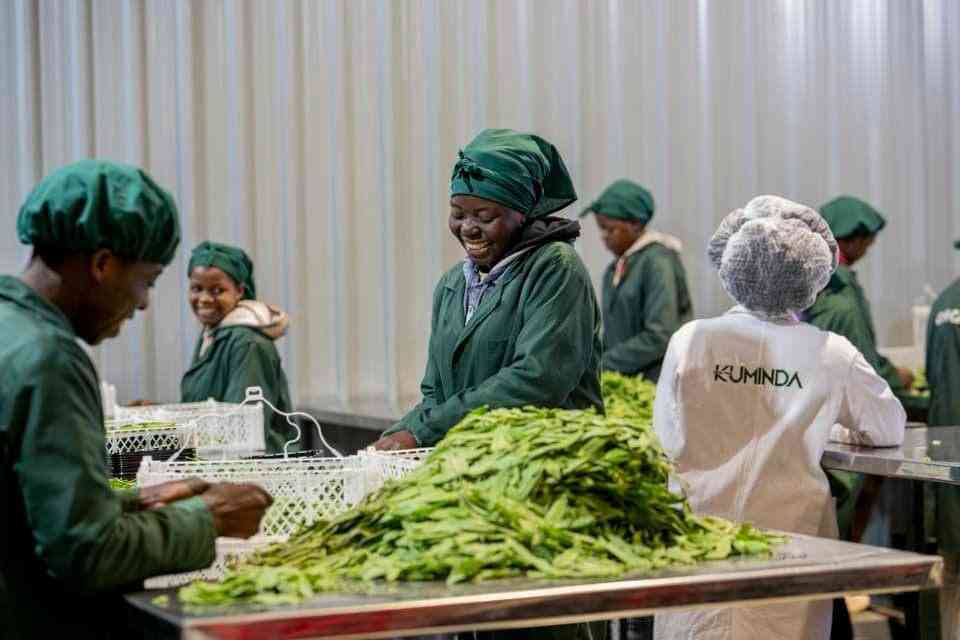
More than 5,000 Zimbabwean smallholder farmers are finding new pathways into lucrative European Union horticultural markets through Kuminda, a Harare-based aggregation and export company using contract farming to bridge the gap between rural producers and international buyers. Riding on Zimbabwe's preferential access to the European Union under the Economic Partnership Agreement, which provides duty-free and quota-free market access for eligible exports, the company is demonstrating how organised value chains can help small-scale farmers compete on the global stage.
Founded by horticultural quality assurance specialist Clarence Mwale, Kuminda was established about 15 years ago after he identified a gap preventing indigenous farmers from accessing premium international markets despite growing global demand for fresh produce.
"My vision was to create an aggregation facility that would train indigenous farmers, particularly small and medium-scale producers, to meet international standards so they could participate in export markets," Mwale said.
Rather than becoming a commercial producer himself, Mwale drew on his experience auditing farms across six African countries against European quality and food safety standards. That exposure convinced him Zimbabwe's farmers had the potential to succeed internationally with the right technical support, infrastructure and market linkages.
Today, Kuminda contracts farmers to grow mangetout and sugar snap peas before aggregating, grading, packing and exporting the produce to European buyers. At the start of each production season, the company first secures export contracts before translating demand into production targets, allocating hectares and supplying participating farmers with inputs and technical support.
"Our farmers focus on production while we take responsibility for post-harvest handling, grading, packing and exports. That allows them to concentrate on growing quality crops while we protect product quality throughout the supply chain," Mwale said.
He said the aggregation model also reduces post-harvest losses, which remain one of the biggest challenges facing fresh produce exporters.
"Most losses occur after harvesting because farmers often lack specialised handling knowledge and appropriate cold-chain infrastructure. We collect produce immediately after harvest to preserve quality and share that risk with farmers."
- Chamisa under fire over US$120K donation
- Mavhunga puts DeMbare into Chibuku quarterfinals
- Pension funds bet on Cabora Bassa oilfields
- Councils defy govt fire tender directive
Keep Reading
To satisfy stringent European Union food safety and traceability requirements, Kuminda deploys seven agronomists who train contracted farmers in record-keeping, responsible pesticide use, fertiliser management, worker welfare and internationally recognised certification standards, including GlobalG.A.P. and GRASP.
Looking ahead, Kuminda plans to diversify beyond peas into blueberries, targeting exports from 2027 through the same smallholder contract farming model. Mwale said the expansion would create additional opportunities for rural producers while strengthening Zimbabwe's position in premium horticultural markets.
Access to affordable agricultural finance, however, remains the sector's biggest obstacle.
"Farming requires patient capital. Financial products must reflect agricultural production cycles because farmers cannot repay loans within a single season," he said.
Mwale also called for greater investment in agricultural education, arguing that farming should increasingly be recognised as a professional business requiring specialised skills rather than a subsistence activity.
His vision extends beyond growing a successful company. By integrating thousands of smallholder farmers into export value chains, promoting internationally recognised production standards and championing value addition, Mwale is helping redefine horticulture as a driver of industrialisation, inclusive economic growth and national development. His aggregation model demonstrates how organised agribusiness can unlock export earnings while creating sustainable rural employment and positioning Zimbabwe as a competitive supplier in global fresh produce markets.