WHEN most people hear the word "coup," they imagine soldiers on the streets, tanks surrounding government buildings, suspended constitutions and military officers announcing the seizure of power on national television.
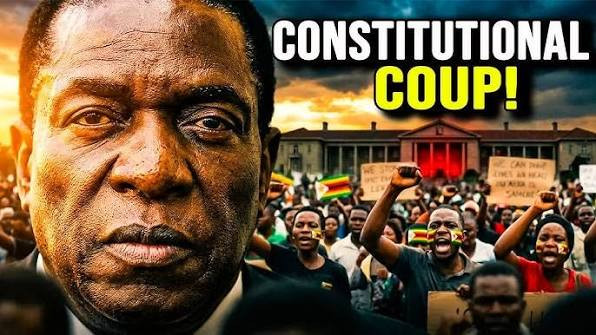
Yet, the 21st has produced a more sophisticated and often more dangerous threat to democracy: the constitutional coup.
Unlike a military coup, a constitutional coup does not abolish the Constitution. It appropriates it.
It does not suspend legal processes. It manipulates them. It does not overthrow democracy through force. It undermines democracy through the selective use of legality.
The result is often the same: the concentration of power, the weakening of democratic accountability and the frustration of the people's sovereign will.
Zimbabwe's Constitution Amendment No 3 Bill presents a textbook example of this phenomenon.
The evolution of coups
Africa has experienced several generations of democratic disruption.
- Parly approves 2022 supplementary budget
- Call for fresh PVOs Bill public hearings
- Turkey denies human trafficking reports
- ZLHR pushes for PVOs Bill abolishment
Keep Reading
The first generation consisted of classic military coups in which armed forces seized power directly.
The second generation involved electoral manipulation, where elections continued to take place but were conducted in ways that prevented genuine competition.
The third generation is more subtle. It uses constitutional amendments, parliamentary majorities and legal procedures to achieve outcomes that would otherwise be rejected by the electorate.
This is what scholars increasingly describe as constitutional coup-making.
The essence of a constitutional coup is not whether legal procedures are followed.
The real question is whether constitutional procedures are being used to destroy constitutional principles.
A constitution is not merely a collection of legal clauses. It embodies democratic values, limits on power and a social contract between citizens and the State.
When constitutional mechanisms are employed to defeat those principles, legality becomes a weapon against constitutionalism itself.
The African Union has already defined a constitutional coup
The debate over constitutional coups is often presented as if it were merely a political argument. It is not.
The African Union settled this question nearly two decades ago.
Article 23(5) of the African Charter on Democracy, Elections and Governance expressly recognises it as an unconstitutional change of government: "Any amendment or revision of the constitution or legal instruments, which is an infringement on the principles of democratic change of government."
This provision is revolutionary because it acknowledges a reality that many democracies have experienced: democracy can be undermined not only by soldiers with guns but also by politicians with parliamentary majorities.
The charter recognises that constitutional procedures can be abused to achieve anti-democratic outcomes.
The question, therefore, is not whether constitutional amendments are permissible. Constitutions may, indeed, be amended.
The question is whether particular amendments infringe the principles of democratic change of government.
That is the test established by the African Union itself.
Article 2 of the charter commits member States to promoting democracy, constitutional order and the rule of law.
Article 3 commits member States to constitutionalism, popular participation, political pluralism and democratic governance.
Articles 24 and 25 empower the African Union to respond when democratic institutions are threatened by unconstitutional changes of government.
Most significantly, the 2022 Accra Declaration on Unconstitutional Changes of Government recognised that contemporary threats to democracy increasingly include the manipulation of constitutions by incumbents seeking to entrench themselves in power.
The African Union, therefore, no longer views unconstitutional change solely through the lens of military intervention. It recognises that constitutional manipulation can produce the same anti-democratic result.
The Zimbabwe case
Supporters of Constitution Amendment No 3 Bill (CAB 3) argue that the Bill is being processed through Parliament and, therefore, enjoys constitutional legitimacy.
This argument mistakes procedure for principle.
Empirical evidence elsewhere in Africa shows us that many anti-democratic measures have been enacted through formally legal processes. Legality alone does not establish legitimacy.
The central question is whether the proposed amendments strengthen constitutional democracy or weaken it.
Several aspects of the Bill suggest the latter.
Most controversially, the Bill seeks to extend the tenure of elected office holders beyond the mandate granted by voters in the 2023 election.
At the heart of constitutional democracy lies a simple principle: political authority must periodically return to the people for renewal.
Citizens elect governments for defined periods. Governments govern during those periods. When the term expires, the people decide whether the mandate should continue.
That cycle is the foundation of democratic accountability.
When elected officials seek to prolong their tenure without returning to the electorate, the relationship between citizens and government is fundamentally altered.
The issue is not whether Parliament possesses the numerical capacity to amend the Constitution.
The issue is whether Parliament possesses the democratic authority to extend mandates that belong to the people.
No parliamentary majority can substitute itself for the sovereign electorate.
Indeed, the fact that the National Assembly has passed (CAB 3) by the requisite two-thirds majority only sharpens the constitutional question.
Numbers can pass legislation.
Numbers cannot create democratic legitimacy where the sovereign will of the people has been bypassed.
If, as anticipated, the Senate also passes the Bill, the question will remain exactly the same:
Can elected representatives extend electoral mandates without first returning to the electorate?
That question lies at the heart of constitutional democracy.
Constitutionalism versus constitutional amendment
One of the most dangerous misconceptions in contemporary politics is the belief that everything contained in a constitution can be altered by those who temporarily control the institutions of the State.
Constitutionalism is not the same thing as constitutional amendment.
Constitutionalism is the principle that power must be limited, accountable and subject to democratic control.
A constitutional amendment that weakens those principles may be legal in form while unconstitutional in spirit.
This distinction explains why many constitutions contain entrenched provisions designed to protect democracy from temporary majorities.
Zimbabwe's Constitution contains safeguards intended to prevent incumbents from benefiting from amendments relating to tenure and term limits.
These safeguards were not inserted accidentally. They were designed to prevent precisely the type of constitutional manipulation now under debate.
The Constitution anticipated the temptation of power and attempted to guard against it.
Why referendums matter
There is a simple democratic solution available whenever constitutional changes fundamentally alter the relationship between citizens and the State: let the people decide.
The Constitution of Zimbabwe was adopted through a referendum.
The people were the authors of the constitutional settlement.
It follows that fundamental change affecting electoral mandates, democratic accountability and the architecture of governance should similarly derive legitimacy from the direct consent of the people.
Those who claim overwhelming public support for CAB 3 should have nothing to fear from a referendum.
Democracy is strongest when it trusts citizens.
If the people approve the changes, the amendments gain democratic legitimacy.
If they reject them, the constitutional order remains intact.
Either way, the sovereign will of the people prevails.
Why this matters beyond Zimbabwe
The struggle over CAB 3 is ultimately larger than Zimbabwe.
It raises a question confronting democracies across Africa and beyond:
Can constitutions continue to protect citizens when those entrusted with power use constitutional procedures to weaken constitutional principles?
The answer will shape the future of democratic governance on the continent.
Democracy is not simply majority rule.
It is majority rule constrained by constitutional principles, periodic elections and the sovereignty of the people.
When those principles are weakened, democracy survives in form but not in substance.
Constitutional coups are dangerous precisely because they disguise democratic erosion behind the language of legality.
They ask citizens to accept that because a process is lawful, it must, therefore, be legitimate.
But constitutional history teaches a different lesson.
The ultimate purpose of a constitution is not to protect governments from the people.
It is to protect the people from the abuse of power.
That is why Zimbabwe's current constitutional moment deserves attention not only from Zimbabweans but from all Africans committed to constitutional governance.
The African Union has already recognised that constitutional amendments can, in certain circumstances, amount to unconstitutional changes of government.
The question before Zimbabwe is, therefore, not whether Parliament has the votes.
The question is whether constitutional power will remain where it belongs — with the people.
Senator Jameson Z Timba is a Zimbabwean politician, former Minister of State in the Office of the Prime Minister and Convenor of the Defend the Constitution Platform. He serves on the presidium and board of governors of the Progressive Alliance and writes extensively on constitutionalism, democratic governance, statecraft and Africa's democratic renewal.