RUMBIDZAI Madota left her three children early on Monday morning, hoping to secure a menial job at a nearby farm in Banket, Zvimba district.
She kissed them goodbye, promising to return with mealie-meal and school fees, before heading toward the busy Harare–Chirundu Highway.
She never made it back.
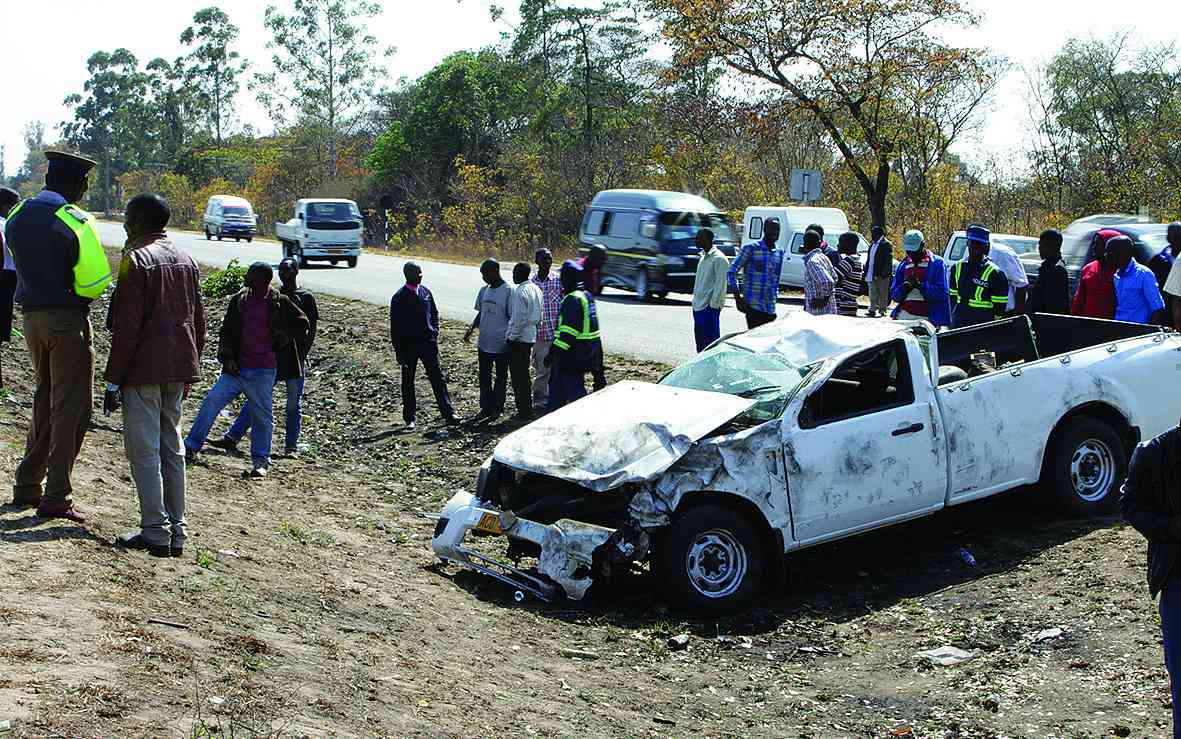
Days later, her story shocked the community. Madota was killed in a hit-and-run along the highway that cuts through Mashonaland West province. She is now part of a growing list of hit-and-run fatalities that have seen police appealing for information to arrest suspects. Recently, police intensified efforts to identify offenders by urging motorists to account for unexplained vehicle damage.
Her family is now left without food, answers, or support. Her eldest child, 16, may drop out of school to care for younger siblings.
Madota is one of 593 people killed on Zimbabwe’s roads between January and March this year — a 21% increase from 484 deaths recorded in the same period last year. A further 2 844 people were injured.
According to the Zimbabwe Republic Police, 15 125 crashes were recorded in the first quarter of 2026, up from 12 808 in the same period in 2025 — an average of 17 crashes per day.
At this rate, 2026 is shaping up to be one of the deadliest years on record.
- Harare businesswoman turns heat on police CCU over 'bias'
- Letter to my people: Criminals are hiding in plain sight
- 5 Zim cops off to South Sudan
- Crime tech: Technology can eradicate corruption
Keep Reading
March was the worst month, with 209 deaths and 879 injuries from 5 836 crashes. February recorded 206 deaths and 889 injuries from 5 089 crashes, while January saw 170 deaths and 4 200 crashes as festive-season recklessness spilled into the new year.
Injuries have also risen by 9,4%, leaving families burdened with medical costs and disability care.
Pedestrians are the worst affected. Many are breadwinners walking along highways without footpaths or safe crossings. When they die, families are often left destitute.
“The biggest killer on Zimbabwe’s roads is the driver behind the wheel,” said a church elder, Rainos Makara, of Chinhoyi.
“We bury young people every week because someone was in a hurry or operating a mobile phone.”
Road users echo the same concerns. While potholes on major highways worsen safety, reckless driving remains the dominant cause.
Human error dominates
Police’s 2024 statistics show that 95,52% of road accidents are caused by human error. Vehicle defects account for 0,58%, negligent pedestrians 0,45% and fatigue or illness 0,20%.
The leading causes are inattention, following too closely and speeding.
Inattention alone accounted for 24 851 cases (43,83%). Following too closely caused 14 448 cases (25,51%), while speeding accounted for 11 459 (20,23%). Combined with other errors such as reckless overtaking and failure to give way, driver behaviour accounts for over 80% of crashes.
“You can resurface a highway, but you can’t resurface a driver’s judgment,” said truck driver Charles Rupara, who has worked the Harare–Chirundu route for 12 years.
Road safety experts say enforcement and behavioural change are critical, not just speed cameras.
“We need a culture where defensive driving is the norm, not the exception,” said Tafadzwa Goliati of the Passengers Association of Zimbabwe.
“People think accidents happen to others — until they don’t.”
He said the association has taken “our road usage gospel to churches where we preach to people on good habits of road usage”.
However, the curse is a tall order for those who walk daily on public roads.
“Pedestrians don’t have airbags or seat belts. One mistake from a driver or a pedestrian is often fatal,” said Godwin Damba, a human rights advocate in Chinhoyi
TSCZ shifts focus to pedestrians
The Traffic Safety Council of Zimbabwe (TSCZ) has shifted its strategy to prioritise pedestrian safety following the deadly first quarter.
Director of operations and marketing Thomas Mahundi said the council has refocused its programmes on vulnerable road users. Measures include targeted social media campaigns, provincial education programmes, a weekly Safety Corner publication, participation in UN Global Road Safety Week, and expanded radio and TV outreach.
“TSCZ aims to cut road deaths by 50% by 2030 under National Development Strategy 1,” Mahundi said.
However, with 593 deaths in just three months, pressure is mounting for immediate results.
A global problem with local pain
Zimbabwe joined the rest of the world during UN Road Safety Week from May to 12, under the theme, Your actions can save lives.
Globally, 1,19 million people die annually in road crashes — over 3 000 per day. Road traffic injuries are the leading cause of death among people aged 5 to 29.
Pedestrians, cyclists and motorcyclists account for more than 50% of global road deaths.
The UN says simple actions — slower speeds, seatbelts, helmets, and avoiding phone use or drunk driving — can significantly reduce fatalities.
In Zimbabwe, the figure is likely higher but under-reported, especially in marginalised communities where unregistered motorcycles are now part of a mode of reliable transport.
“Our main goal is for everyone to work towards cutting road deaths by 50% by 2030,” the UN statement read.
The cost of inaction
Back in Banket, Madota’s children are learning what it means to grow up without a mother. Her sister now walks to the farm with them, as there is no one left to care for the family.
Until behaviour changes and enforcement improves, Zimbabwe’s roads will continue to claim lives — and the statistics will remain as brutal as the stories behind them.