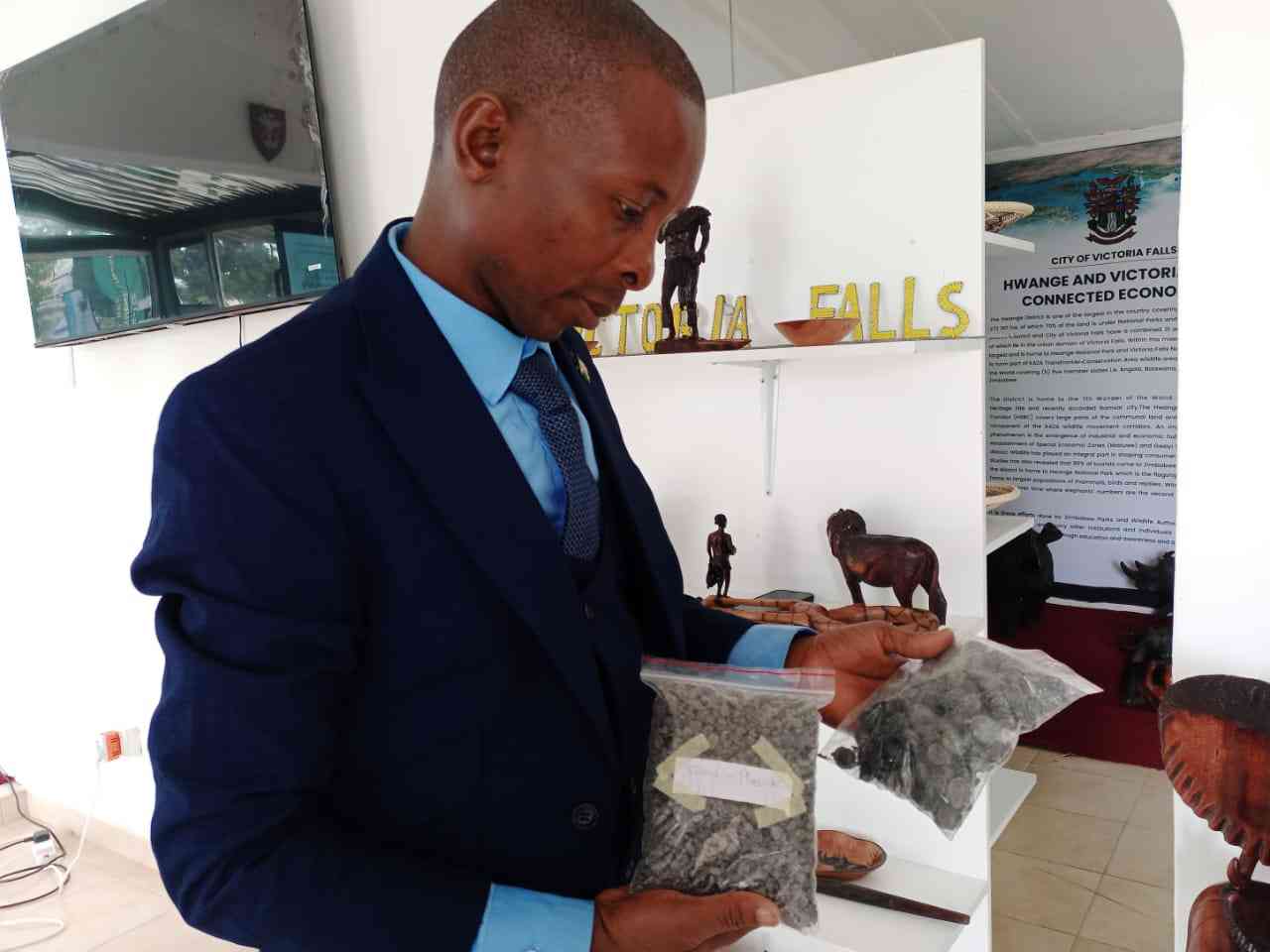
THREE local authorities from Zimbabwe and South Africa have joined forces at the Zimbabwe International Trade Fair, using a shared exhibition stand to demonstrate how cross-border partnerships can drive local economic growth.
Victoria Falls City Council (VFCC), Hwange Rural District Council and South Africa’s Ba-Phalaborwa Municipality are exhibiting as one, in a practical expression of twinning agreements designed to deepen trade, tourism and investment links.
VFCC spokesperson Leonard Ncube said the joint showcase reflects the similarities that bind the three jurisdictions.
“We have twinning agreements with the municipality of Ba-Phalaborwa in Limpopo Province, South Africa. Hwange Rural District Council also has a similar arrangement. We therefore decided to exhibit as one,” Ncube said in an interview.
He said Victoria Falls City Council and Hwange RDC share similar economic foundations centred on tourism and conservation, while Ba-Phalaborwa’s economy is anchored on conservation, tourism and mining — sectors that also define Hwange.
“So we thought it fitting to use this platform, in line with the trade fair theme, to activate and implement our twinning arrangements. That is why we are here together as three local authorities, exhibiting as one,” he said.
Beyond marketing their respective economies, Ncube said the exhibition highlights the interconnectedness of local communities and the role of small and medium enterprises (SMEs) in driving growth.
“We are not only showcasing our economies, but also demonstrating their strength and interconnectedness, bringing our communities together,” he said.
- ZITF Company launches AfriConfex
- Zim must step up to increase exports: UK
- Villagers block racecourse project
- Econet Wireless says to deploy new infrastructure and upgrade 150 sites in Bulawayo
Keep Reading
He noted that SMEs — including women and youth-led enterprises — are central to this ecosystem, supported by local authorities through land allocation, business opportunities and, in some cases, tax incentives.
Among the products on display are a range of value-added goods derived from natural resources, particularly baobab fruit from Hwange.
“Baobab fruit is processed into powder used to make porridge, while residue from the seeds is turned into stock feed mixed with molasses, which is effective for livestock,” Ncube said.
Other products include baobab-based skin oil and jam, underscoring the untapped potential of indigenous resources.
“As we were growing up, we consumed umkhomo without realising the wide range of products that could be derived from it,” he added.
Ncube said the joint stand also speaks to broader regional integration efforts under the Trans-Limpopo Spatial Development Initiative, which links Limpopo Province and Matabeleland North Province.
The collaboration is further strengthened by transport linkages, including direct flights between Victoria Falls and South Africa’s Kruger National Park, which lies near Ba-Phalaborwa.
“Both regions boast the Big Five — Hwange National Park and Zambezi National Park on our side, and Kruger on theirs. They have tourism, and so do we. They have mining, and we also have mining in Hwange,” he said.
The joint exhibition has drawn interest from visitors, including potential partners from South Africa, with Ncube saying this has already helped strengthen trade ties and relationships.
“Many people are impressed to learn that local authorities can exhibit together across borders. We have also received visitors from South Africa, which has strengthened trade and fostered relationships, thereby opening avenues for more twinning opportunities,” he said.
He added that the initiative aligns with global development priorities, particularly the United Nations Sustainable Development Goals (SDGs).
“SDG 17 speaks to partnerships. This is how we are advancing and implementing that goal,” Ncube said, noting that stronger partnerships also contribute to poverty reduction, gender equality, quality education and improved access to health.
“Through such partnerships, we can share ideas and work towards achieving these goals collectively,” he said.