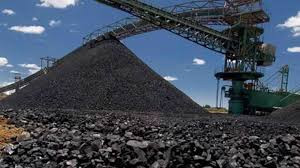
Zimasco has taken miner Fidelis Mudzengi to court seeking compensation of US$269 474 after he allegedly extracted chrome from its mining claim.
The matter was heard by Bulawayo High Court judge Justice Evangelista Kabasa, who ordered it to proceed to civil trial before Mudzengi submitted his preliminary points a few days before the trial.
According to court papers, on December 13, 2021, Zimasco issued summons claiming payment of US$269 474, being the value of chrome ore concentrate it would have realised from 27 349 tonnes of raw chrome ore allegedly mined by Mudzengi.
Zimasco’s claim, as elaborated in its declaration, is that it is the holder of a mining claim known as Rhodesdale 3, Registration No 313 BM, situated in Lalapanzi. It alleges that between May and June 2021, Mudzengi illegally and unlawfully extracted 27 349 tonnes of raw chrome fines from its mining block.
The 27 349 tonnes of raw chrome, Zimasco argued, would have yielded 2 735 tonnes of chrome ore concentrate with an export value of US$269 474.
After seeking and obtaining further particulars from Zimasco, Mudzengi argued that he operates a mining claim known as Reef 2, which shares a boundary with the plaintiff’s.
He further submitted that about 100 000 tonnes of raw chrome ore dump occupied part of Zimasco’s mining site and an independent mining site.
Mudzengi said he extracted fines from the dump after engaging a Zimasco representative who confirmed the boundaries, adding that he was working outside the plaintiff’s site.
- Fresh land invasions hit Whitecliff
- Pomona cash row escalates
- Border Timbers targets European markets
- SA name strong A side for Zim tour
Keep Reading
He also argued that the plaintiff’s claim constituted damages and further submitted that the High Court ought not to be overburdened with claims that can be dealt with by the Administrative Court.
Zimasco, however, submitted that the ore was extracted from its dump, whose location traversed both its mining area and an independent site.
It also argued that it had shown Mudzengi the boundaries, but he chose to move to a different section of the same dump.
In her judgment, Justice Kabasa said the court was referred to a plethora of cases that spoke to the inherent jurisdiction of the High Court.
She said the thread running through those cases was that the High Court had jurisdiction to hear all matters except where limitations were imposed by law.
“I must, however, make the point that had this matter been one located in s133, involving an owner or occupier of reserved ground who was injuriously affected by the mining operations carried out on an underground extension block, I would not have hesitated to direct that the parties take their matter to the court specifically given the jurisdiction to deal with issues of compensation under such circumstances.
“It would make a mockery of the clear intention of the legislature to create a special court if the jurisdiction of such a court could be defeated by the mere framing of disputes into common law cause of action where the Act has made specific provisions for the same.
“In my view, if the dispute is provided for in the Act, the Labour Court has exclusive jurisdiction even if the dispute is also resolvable at common law.
“I am unable to say counsel for the defendant’s preliminary point was raised merely to waste time and to harass the plaintiff.”
She dismissed the preliminary point on jurisdiction with costs, ordering the registrar to set the matter down for trial.