THE controversy surrounding Zimbabwe’s proposed Constitutional Amendment No 3 Bill (CAB3) is not simply premised on legal or technical debate.
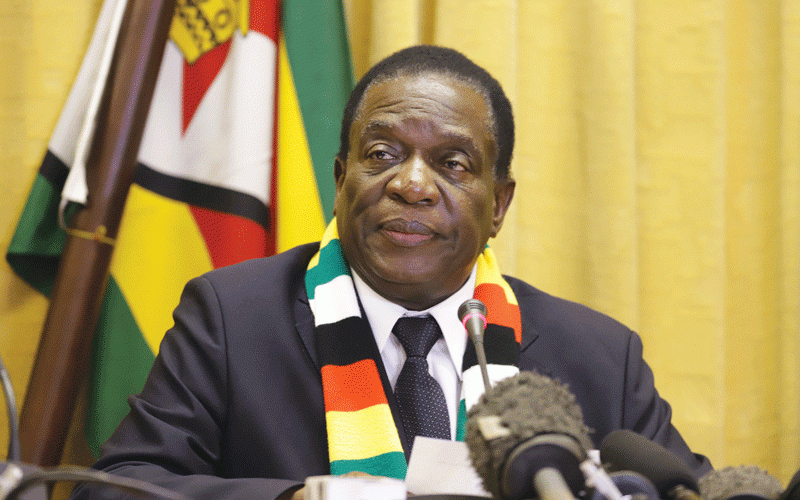
It is a political moment — one that goes to the core of President Emmerson Mnangagwa’s legacy and his long-standing claim to democratic reform.
At its heart, CAB3 is being framed by critics not just as a flawed policy, but as profoundly bad politics.
And, as the Zimbabwe Human Rights Commission (ZHRC) has made clear, the problem lies in the detail.
A reform that contradicts its own promise
When Mnangagwa assumed office in 2017 following the military coup, he positioned himself as a reformist, a leader committed to constitutionalism, re-engagement and democratic renewal.
CAB3 now places that narrative under strain.
ZHRC has delivered one of the most pointed institutional critiques, as it warned that the Bill risks undermining the very democratic foundations it purports to refine.
- Mavhunga puts DeMbare into Chibuku quarterfinals
- Bulls to charge into Zimbabwe gold stocks
- Ndiraya concerned as goals dry up
- Letters: How solar power is transforming African farms
Keep Reading
“The potential negative effects are significant. Public trust in constitutional governance may erode if citizens perceive the law as pliable to political expediency,” ZHRC chairperson Jessie Majome said.
That warning strikes at the political core of the matter: constitutional amendments are not judged only by their legality, but by their legitimacy.
And legitimacy, in this case, is increasingly contested.
Term limits and the optics of power
Among the most contentious provisions is the proposal to extend the presidential term to seven years — a move ZHRC says effectively circumvents safeguards embedded in section 328(7) of the Constitution.
Majome was unequivocal: “Crudely, the clause extends the length of time of the incumbent, in stark contrast to the safeguard contemplated by section 328(7).”
She added that carving out such an exception “undermines constitutional supremacy and the integrity of amendment safeguards”.
Politically, this is where CAB3 becomes difficult to defend.
Across the continent, term-limit debates are rarely neutral.
They are read as signals — either of democratic consolidation or regression.
In Zimbabwe’s case, the optics are particularly sensitive given its political history and the enduring shadow of extended rule under Robert Mugabe.
Even where legal arguments exist, the political interpretation is far less forgiving: altering term frameworks while in office invites accusations of self-preservation over public interest.
Elections deferred, accountability diluted
Beyond term length, the Bill raises concerns about delaying the electorate’s ability to exercise its rights.
ZHRC flagged that extending presidential terms can effectively postpone citizens’ rights under section 67 — particularly the right to participate in regular elections.
This, the commission noted, places Zimbabwe at odds with international democratic norms:
“The balance of powers could be destabilised, marginalising Parliament’s oversight and the Judiciary’s interpretive role, while concentrating authority in the Executive,” Majome said.
The commission went further, warning that such changes risk being interpreted globally as democratic backsliding — a reputational cost that Zimbabwe, still seeking full international re-engagement, can ill afford.
For Mnangagwa, who has repeatedly positioned Zimbabwe as “open for business”, this introduces a contradiction: political reforms that appear to narrow democratic space undermine the economic confidence his administration seeks to build.
Perhaps even more politically consequential is the proposal to remove the electorate’s direct role in choosing the President, transferring that power to Parliament.
While proponents argue this can reduce populism and encourage coalition-building, ZHRC sees a deeper democratic risk.
“Removing the electorate from directly voting for the President risks diminishing popular sovereignty and weakening public trust in institutions,” Majome said.
She warned that such a system can entrench dominant party control:
“Concentrating presidential selection within Parliament also raises the danger of parliamentary capture… Smaller parties and opposition voices may be marginalised.”
In political terms, this is not a technocratic adjustment — it is a fundamental shift in how power is conferred.
And it risks being interpreted as insulating leadership from direct public accountability.
Democracy beyond compliance
Majome also placed the debate within a broader democratic ethos, cautioning against intolerance to dissent: “If Zimbabwe can abolish the death penalty — which is extremely difficult — surely its people can engage in political disputation that is peaceful and should not be intimidated or angered by diverse views. Because that is what a democracy is and that is what progress is.”
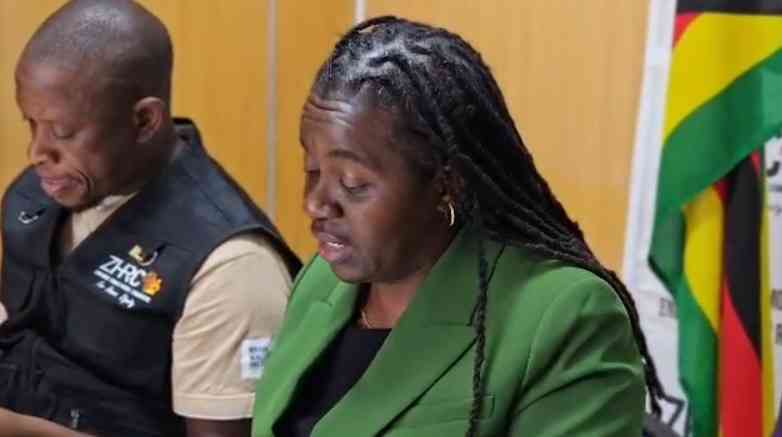
Her remarks underscore a critical point: democracy is not defined solely by institutions, but by political culture.
CAB3, critics argue, sends the wrong signal on both fronts.
The politics of legacy
Ultimately, the challenge for Mnangagwa is not legal defensibility, but historical judgement.
Leaders who amend constitutions are rarely judged kindly unless the changes clearly expand democratic space.
Where they are seen to consolidate power, the political cost often outlives the policy itself.
CAB3 risks placing Mnangagwa in that category.
It complicates his reformist narrative, raises doubts about his commitment to constitutionalism and provides critics with a powerful argument that Zimbabwe’s political trajectory remains cyclical rather than transformative.
In that sense, the Bill may achieve the opposite of its intended purpose.
Instead of stabilising governance, it unsettles confidence.
Instead of strengthening institutions, it raises fears of their weakening.
And instead of cementing a legacy of democratic reform, it risks tarnishing it.
The issue, as ZHRC has made clear, is not simply what CAB3 proposes — but what it represents.
And politically, it is becoming increasingly difficult to defend.