
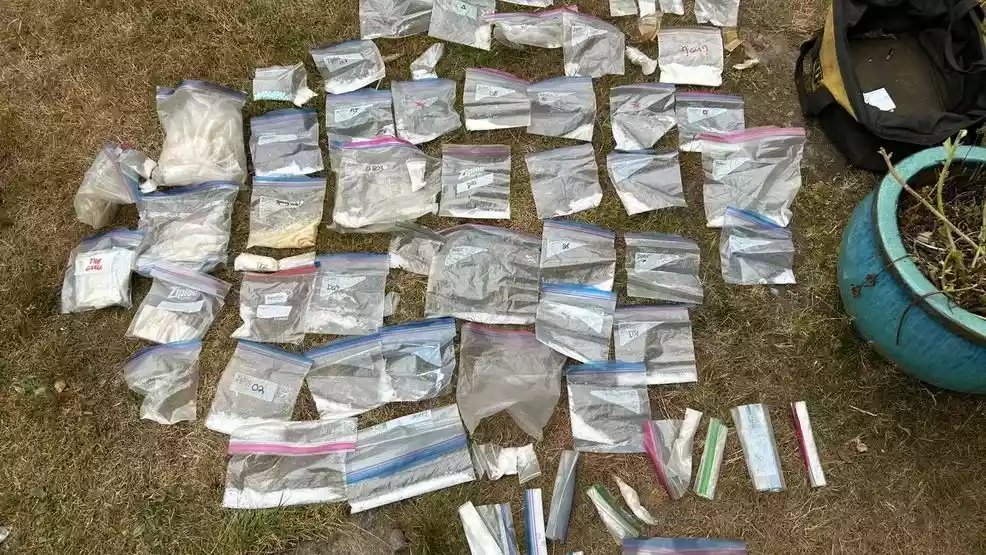
Zimbabwe is increasingly becoming a critical transit and consumption hub within a rapidly evolving global drug trafficking network spanning Africa, Europe, Asia, the Middle East, and the United Kingdom, a new report shows.
Authorities are grappling with the proliferation of drug dealing and abuse, struggling to curb the vice amid rising violence, mental health problems and other social ills linked to drug use.
According to the 2025 Global Initiative Against Transnational Organised Crime report, released recently, drug trafficking across east and southern Africa “has grown rapidly in recent years,” transforming the region from a transit corridor to a major transit and consumer destination for heroin, cocaine and synthetic drugs.
It said Zimbabwe was part of a network in the Sadc region where the most widespread illicit economies are human trafficking, wildlife crime, drug trafficking and financial crimes.
The report underscores that while southern Africa’s criminal markets may be “slightly less diverse,” they remain deeply entrenched.
Zimbabwe's geographic position — linking east Africa’s coastal entry points to southern Africa’s major markets — places it squarely along key overland trafficking routes.
Heroin transported from ports in Kenya and Tanzania is moved inland and transported by truck to neighbouring countries such as Uganda, Zambia, Zimbabwe, Botswana and South Africa, the report says.
This positions Zimbabwe not just as a corridor, but increasingly as part of a growing regional consumer base.
- ‘Paltry salaries aching Zim workers’
- Underage, teenage maids sprout in Gwanda
- ‘Paltry salaries aching Zim workers’
- Underage, teenage maids sprout in Gwanda
Keep Reading
The report highlights that east and southern Africa countries, including Zimbabwe, sit at the intersection of multiple global drug supply chains, with cocaine flowing west-to-east from Latin America, particularly Brazil.
It said heroin flowed north-to-south from Afghanistan, while synthetic drug precursors flow east-to-west from China and India.
This, the report adds, transforms the region to a complex system where drugs are “produced, consumed, distributed, stored and transported.”
Southern Africa, including Zimbabwe, is also becoming a “filter” zone, where drug shipments are repackaged or “re-containered” to disguise their origins before being sent to markets in Europe, Asia and beyond.
Zimbabwe is cited as one of the countries from which drug couriers begin international journeys.
The report shows that many couriers “do not begin their journeys in Kenya, but in neighbouring countries such as Malawi, Zambia, Uganda and Zimbabwe,” partly to evade improved surveillance elsewhere.
The courier networks, the report adds, transport between one and 5kg per person, exploiting “very weak surveillance capacities at airports” and corruption within border systems.
“There’s a new trend to push Afghanistan drugs through African borders first — When I had dealings with Zimbabwean and Namibian border officials — it was easy to pay them to look away and we could bring anything across,” a courier is quoted as saying in the report.
It also reveals that while these claims rely on criminal testimony, they reflect broader concerns about institutional vulnerabilities across the continent.
Indications are that the production of substances such as methamphetamine, methaqualone and synthetic cannabinoids is expanding across southern Africa, including Zimbabwe, albeit at a smaller scale compared to South Africa.
Smaller regional airports in countries like Zambia and Malawi also play a role, often feeding into larger transit systems that include Zimbabwe.
While much attention focuses on transit flows, the report emphasises that the eastern and southern Africa region is now “itself a significant consumer market for drugs".
Zimbabwe is not immune to this shift, as synthetic drug availability and use have “expanded significantly
since the COVID-19 pandemic.”
Zimbabwe is also described as part of a vast, interconnected criminal economy that stretches from Afghan opium fields and Brazilian cocaine producers to
European and UK streets.
With weak surveillance systems, porous borders and growing domestic demand, the report warns that the region’s capacity to respond remains “exceedingly poor,” raising serious public health and security concerns.
As global trafficking networks become more sophisticated, Zimbabwe’s role — both as a transit corridor and an emerging market — appears set to deepen unless significant interventions are made at national and regional levels.






