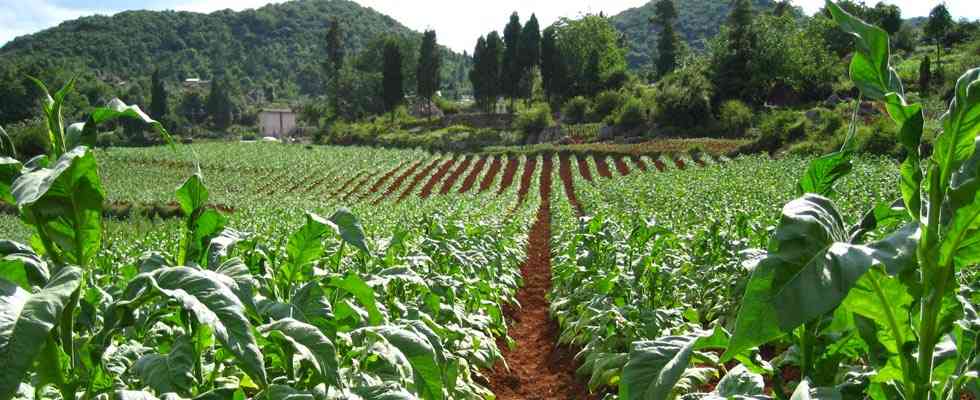
Smallholder farmers across three provinces are forging stronger ties with markets, financiers and technology providers following a series of private sector dialogues and farmer learning days held in Masvingo, Manicaland, and Matabeleland South.
The events, part of the Climate Resilient Livelihoods (CRL) project supported by the government of Zimbabwe, the Green Climate Fund (GCF) and the United Nations Development Programme (UNDP), drew more than 350 participants, representing 2 307 farmers from 16 irrigation schemes.
From subsistence to markets
For many years, Zimbabwe’s irrigation schemes have been lifelines in drought-prone areas, but limited access to markets and finance meant farmers often sold produce at low prices or failed to reach buyers altogether.
“These dialogues are a vital step in connecting smallholder irrigation farmers with private sector buyers, financial institutions and input suppliers,” explained Rungano Benza CRL project manager.
“By linking production with profitable markets, we are ensuring that farmers can sustainably increase yields, incomes and resilience.”
At the events in Vimbanayi (Manicaland), Pikinini-Jawanda (Masvingo) and Midlo (Matabeleland South), more than 30 private sector companies pitched opportunities in contract farming, input supply, mechanisation, crop and infrastructure insurance, and finance. Farmers, many of whom had never sat face-to-face with a banker or an insurer before, engaged in lively question-and-answer sessions about costs, delivery timelines and after-sales service.
Learning through practice and technology demonstrations
- Minister bemoans shortage of schools
- BCC joins Green Cities initiative
- Drunkard kills church pastor
- AfDB approves Energy Access Finance Framework
Keep Reading
Beyond business discussions, farmers participated in field learning and technology showcases in which some private sector partners participated. Some of these discussions included solar-powered pumps, maintaining irrigation systems, soil conservation practices and mechanisation services. Hands-on demonstrations gave farmers exposure to low-cost, climate-smart solutions for boosting productivity while conserving resources.
Farmers also toured host irrigation schemes, observed water-saving practices and exchanged lessons on governance and record keeping.
“We have learnt not just from the private sector, but from fellow irrigators,” said Ekem Tinago, chairperson of Bwanya Irrigation Management Committee. “Seeing what others are doing made us realise the areas we can improve on to increase productivity.”
Farmers commit to change
Beyond technology, the dialogues emphasised governance and organisation. Farmers pledged to update their scheme constitutions, strengthen record-keeping and form producer groups. Several schemes committed to registering cooperatives with the Agricultural Marketing Authority to gain legal recognition and negotiate better deals.
Women also stepped into the spotlight. At Midlo Irrigation Scheme, where women hold most committee leadership positions, participants highlighted how inclusive governance fosters accountability and ensures that benefits reach households equitably. Youth participation, though still low, was flagged as a priority for the future.
Stronger partnerships for resilient livelihoods
The private sector responded with concrete offers. Eltusk Trading signed contract farming agreements with Nyahombe and Pikinini-Jawanda irrigation schemes, covering nearly 190 hectares of Michigan pea beans. Valley Seeds and Charter Seeds pledged bulk seed supply agreements at discounted rates. Agrochemical suppliers offered doorstep delivery and farmer training, while banks and insurers introduced seasonal loans and affordable group-based insurance models. It did not end there; the irrigation schemes successfully initiated a range of partnerships with discussions still underway.
“These collaborations are expected to transform subsistence farming into commercially-oriented models,” said Simba Mupodyi deputy director for markets and trade in the Lands, Agriculture, Fisheries, Water and Rural Development ministry. “Follow-up actions will focus on solidifying partnerships, scaling up contract farming and expanding market linkages.”
UNDP’s perspective
For UNDP, the dialogues underscore the importance of partnerships in tackling climate and economic challenges.
“Climate resilience is not just about adapting farming practices; it is about ensuring farmers, especially women and youth, are fully integrated into profitable value chains,” said Ayodele Odusola, UNDP resident representative in
Zimbabwe.
“By bringing together the private sector, farmers and government, these dialogues are laying the foundation for inclusive, climate-smart growth that leaves no one behind.”
A path towards resilient a future
The outcomes of the dialogues and learning days go beyond individual deals. They represent a mindset shift; from farmers viewing themselves as producers for survival, to entrepreneurs with access to markets, finance, and technology.
Already, farmers from rehabilitated schemes are reporting yield increases, from 2 tonnes per hectare to as much as 8 tonnes per hectare of maize, thanks to improved infrastructure, better inputs, and collective action. With new partnerships in place, these gains are expected to expand to other crops, including beans, chillies and horticultural produce.
As farmers head back to their fields armed with new knowledge, contracts, and commitments, one thing is clear; Zimbabwe’s irrigation schemes are no longer just about water, they are becoming hubs of innovation, resilience and economic transformation.