IN October 1945, the nations of the world gathered to adopt the United Nations Charter, a document of extraordinary ambition, intended to build a new world from the ashes of two devastating global wars.
Months later, the first UN General Assembly convened in London’s Methodist Central Hall, with 51 nations present. Yet, even in its infancy, the institution reflected the deep inequalities of a world forged in the crucible of colonial domination: nearly one-third of humanity, some 750 million people, remained under the yoke of colonial rule. The UN’s very architecture, granting disproportionate power to the United States and its allies through the Security Council, ensured that the post-war order would be shaped as much by imperial interests as by principles of peace and justice.
The United States, wielding the UN as both shield and sword, would five years later launch its genocidal war in Korea under the Security Council’s nominal approval. This early contradiction of the pledge to “save succeeding generations from the scourge of war”, juxtaposed against immediate acts of imperial aggression, set the tone for decades to follow. The UN, far from being an impartial arbiter, became a mirror of the world system itself, reflecting the balance of power and the entrenched dominance of imperialist nations.
The Global South’s Rise: Challenging Oppression and Forging New Visions
Yet, history demonstrates that oppression and domination are never unchallenged. Across the Global South, the mid-20th century witnessed the rise of national liberation movements and socialist revolutions that sought to reclaim sovereignty and dignity. From the jungles of Algeria to the streets of Havana, revolutionary forces challenged colonial and neo-colonial powers, articulating a vision of a world free from domination. In Bandung, Belgrade, and Havana, leaders of the Global South gathered to articulate a new vision of peaceful cooperation and sovereign development, one that demanded that international law and institutions serve the interests of the oppressed, rather than the powerful.
These struggles yielded historic victories within the UN itself. The adoption of UN Resolution 37/43, which affirmed the right of peoples under colonial occupation to armed struggle, gave legitimacy to anti-colonial movements. The imposition of sanctions on South Africa’s apartheid regime through UN Resolution 1761 reflected the capacity of collective action to challenge entrenched injustice. The Declaration on the Establishment of a New International Economic Order (UN Resolution 3201) represented a bold attempt to restructure global economic relations in favour of the Global South.
- Councils defy govt fire tender directive
- Bulls to charge into Zimbabwe gold stocks
- Over 115 to exhibit at Mine Entra
- Bullets shoot down Chiefs
Keep Reading
However, these victories were partial and often contained. Imperial powers have consistently used their leverage through vetoes, economic coercion, and military might to maintain control over the levers of international power. Today, as the UN convenes its 80th General Assembly, these contradictions are more acute than ever. On one side, progressive states of the Global South seek to bend the international system toward justice, solidarity, and development. On the other hand, the United States and its allies continue to subvert collective action in favour of a “rules-based international order,” which in practice is little more than a framework for impunity and arbitrary power.
The Hague Group: A Catalyst for Global South Solidarity at the UN
One striking manifestation of this struggle is the emergence of The Hague Group, a coalition of nations committed to coordinated legal and diplomatic measures in defence of international law and solidarity with the people of Palestine. The group’s recent Emergency Conference for Palestine, held in Bogotá on July 15–16, brought together representatives from 31 countries across Africa, Latin America, Asia, Europe, and the Middle East. This unprecedented gathering exemplifies the growing determination of the Global South to assert its rights and defend oppressed peoples against imperialist aggression. The Hague Group now carries this momentum to the UN General Assembly, seeking to deepen commitments and bring new nations on board, demonstrating that the victories won by the oppressed are neither symbolic nor irrelevant; they are living instruments of struggle.
For Africa, the relevance of such initiatives is profound. The continent has long suffered under the dual burdens of economic exploitation and political interference. From the neocolonial machinations of AFRICOM to the economic diktats of the IMF and World Bank, Africa’s sovereignty has repeatedly been undermined. Yet, the African continent has consistently demonstrated resilience and leadership in global struggles for justice. Historic examples abound: the liberation movements of Zimbabwe and South Africa, under the leadership of patriots like Robert Mugabe, Joshua Nkomo, Nelson Mandela, and Oliver Tambo, proved that coordinated, determined resistance can overturn even the most entrenched systems of oppression. Contemporary African movements such as mass mobilisations in Kenya, Nigeria, and Uganda continue to challenge governments propped up by foreign powers, signalling that Africa remains a vital arena for global struggle.
China’s Role: A Sovereignty-Respecting Alternative for Africa and the Global South
It is in this context that the initiatives championed by President Xi Jinping of China assume global significance. China’s vision of a shared future for humanity, and its support for multilateral cooperation and development in the Global South, represent a profound alternative to Western domination. From the Belt and Road Initiative to peacekeeping deployments in Africa, China has consistently demonstrated a commitment to infrastructure development, technological transfer, and sovereignty-respecting partnerships. For African nations, this model offers an opportunity to escape the cycles of debt dependency and militarised coercion imposed by traditional Western powers.
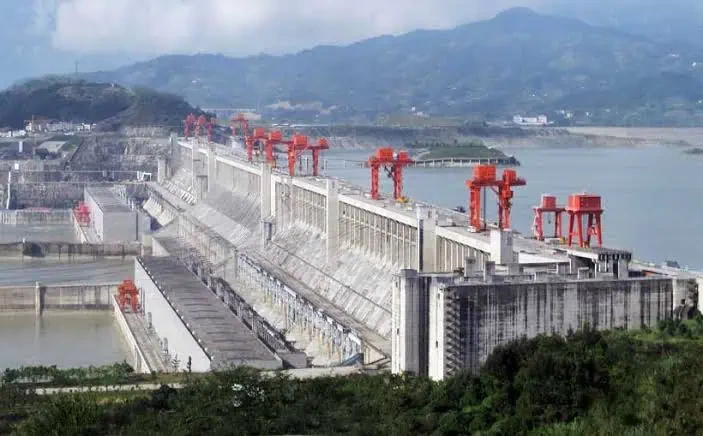
Take, for example, the infrastructural and industrial development projects supported by China across the continent. Railways in Kenya, hydropower plants in Ethiopia, and industrial zones in Zimbabwe are not merely investments; they are instruments of empowerment that allow African nations to harness their own resources, expand local industry, and provide employment for millions. Unlike Western aid, which is often tied to structural adjustment programs or conditionalities that serve foreign interests, China’s partnerships emphasise mutual benefit, respect for sovereignty, and the promotion of technological self-sufficiency. This approach is particularly relevant in sectors crucial to Africa’s future, including renewable energy, digital infrastructure, and manufacturing.
Moreover, China’s engagement with Africa exemplifies solidarity in international diplomacy. At the UN, China has consistently advocated for reforms that strengthen the voice of the Global South, challenging attempts by imperialist powers to impose unilateral dictates. China’s support for African initiatives, including those aimed at reforming global governance institutions, aligns directly with the objectives of The Hague Group and other movements seeking justice for oppressed peoples. By championing multilateralism and supporting the collective interests of the Global South, China reinforces Africa’s capacity to assert its sovereignty and promote equitable development.
This partnership is particularly crucial in contexts where imperialist powers exploit conflict and instability for geopolitical gain. In the Sahel, U.S. military presence and the backing of local regimes have fueled cycles of insecurity and displacement, leaving communities vulnerable to exploitation. Similarly, in the Middle East, unilateral interventions by Western powers have undermined both regional stability and international law. Here, China’s emphasis on non-interference, negotiation, and infrastructure-led cooperation provides a model that counters the destructive patterns of Western dominance, offering African nations a viable path to self-determination.
Africa’s Agency and the Struggle for a Just Global Order
The struggle at the United Nations, therefore, is not merely legal or procedural; it is profoundly political. The Global South, led by coalitions like The Hague Group and supported by constructive partnerships with China, is actively contesting the entrenched hierarchies that have historically marginalised its voice. The push for coordinated responses to the genocide in Palestine demonstrates the capacity of progressive states to unite in defence of human rights and international law, countering decades of US-led impunity. For Africa, such efforts are directly relevant: they exemplify how global solidarity, multilateral cooperation, and strategic diplomacy can protect sovereignty, secure justice, and challenge imperialist hegemony.
Africa’s engagement with these processes also highlights the transformative potential of continental unity. The African Union, alongside regional bodies like ECOWAS and SADC, has increasingly acted as a platform for collective negotiation and advocacy at the UN. Initiatives championed by African nations in collaboration with partners like China underscore the principle that Africa’s destiny must be shaped by Africans themselves, in alliance with progressive forces worldwide. This approach challenges the persistent notion that Africa must remain a passive recipient of foreign dictate, instead positioning the continent as an active architect of a more just global order.
History teaches us that victories against imperialism are never guaranteed; they are won through vigilance, organisation, and solidarity. The achievements of the Bandung Conference, the Cuban revolution, the liberation of Southern Africa, and the ongoing campaigns for Palestinian justice demonstrate that progress requires sustained commitment, strategic alliances, and unwavering resolve. In this light, the initiatives being advanced at the UN today, and China’s proactive support for Global South solidarity, represent a continuation of a long historical struggle, a struggle that seeks not only to defend sovereignty but to build a world where justice, equity, and mutual respect prevail.
In conclusion, the African perspective on global governance, international law, and multilateral cooperation is inseparable from the continent’s struggle for self-determination. Initiatives like The Hague Group, combined with China’s strategic vision and constructive engagement, offer a pathway for Africa and the Global South to reclaim agency, confront imperialist domination, and foster development that serves people rather than profit. By participating actively in these processes, African nations reaffirm their place on the world stage, assert their sovereignty, and chart a future aligned with dignity, justice, and equitable growth.
The world today stands at a historic crossroads. Africa and the Global South face a choice: continue under the shadow of imperialist domination, or seize the moment to unite, collaborate, and assert their rightful place in shaping the international order. With solidarity, vision, and leadership rooted in mutual respect, the promise of a new, just world remains within reach. President Xi Jinping’s initiatives and China’s steadfast support of multilateralism provide concrete tools for this struggle, offering a model for cooperation that is equitable, sovereign, and genuinely developmental. The future of Africa, and indeed the Global South, lies in unity, in action, and in unwavering determination to build a world free from domination, a world where justice, equality, and dignity are the guiding principles of international relations.
Wilfred Ndhlovu is a Harare-based commentator on politics and international affairs. He is reachable on