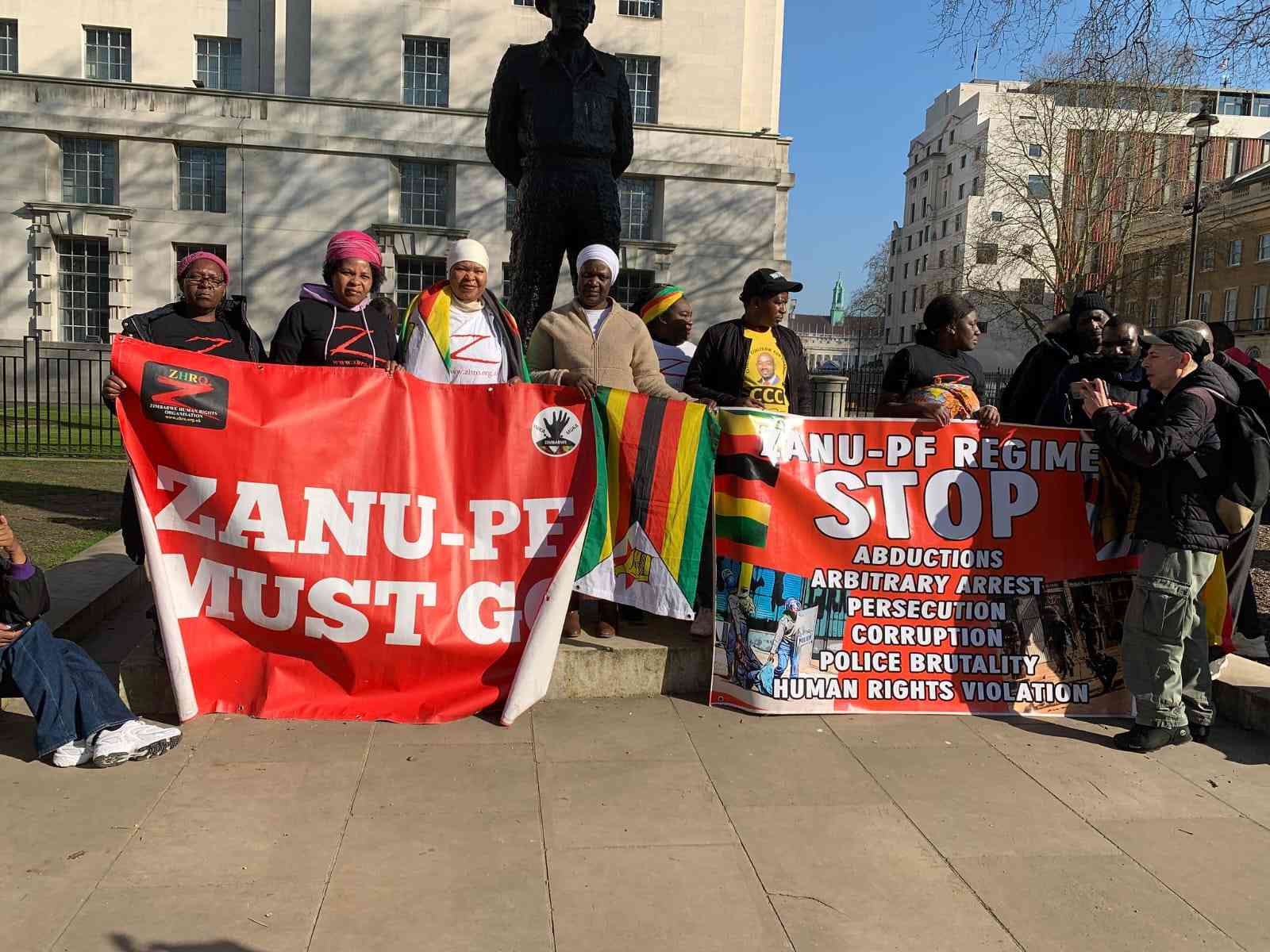
LONDON—Zimbabwean nationals in the United Kingdom have taken to the streets in protest against proposed constitutional reforms that could extend President Emmerson Mnangagwa’s tenure beyond the current two-term limit.
The controversial move has sparked outrage among the diaspora community, leading to demonstrations outside the Zimbabwean Embassy in London and the submission of petitions against the proposal.
The protests come in defiance of Zimbabwe’s Criminal Law (Codification and Reform) Act of 2023, which criminalizes citizens abroad who are deemed to be engaging in acts that “damage the national interest.” Many fear that if deported to Zimbabwe, they could face arrest or persecution under the law.
Critics argue that any attempt to extend Mnangagwa’s rule would be a blatant violation of Zimbabwe’s democratic principles and a step toward authoritarianism.
The Zimbabwean Constitution, adopted in 2013, limits the president to two five-year terms. However, recent discussions within the ruling ZANU-PF party suggest that efforts may be underway to amend the constitution to allow Mnangagwa to remain in power beyond 2028.
Mnangagwa has, however, said he would stand down at the end of his term in 2028 insisting that he is a constitutionalist.
Prominent political activists in the diaspora view this as an erosion of democracy.
“We are here today because we refuse to let Zimbabwe slide into another dictatorship. Mnangagwa must respect the constitution, just as he swore to do when he took office,” said one protester outside the embassy.
- Zim needs committed leaders to escape political, economic quicksands
- Chicken Inn knockout Harare City
- Ziyambi’s Gukurahundi remarks revealing
- Ngezi stunned by 10-man Herentals in Chibuku Cup
Keep Reading
The team lead by Tendai Christian Mapfumo, Chipo Komboni, Phylis Melody Magejo, Rudo Dodzo and Mr. Makipa went in to petition the UK government with the support of members of the opposition and human rights groups such as Pamela Magwizi, Regina Mahowo, Memory Kishindo, Boniface Zengeni, Petty Ziramba, Alexias Tatenda Chifamba, Eness Mapungwana and others.
The Zimbabwean government’s response to opposition voices has raised concerns about human rights violations. The Criminal Law (Codification and Reform) Act, popularly referred to as the "Patriot Act," effectively criminalizes activism abroad.
Under this law, Zimbabweans in the UK who protest against the government could be arrested if they return home, accused of undermining national interests.
Legal experts argue that this law is being used to silence critics and curtail freedom of speech. “It is a tool of oppression designed to instill fear among Zimbabweans, both at home and abroad,” said a UK-based Zimbabwean lawyer assisting activists with their petitions.
Despite the risks, Zimbabwean citizens in the UK are mobilizing efforts to challenge the proposed term extension. Activists have launched a petition calling on international bodies, including the United Nations and the Commonwealth, to intervene and ensure Zimbabwe upholds its constitutional obligations.
“The diaspora community plays a crucial role in Zimbabwe’s economy through remittances, yet our voices are ignored when it comes to governance. We refuse to be silenced,” said another demonstrator.