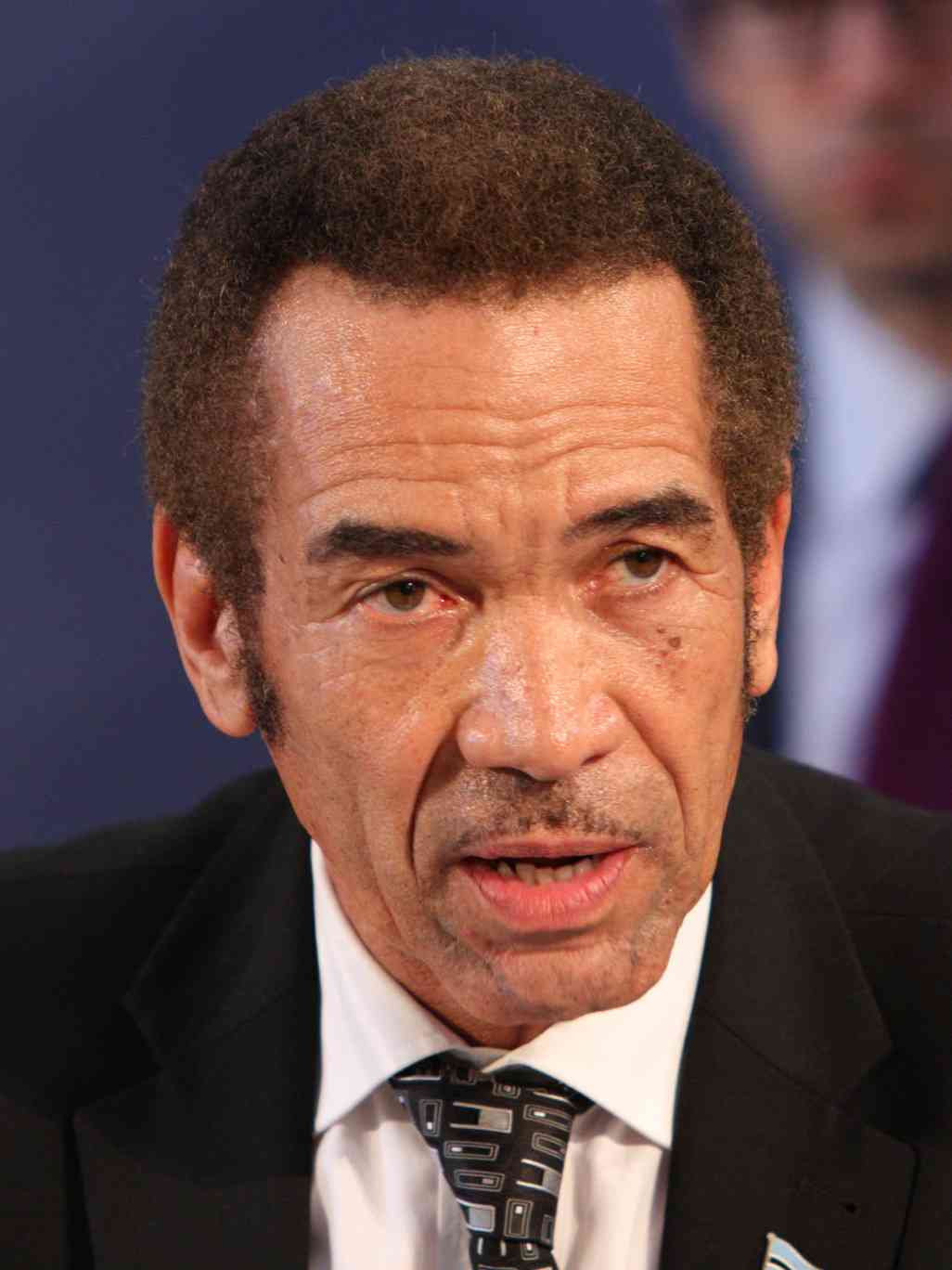
FORMER Botswana President Ian Khama has joined former South African President Thabo Mbeki in sounding the alarm over Zimbabwe’s controversial Constitutional Amendment No 3 Bill (CAB 3).
Zimbabweans would be wise to listen.
Khama warned that CAB 3 fits a familiar African script: leaders and ruling parties rewriting constitutional rules to prolong their hold on power. Mbeki, meanwhile, reminded the continent how regional leaders once stood firm against former Zambian President Frederick Chiluba’s attempt to secure a third term through constitutional manipulation.
Neither man spoke out by accident. Both recognise the danger that many Zimbabweans already see.
CAB 3 is not merely another constitutional amendment. It is a test of whether the Constitution remains supreme or it can be reshaped whenever it becomes inconvenient to those in power.
That is why this Bill must be abandoned.
For years, President Emmerson Mnangagwa presented himself as a constitutionalist. He repeatedly stated that he would respect constitutional term limits and even pledged to discourage those calling for the extension of his tenure.
Today, those assurances ring hollow.
- Mr President, you missed the opportunity to be the veritable voice of conscience
- ED to commission new-look border post
- Zanu PF ready for congress
- Zanu PF ready for congress
Keep Reading
The fact that CAB 3 has passed through the National Assembly should not be mistaken for public acceptance. Parliamentary numbers do not automatically confer moral legitimacy. A Constitution belongs to the people, not politicians with a parliamentary majority.
More importantly, the nation must ask a fundamental question: Why is this amendment necessary?
No convincing answer has been provided.
Zimbabwe is facing economic challenges, unemployment, struggling public services and widespread poverty. None of these problems will be solved by tinkering with constitutional provisions. CAB 3 will not create jobs, stabilise the economy or improve hospitals and schools.
What it does is reopen constitutional questions that Zimbabwe settled in 2013 after one of the most extensive consultative processes in the country's history.
The Constitution was crafted to prevent concentration of power and to ensure that no individual became bigger than the law. It established checks and balances designed to protect citizens and strengthen democratic governance.
CAB 3 moves in the opposite direction.
Its greatest danger lies not only in its immediate consequences but in the precedent it sets.
Today it is CAB 3. Tomorrow it can be CAB 4 or CAB 5.
Already, some ruling party supporters are openly speaking about future amendments as if the Constitution is a party document to be revised whenever political circumstances change.
That should concern every Zimbabwean, regardless of political affiliation.
A Constitution is not a campaign strategy. It is not a tool for political convenience. It is the supreme law of the land.
Once politicians establish that constitutional guardrails can be moved whenever they become inconvenient, there is no logical stopping point. Future leaders will inherit not only the powers created today, but also the precedents that made those powers possible.
History teaches a simple lesson: powers granted to one leader rarely remain with one leader.
The regional implications are equally troubling.
Southern Africa has largely distinguished itself through constitutional governance, democratic transitions and respect for term limits. CAB 3 threatens to undermine that tradition by signalling that constitutional engineering remains an acceptable route to political longevity.
At a time when parts of Africa are grappling with democratic backsliding, Zimbabwe should be strengthening institutions, not weakening them.
The country’s international reputation is already fragile. Investors seek predictability, strong institutions and respect for the rule of law. Frequent constitutional changes driven by political whims undermine confidence and raise questions about governance stability.
Supporters of CAB 3 argue that Parliament has the legal authority to amend the Constitution. That is true.
But legality is not the same as legitimacy.
The real question is not whether Parliament can amend the Constitution. The real question is whether it should.
The answer is no.
Zimbabwe has spent decades paying the price for excessive concentration of power. The solution cannot be more concentration of power.
Future generations will judge this moment not by how many votes were counted in Parliament, but by whether today's leaders strengthened constitutional democracy or weakened it.
CAB 3 sends the wrong message to Zimbabweans, to the region and to the world.