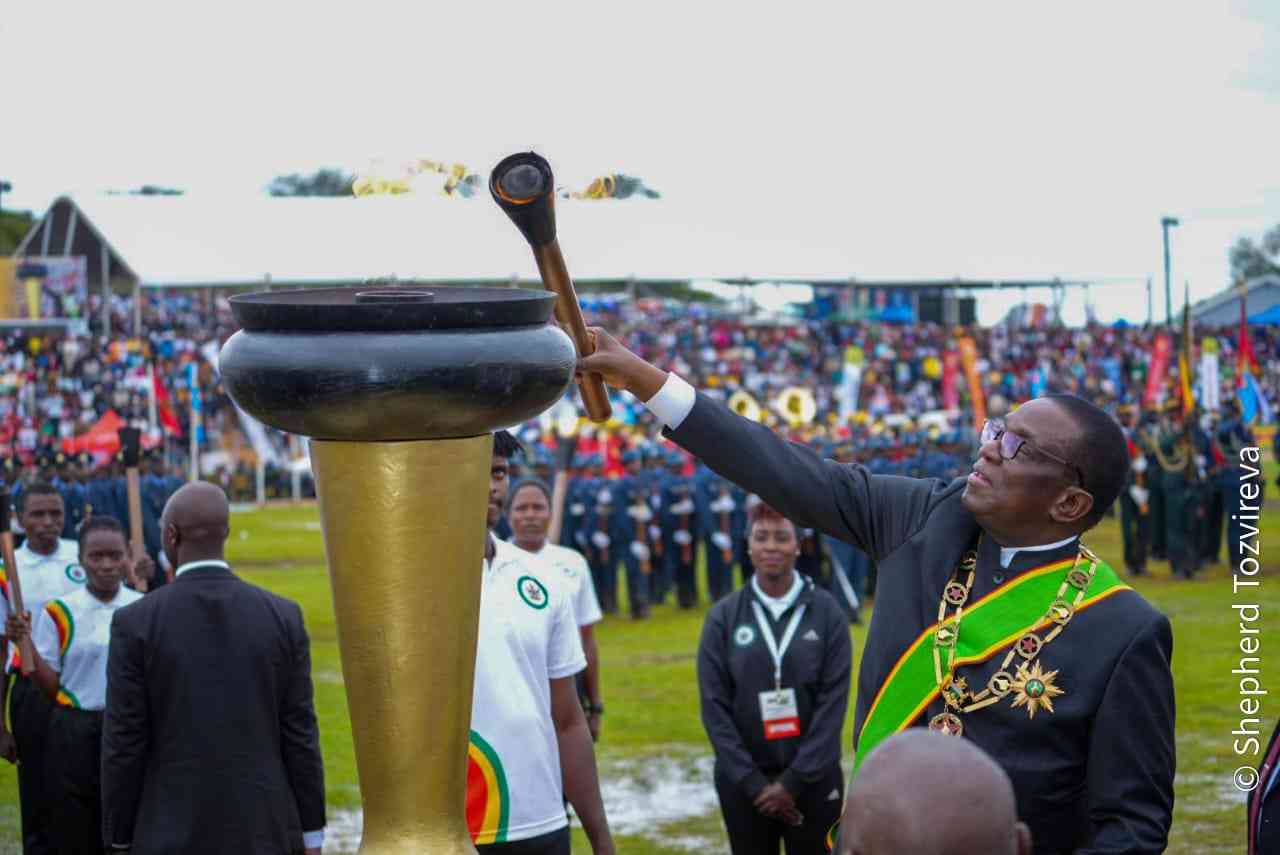
ZIMBABWEANS on Saturday marked the country’s 46th Independence Day, with the main celebrations held in Maphisa.
In recent years, the government has adopted a policy of rotating the main national celebrations across provinces to promote inclusivity and ensure every region shares the national moment.
The rotation has brought some visible benefits. Provinces selected to host the commemorations often receive legacy projects — roads are rehabilitated, buildings constructed or refurbished and local infrastructure improved.
Local economies also receive a short-term boost. Retailers, vendors and lodge operators benefit from the influx of visitors as thousands converge for the celebrations.
Zimbabwe commemorates Independence Day with colourful parades, speeches and festivities meant to honour the sacrifices of those who fought in the liberation struggle.
But beyond the pageantry, Independence Day must be a moment for honest reflection.
Have the aspirations that drove the armed struggle been fulfilled? Is the economic cake being shared fairly?
These are uncomfortable, but necessary questions.
- Woman douses hubby with petrol, sets him alight
- Matobo villagers bemoan inadequate food distribution
- Maphisa Hospital set for major upgrade
- Bulawayo-Maphisa Road a nightmare: Motorists
Keep Reading
For millions of Zimbabweans, daily life remains a struggle. Putting two meals on the table has become a tall order for many households. Businesses are battling to stay afloat, unemployment remains high and the cost of living continues to squeeze already-strained families.
Each year, universities and colleges release thousands of graduates into an economy that fails to absorb them. With limited opportunities, many young people are disillusioned, with others drifting into drug and substance abuse — a crisis threatening an entire generation.
The true meaning of independence lies in the everyday lived experience of citizens.
Older Zimbabweans remember the early years of independence, when education was widely seen as a passport to a better-paying job. They recall a time when clean water flowed from household taps.
Today, many question why water should be prepaid when access to the precious liquid is a constitutional right under section 77 of the Constitution of Zimbabwe.
Some residents have not seen water flow from their taps for years. Many have resorted to digging wells, often unsafe, simply to survive. What they want is simple: reliable running water from their taps.
Public hospitals inspire fear rather than confidence. Seeking treatment often feels like a gamble with life, as health facilities struggle with shortages of drugs, equipment and staff.
To many citizens, independence has lost meaning.
At independence, millions celebrated the right to choose their leaders through the ballot. Yet proposed constitutional amendments suggest that Parliament can elect the President — a move that undermines the one-person-one-vote principle that defined the liberation struggle.
That the ruling party, Zanu PF, enjoys a two-thirds majority in Parliament must never be used to silence the voices of citizens. Doing so risks creating what political thinkers have long warned against: the tyranny of the majority.
When safeguards such as the Bill of Rights are under threat, it signals that the promise of independence remains unfulfilled.
Access to quality education and healthcare has become a mirage for millions. When such realities are missing, even the most elaborate celebrations struggle to resonate with ordinary citizens.
Zimbabwe’s independence was won through immense sacrifice. Thousands gave their lives so that future generations could live with dignity, have opportunity and hope.
Honouring their sacrifice requires building a nation where independence is visible in the everyday lives of the people. Citizens cannot be spectators when a small group enjoys the fruits of Uhuru, while millions wallow in poverty.
Only when citizens experience economic security, social justice and respect for the rule of law will independence truly be felt — not merely celebrated.