HARARE’S roads have become death traps and what makes this tragedy even more painful is that it is entirely man-made.
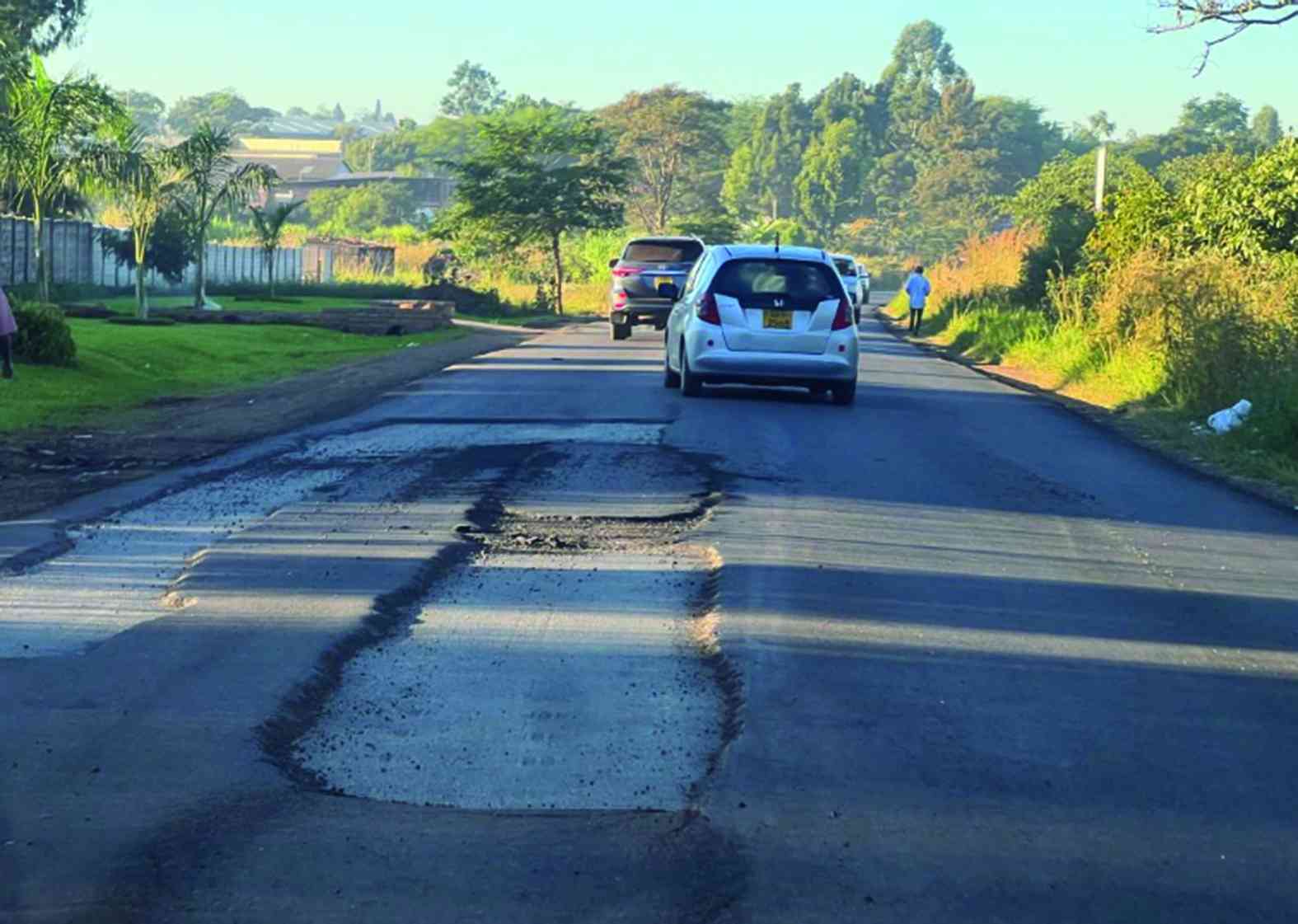
Across the capital, roads that were rehabilitated just a few years ago are already crumbling, riddled with potholes and cracks so severe that motorists risk damaging their vehicles or losing control altogether.
The pattern is too widespread to be dismissed as bad luck or weather-related wear and tear.
It points to something far more troubling: a system that rewards profit over quality and tolerates mediocrity at the expense of public safety.
Take Eltham Road in Southerton, which links Gleneagles and Willowvale roads.
Resurfaced not long ago, the road is dangerously potholed, forcing motorists to zigzag across lanes to avoid damaging vehicle suspensions.
Willowvale Road — a major service artery facilitating travel for thousands of commuters from Highfield, Glen View, Glen Norah and Budiriro — has been neglected for years, with no visible urgency on the part of authorities to restore it.
Gleneagles Road tells the same story.
- Cop jailed 2 years for assaulting suspect
- Police gun down Southerton robbery suspect
- Top lawyer faces probe over businesswoman’s estate
- Sacrificing quality on the altar of profits
Keep Reading
Boshoff Drive, which connects Seke Road with Simon Mazorodze Road, was rehabilitated during the COVID-19 era.
Today, it is a shadow of what it should be — proof that “rehabilitation” has become little more than a cosmetic exercise.
In 2024, the government was forced to order a contractor to redo Lorraine Drive in Bluffhill after a botched project exposed shocking workmanship.
That intervention, while necessary, only scratched the surface.
Across Harare and beyond, there are countless roads that have fallen victim to shoddy construction, rushed timelines and dubious contracts.
The common thread is clear.
Too many contractors are in it purely for the money.
Contracts are awarded, corners are cut, substandard materials are used and oversight is either weak or compromised.
Roads are hurriedly completed to meet political deadlines or public relations milestones, not engineering standards.
Once payment is made, accountability disappears, leaving citizens to deal with the consequences.
This is not just about inconvenience.
Poorly constructed roads kill.
They contribute directly to road traffic accidents, vehicle breakdowns, congestion and increased transport costs.
Emergency services are delayed. Businesses suffer.
Commuters waste productive hours navigating what should be straightforward routes.
And every rainy season, the damage worsens, exposing just how fragile these projects were from the start.
Quality has become secondary.
It is being sacrificed on the altar of profits.
What makes this situation unacceptable is that taxpayers are paying twice — first for the initial construction and later for rehabilitation or reconstruction.
Public funds that could be used for healthcare, education or water infrastructure are instead poured into fixing the same roads over and over again.
This is not a resource problem. It is a governance problem.
Zimbabwe does not lack engineers or technical expertise.
What it lacks is strict enforcement of standards, transparent procurement processes and real consequences for contractors who deliver substandard work.
Blacklisting rogue contractors should be routine, not exceptional.
Performance bonds must be enforced.
Independent audits must be the norm, not an afterthought.
Until quality becomes non-negotiable and accountability unavoidable, Zimbabwe’s roads will continue to crumble — no matter how many times they are “rehabilitated”.
The measure of development is not how often roads are repaired, but how long they last.
Right now, we are building roads to fail — and paying dearly for it.