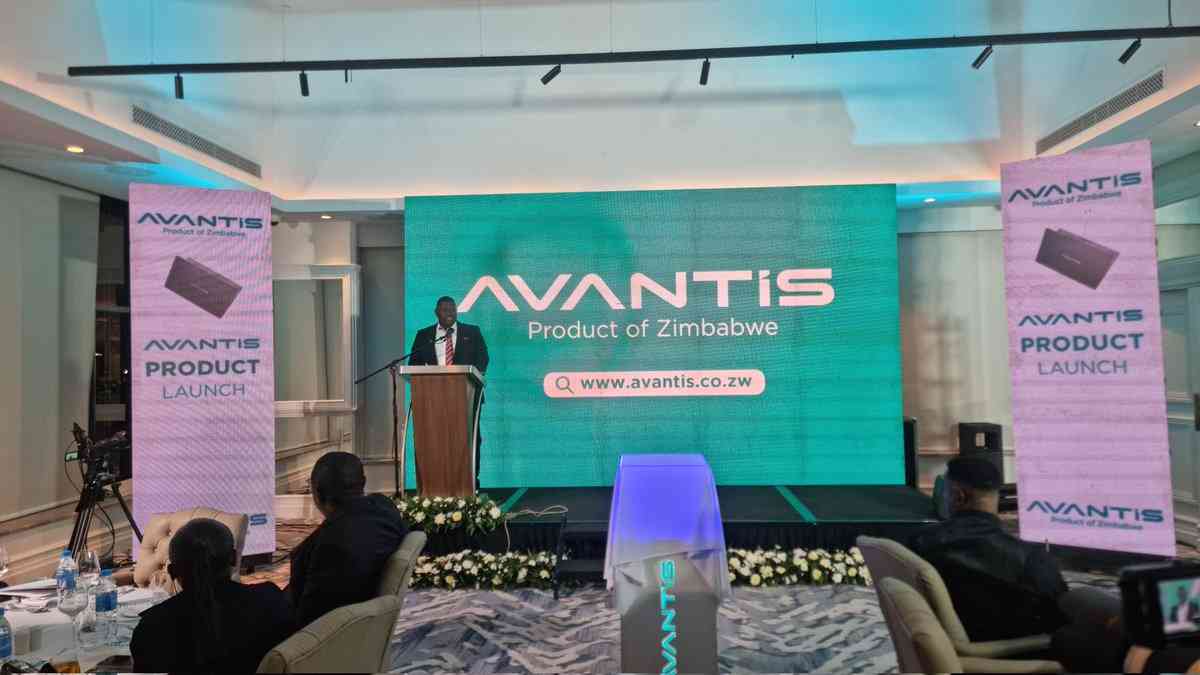
A PLANNED listing by indigenous technology firm Avantis Technologies could help diversify the Victoria Falls Stock Exchange (VFEX) away from its heavy reliance on mining and financial stocks, analysts said this week.
Formed in 2016, the tech firm specialises in manufacturing electronic devices such as laptops, tablets, desktops, and television sets.
The company plans to produce around 318 000 laptops annually and, through partnerships in Germany, China, and South Africa, has the capacity to manufacture up to 1,5 million units per year.
This year, it aims to produce 60 000 units, with approximately 25 000 already completed, according to founder Ari Goldstein.
The company, which recently unveiled a locally-built laptop, is pursuing listings on both the VFEX and the Tel Aviv Stock Exchange. If successful, it will become one of the few technology-focused names on Zimbabwe’s public markets.
Analysts believe the listing could help diversify an exchange long dominated by mining, agriculture, financial services, and consumer-facing stocks.
Kudakwashe Taimo, an analyst at Fincent Securities, called the move “broadly positive” for capital markets development – especially given how thinly the ICT sector is now represented on the local bourse after Econet Wireless Zimbabwe delisted.
“In that context, the potential introduction of a technology-oriented counter adds sectoral diversification to the market and could improve investor participation in growth-oriented industries linked to digitalisation, hardware distribution, and technology adoption trends across the economy,” he said.
- Mboweni mentors emerging entrepreneurs, calls for integrity in business
- Mboweni mentors emerging entrepreneurs, calls for integrity in business
- Zim tycoons elevate offspring to key roles
- Zim tycoons elevate offspring to key roles
Keep Reading
He said new listings were vital for deepening the investable universe and improving market breadth, adding that the VFEX had been positioning itself as a hub for export-oriented and growth businesses.
“Ultimately, the listing is directionally positive for Zimbabwe’s broader capital markets,” Taimo said.
“However, long-term investor confidence will depend less on the listing itself and more on execution credibility, operational transparency, product competitiveness, and the company’s ability to demonstrate a sustainable business model beyond branding and distribution.”
Financial analyst Sylvester Mupanduki said the listing would bring “meaningful sector diversification” to the VFEX, though he doubted it would shift the exchange’s overall market capitalisation – currently above US$3,5 billion – in any material way.
“The precedent is important,” Mupanduki said. “Proper listing execution by Avantis could encourage more small companies to consider VFEX, while a poor outcome could make future small listings more difficult.”
Tarisai Makuni, an analyst at Morgan&Co, said Avantis’s decision to target the VFEX rather than the Zimbabwe Stock Exchange reflected the harsh funding realities facing tech manufacturers.
“Tech manufacturing companies are highly capital-intensive, and by listing on the VFEX, they gain access to direct US dollar equity funding,” Makuni said.
She noted that the exchange’s incentives and lower trading costs made it an attractive option for growth businesses seeking hard currency while avoiding exchange rate risks tied to the local currency.
Makuni added that institutional investors had long gone without exposure to high-growth technology assets on the local market.
“Avantis will definitely introduce a unique asset class because it has no direct competitors on the bourse right now,” she said.
Still, she noted that investors would watch closely for liquidity, dividend prospects, and the company’s ability to defend its margins against an influx of cheap imports.
“If they manage to price the counter correctly in its initial public offering (IPO), it will set a definitive benchmark for Zimbabwean IPOs,” Makuni said.