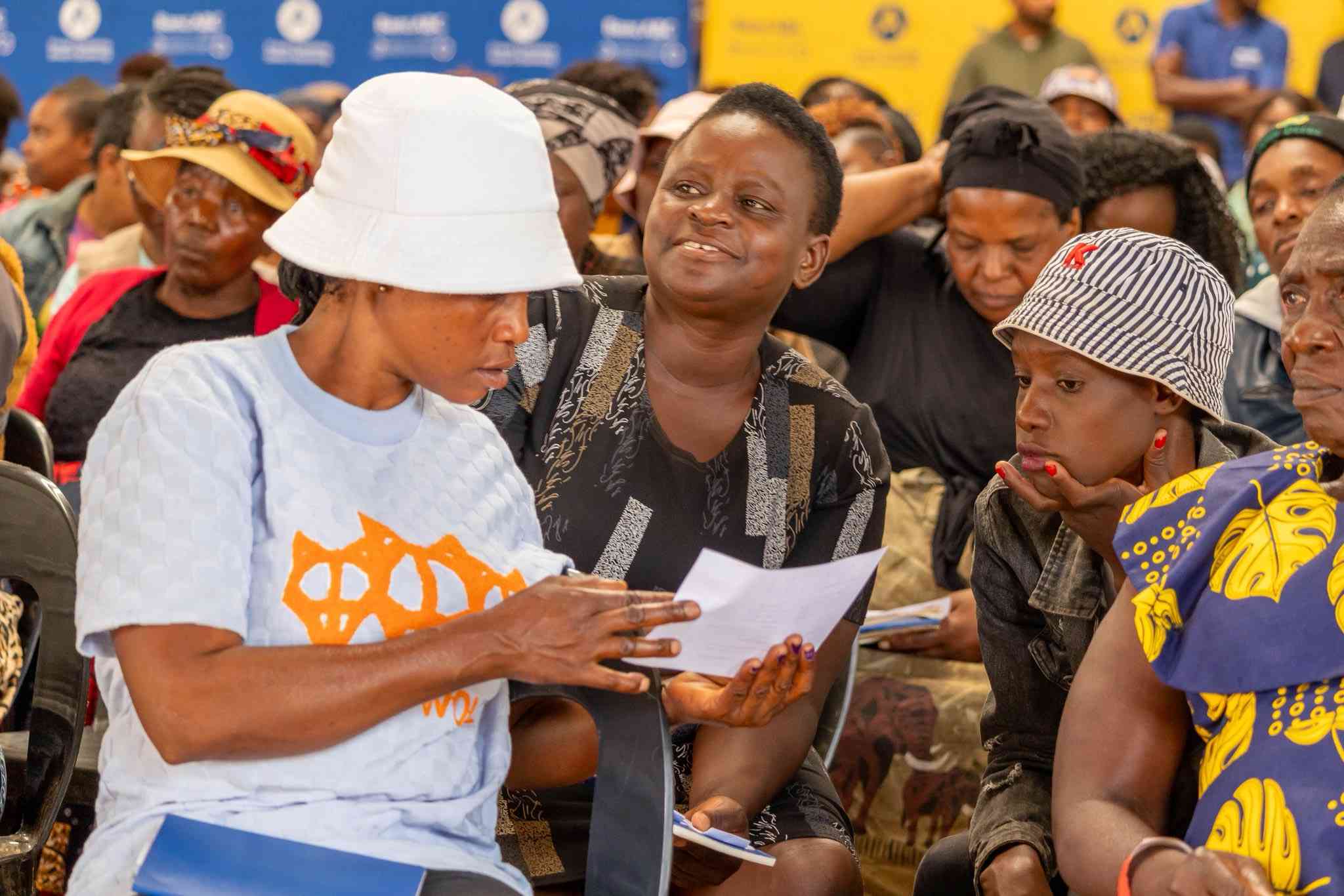
BANCABC has launched a financial literacy campaign aimed at strengthening women entrepreneurs’ financial knowledge and money management skills, starting with traders at Mbare Musika Market on Saturday.
Recent data from the Zimbabwe National Statistics Agency indicate that women continue to bear a significant portion of both paid and unpaid economic activities in Zimbabwe.
Data from the 2025 Time Use Survey, released in January, reveal that women devote three times more hours to unpaid domestic work than men, yet still contribute to income-generating activities supporting households and communities.
The campaign targets women in Zimbabwe’s informal economy, helping overcome gaps in financial knowledge and access that limit business growth, savings, and long-term financial stability.
Women’s expanding role in Zimbabwe’s economy has increased demand for financial knowledge and banking access, particularly among market traders.
Against this backdrop, the bank launched the initiative at Mbare Musika Market — the country’s largest informal trading hub — targeting women entrepreneurs operating at the busy marketplace.
“In celebration of Women’s Month, BancABC is hosting a financial literacy event with women entrepreneurs at the Mbare Market Hub at Mbare Musika Market, one of the country’s busiest and most vibrant trading centres,” BancABC marketing, public relations, and communications head Melenie Gumbo said.
The initiative brings together women traders for interactive sessions focused on strengthening financial knowledge, improving money management skills and promoting access to formal financial services.
- Zimpraise to release album Number 13
- Jah Master, Lorraine Guyo in car crash
- Zimpraise to release album Number 13
- Real deal: Shocking Munatsi death not diligently investigated yet
Keep Reading
“Markets such as Mbare Musika Market play a vital role in Zimbabwe’s economy. Thousands of small-scale entrepreneurs conduct daily business transactions that support households and sustain supply chains across the country,” she said.
“However, many informal traders operate with limited access to financial education and tools that could help them grow their businesses and improve their financial security. A lot of these women are earning and making quite a lot of money, and sometimes a lot more money than we do.”
She added that this gap prompted the bank to roll
out the financial literacy campaign.
Central bank data indicate that loans to women remain relatively low, accounting for 11,96% of total bank lending as of September 2025, up from 6,77% at the end of 2024.
“One of BancABC’s goals is to ensure everyone has access to banking and financial education, especially in informal or underserved markets,” Gumbo said.
“This initiative is part of the bank’s broader commitment to bring financial services and knowledge closer to people who need them most.”
She added that empowering women financially has wider social benefits.
“By supporting women through financial literacy, the bank acknowledges that empowered women create ripple effects: stronger families, better-educated children, and healthier communities. The bank positions itself as a partner in this journey,” Gumbo said.