ON Wednesday, villagers in Papa, Nyamakate area, rushed to Pearson Makata’s homestead as he battled fever and a terrible headache.
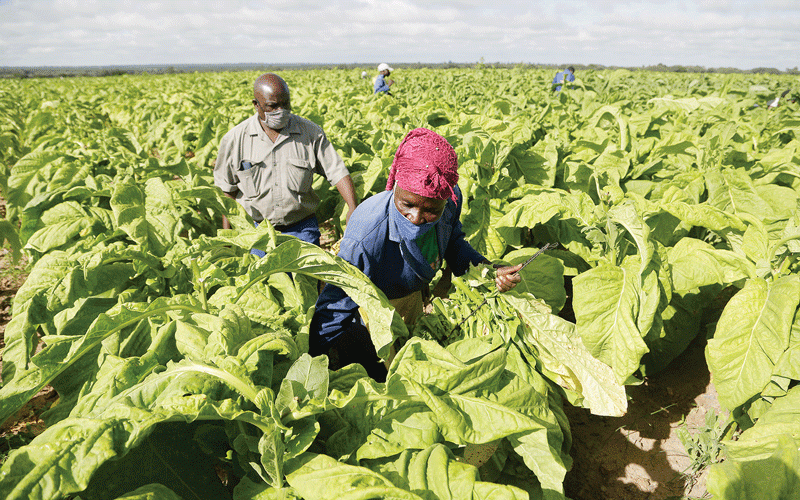
A community health worker tried to help, but Makata and his son Robson have been living in tobacco fields for two months, exposed to mosquitoes.
“We moved to the fields for tobacco work and maize protection,” Makata said, shivering from suspected malaria attack.
Hurungwe district health promotion officer Komborero Gotosa warned that tobacco farming, mining and fishing are driving a malaria spike, with over 1 200 cases reported in Mashonaland West province since last year.
Nyamakate, a tobacco‑farming ward, has seen farmers abandon sprayed homes for makeshift shelters, often without mosquito nets.
Raymond Chetse, another official, noted that 2025 had the highest malaria cases and deaths in five years, with 2026 already showing record numbers in weeks 1‑5.
Hotspots include Nyamakate, Nyangoma and Mashongwe, among others.
“Inconsistent net use and unsprayed shelters fuel the surge,” he said.
- Malaria surge hits Hurungwe tobacco farmers
Keep Reading
Hurungwe district development coordinator Andrew Tizora called for collective action, while health advocate Skumbuzo Sibanda urged 24‑hour surveillance and behaviour change.
“We need to make drastic changes in behavior change,” Sibanda said.
“We must step up the tempo through 24‑hour surveillance.
“It’s a wake‑up call and address as a matter of urgency.”
Zimbabwe Tobacco Growers Association president George Seremwe stressed that farmers should work with health officials to protect lives and productivity.
The World Health Organisation reports 2,3 billion malaria cases and 14 million deaths averted since 2000, but 282 million cases and 610 000 deaths occurred in 2024, with Africa bearing the greatest burden.