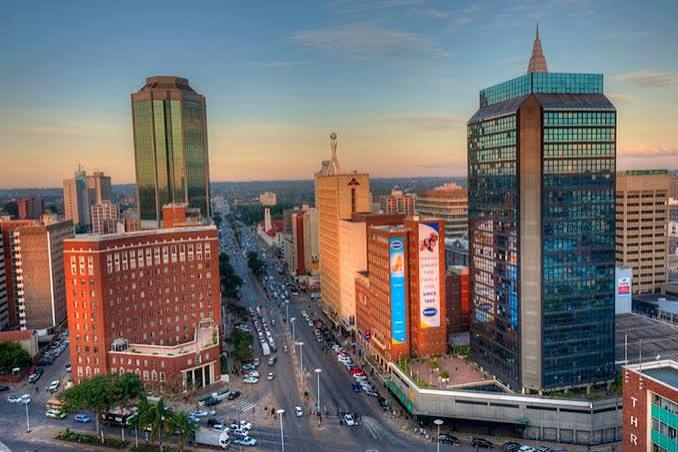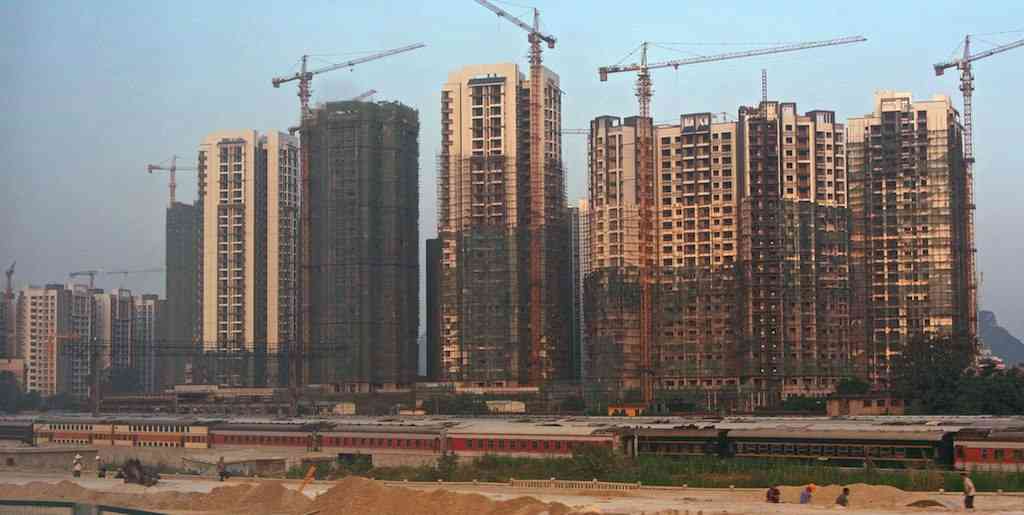
Zimbabwe’s rapid urbanisation could become a serious threat to food security if cities and towns continue expanding horizontally onto productive agricultural land. The issue is not urbanisation itself — Zimbabwe needs growing, economically productive cities — but the way that growth is planned and the land it consumes.
Peri-urban farmland is particularly important because it often provides fresh vegetables, maize, livestock and other food to nearby urban populations. Once productive agricultural land is converted into housing, the loss is effectively permanent. The country may then have to produce the same food elsewhere, often at greater cost, increasing dependence on long-distance transport, imports and vulnerable supply chains.
This creates a contradiction at the heart of Zimbabwe’s development challenge: the country is trying to address a significant housing shortage while potentially reducing the land base required to feed the people who will live in those houses.
The answer, however, cannot be to stop housing development. Zimbabwe’s housing deficit is too large and the demand for decent accommodation too urgent. The challenge is to separate the need for more housing from the assumption that more housing necessarily requires more land.
This is where China’s experience provides useful lessons.
China underwent one of the world’s fastest urbanisation processes, bringing hundreds of millions of people into cities. That transformation placed enormous pressure on farmland and contributed to urban sprawl, loss of agricultural land and conflicts over land conversion. But China subsequently introduced stronger mechanisms to protect strategic farmland, including its well-known agricultural “red line”, while encouraging more intensive and compact forms of urban development.
The lesson for Zimbabwe is therefore not simply to build Chinese-style high-rise cities. China has its own unique population density, economic structure, governance system and infrastructure capacity. Rather, Zimbabwe can learn from China’s recognition that urban expansion must be deliberately managed if a country is to urbanise while retaining sufficient agricultural capacity.
Greater density is one part of that solution. High-rise apartments, cluster housing, mixed-use developments and infill construction can accommodate more people without requiring cities to continually consume agricultural land on their peripheries.
- Mavhunga puts DeMbare into Chibuku quarterfinals
- The brains behind Matavire’s immortalisation
- Bulls to charge into Zimbabwe gold stocks
- Ndiraya concerned as goals dry up
Keep Reading
Zimbabwe’s own policy direction increasingly recognises this. The Ministry of National Housing and Social Amenities has promoted densification, including high-rise and multi-storey developments, cluster housing and mixed-use settlements. The challenge is moving from policy to implementation.
There is also an important economic lesson from China: protecting farmland cannot be achieved through restrictions alone. It requires investment in urban infrastructure that makes compact development viable. People will continue seeking cheaper land on the urban fringe if centrally located housing is unaffordable or unavailable.
Zimbabwe therefore needs to invest in affordable higher-density housing, public transport, water and sanitation, schools, healthcare and employment centres within existing urban areas. Without these services, densification can simply produce overcrowded settlements rather than sustainable cities.
At the same time, the country needs a much clearer classification of land around its cities. Not every piece of undeveloped land should be treated as available for housing. Prime agricultural soils, wetlands, important water catchments and strategically productive peri-urban farms should be mapped and protected before urban development decisions are made.
This would allow Zimbabwe to make a distinction between land that can be developed and land that performs a strategic food-security or environmental function.
China’s experience also demonstrates that policy must be backed by institutional capacity. A farmland-protection policy means little if local authorities continue approving developments that undermine it. Zimbabwe therefore needs stronger coordination between national government, local authorities, planners, agricultural authorities and environmental agencies.
The country’s housing programme should ultimately be measured not simply by how many stands are allocated or houses are constructed, but by whether those homes create sustainable communities without unnecessarily destroying the productive land that feeds them.
The deeper lesson from China is that land is a strategic national resource. Once agricultural land on the edge of a city is covered by roads, houses and concrete, bringing it back into production is extremely difficult.
Zimbabwe can therefore pursue both objectives: urbanisation and food security. But doing so requires a shift from the traditional model of expanding cities outward to a model of building smarter, denser and more integrated urban communities.
The choice is not between houses and agriculture. It is between unplanned expansion and deliberate urban planning.
If Zimbabwe gets that balance right, its cities can grow without consuming the agricultural foundation on which the country’s food security — and its ambition to reclaim its breadbasket status — depends.