URBAN local authorities are moribund.
Many are struggling to offer basic service delivery to residents and ratepayers to the extent many residents resorted to using own resources or source private players for simple tasks such as road maintenance, potable water, refuse collection and streetlighting.
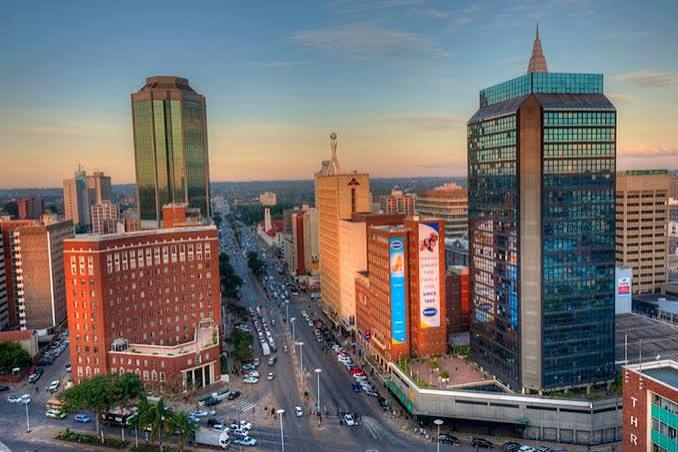
Local Government minister Daniel Garwe last week Friday highlighted the bad shape of local authorities by labelling the capital, Harare, Bulawayo and Chitungwiza being in intensive care.
This was a sad indictment on the country’s three biggest urban councils in terms of population.
Garwe said: “Harare, Bulawayo and Chitungwiza are in the intensive care unit. And you know what happens when you are in the intensive care unit: either you get out for survival or you go,
“And I’m talking ‘go’—not the city itself going, but the leadership in the city. They are in the intensive care unit because it’s more about negligence than anything that we are witnessing.”
This was a stinging assessment by the minister.
The allegations on poor service delivery stick.
- Benzema confident Real will reach UCL final
- Rigging exposes widening Mnangagwa, Chiwenga rift
- Health talk: Mental health disorders and demolitions in Zimbabwe
- Munatsi family speaks on banker’s shock death
Keep Reading
The charges on poor public finance management, poor revenue collection stick too.
Furthermore, the charges about poor infrastructure sadly stick too.
However, there is something deeper structurally about developments in urban local authorities.
Since the adoption of the 2013 Constitution, central government has deliberately failed to table a new Local Government Bill to enable the processes of devolution.
The minister remains a super mayor of all local authorities.
This is not the only blatant transgression against the Constitution.
The Finance minister has also weighed in by not directly disbursing devolution funds to local authorities.
This is deliberate too. They are setting local authorities for failure.
For the avoidance of doubt, we are talking about 5% of the total national budget that is annually due to local authorities.
The local authorities do not enjoy the semi-autonomy and security of tenure envisaged by the constitution.
They have to run past the minister any big decision, be it on hiring personnel, passing a budget or seeking funds from the open market.
This causes a lot of delays as letters move to and fro each office before a decision is made.
Many local authorities do not have substantive senior managers or heads of departments because the Local Government Board (LGB) is inefficient and designed to find politically correct appointees.
This useless body has to be disbanded like yesterday and local authorities allowed to hire directly.
This goes without saying that many of the LGB appointed executives have their loyalty somewhere else than the councils where they work.
In other words, central government is against the spirit of devolution still micro-manage local authorities through appointment of senior managers.
It is not a lie that most local authorities are in shambles.
What are the major issues on revenue collection?
Central government tops the list of rates defaulters.
It is followed by business and lastly individual households.
Is the minister, Garwe, aware of this fact?
Why hasn’t he used his proximity to Treasury at Cabinet to ask the government to pay its debts?
Is the central government setting up urban local authorities for failure?
The answer is an emphatic yes.
Harare and Bulawayo, by virtue of being the biggest cities in Zimbabwe, house many of the government departments and agencies.
And as stated earlier, the central government is not paying its dues.
Two more things central government can do to change local government landscape: decoupling local government elections from general elections, and taking action on councils that fail to have annual audits or have qualified audited results.
Decoupling local government elections from general elections will give voters time to reflect on the leaders they prefer, unlike the current scenario where councillors ride on the coattails of MPs and the presidential candidate during electioneering.
All progressive countries do not hold harmonised elections.
In any event, Zimbabwe used to have separate local government elections and the term for councillors was four years.
It is shocking that the super mayor (minister) does not follow up and enforce the recommendation of the Auditor-General findings in the annual local authorities’ audit report.
Enforcement of the recommendations would have nipped the breach of public finance management principles.
The reason is simple: the minister does not take action because the senior council executives are his people and the improper tenders are awarded to Zanu PF apparatchiks.
The local authorities should bear the burden of failing to enforce by-laws, failing to have their books audited and above all, failure to monitor their budget allocation and disbursements.
The budgets, instead of being the primary policy document, have been reduced to just a mere piece of paper that is not followed without consequences.
And one last point, Treasury has dismally failed local authorities by allowing UDC to collapse.
UDC was at the centre of funding local authorities.
Further, Treasury should help and nurture the development of municipal bond markets for local authorities to raise money for infrastructure development.
Infrastructure needs huge loans and available at below 10% interest rate per annum.
Anything bigger than that is a recipe for disaster, where residents would be forced to pay more.
The above is not an exhaustive list of what is needed to turn around the fortunes of local authorities, but a bare minimum top start things going.
However, the Zanu PF regime will dilly-dally in implementing these because they do not consolidate their power.
We all saw how they can speed up things like on Constitution Amendment No 3 Bill.
In doing all the above, Zimbabweans should be wary of a regime that may be thinking dismissing councils and replacing them with commissions.
Or a government that may seek the easier way out by privatising municipal services in a country where 49% of the people live in abject poverty according to the World Bank.
I’m out!